What We're Thinking About

Best Air Purifier for Large Rooms: CADR, Airflow, Room Size | Jaspr
Best Air Purifier for Large Rooms: How to Size It Correctly What is the best air purifier for a large room? The best air purifier for a large room is one that delivers enough clean air for the actual volume of the space. CADR, room volume, ceiling height, air-change rate, and performance at the fan speed you will actually use are more informative than a large square-footage claim by itself. For large rooms, the most useful specifications are: Clean Air Delivery Rate, or CADR Room volume, not just floor area Equivalent air changes per hour Airflow and whole-machine filtration performance Performance at realistic fan speeds Noise during continuous operation Room layout and air distribution Gas-removal media if VOCs and odors are a concern The U.S. Environmental Protection Agency recommends selecting portable air cleaners with a CADR large enough for the room. EPA also notes that its standard sizing guidance assumes an 8-foot ceiling, and rooms with higher ceilings may require greater CADR. That leads to an important principle: Air cleaners clean a volume of air, not an area of flooring. Why can air purifier square-footage claims be misleading? A square-footage claim is incomplete unless you know the ceiling height and air-change rate used to calculate it. Consider two rooms. Room A 500 square feet8-foot ceiling Room volume: 500 × 8 = 4,000 cubic feet Room B 500 square feet16-foot ceiling Room volume: 500 × 16 = 8,000 cubic feet Both rooms are 500 square feet. But Room B contains: twice as much air. A portable air cleaner delivering the same CADR will therefore provide only half as many equivalent air changes per hour in Room B. EPA specifically advises choosing greater CADR when ceilings are higher than eight feet. This is why a statement such as: “Covers up to 2,000 square feet” needs another piece of information: At what air-change rate? Without that, two manufacturers can assign very different room-size claims to machines with similar clean-air delivery. What is CADR? CADR stands for Clean Air Delivery Rate. It represents the volume of filtered air an air cleaner delivers, typically expressed in cubic feet per minute, or CFM. CADR is a whole-machine performance metric. It reflects both: how effectively particles are removed and how much air the machine processes. That makes CADR fundamentally different from a filter-efficiency percentage. The EPA says higher CADR means an air cleaner can filter more particles and serve a larger area. CADR is typically measured at the machine's highest fan speed. AHAM similarly defines CADR as the volume of filtered air delivered by an air cleaner and independently verifies smoke, dust, and pollen CADR for participating products. For large rooms, CADR is one of the most useful specifications available. What is the difference between CFM and CADR? CFM measures airflow. CADR measures clean-air delivery. They are related, but they are not necessarily the same number. CFM means: cubic feet per minute. A fan could theoretically move 500 CFM through a machine. But if some particles pass through the filtration system, the machine's particle CADR may be lower than 500 CFM. A simplified way to think about clean-air delivery is: airflow × removal efficiency although standardized CADR testing measures the performance of the complete appliance rather than simply multiplying two manufacturer specifications. For room cleaning, CADR is generally more useful than raw fan airflow because it describes filtered air delivered by the complete machine. What are air changes per hour? Air changes per hour, or ACH, describes how many room-volumes of air are replaced or cleaned in one hour. With a recirculating portable air cleaner, the more precise term is often: equivalent air changes per hour, or eACH. The air cleaner is not literally replacing all indoor air with outdoor air. Instead, it is removing particles at a rate equivalent to supplying a certain volume of clean air. A useful approximation is: Equivalent ACH = CADR × 60 ÷ room volume Where: Room volume = floor area × ceiling height For example: A 500-square-foot room with an 8-foot ceiling contains: 4,000 cubic feet of air. If an air cleaner has a CADR of 340 CFM: 340 × 60 ÷ 4,000 = 5.1 equivalent air changes per hour This calculation makes it much easier to compare air-cleaning capacity across different room sizes. How many air changes per hour should an air purifier provide? There is no single ACH target that is ideal for every situation. Higher equivalent ACH generally means faster particle removal, all else being equal. AHAM's current suggested-room-size methodology is based on approximately 4.8 equivalent air changes per hour. Its formula is approximately: Suggested room size = 1.55 × smoke CADR for a room with an 8-foot ceiling. For example: An air cleaner with a smoke CADR of: 100 CFM corresponds to an AHAM suggested room size of approximately: 155 square feet at roughly 4.8 eACH. This is important because the same 100-CFM machine could be described as covering a much larger room if the manufacturer assumes a lower cleaning rate. The machine did not become more powerful. The definition of “coverage” changed. How much CADR do I need for a large room? EPA provides the following approximate guidance for particle removal in rooms with 8-foot ceilings: Room Size Approximate Minimum CADR 100 sq. ft. 65 CFM 200 sq. ft. 130 CFM 300 sq. ft. 195 CFM 400 sq. ft. 260 CFM 500 sq. ft. 325 CFM 600 sq. ft. 390 CFM These estimates assume an 8-foot ceiling. Higher ceilings require additional capacity. Another useful method is to calculate the CADR required for a specific desired air-change rate: Required CADR = room volume × desired eACH ÷ 60 This approach works for rooms much larger than those listed in standard sizing tables. What size air purifier do I need for 1,000 square feet? For a 1,000-square-foot room with an 8-foot ceiling, approximately 667 CFM of total clean-air delivery would provide about five equivalent air changes per hour. Room volume: 1,000 × 8 = 8,000 cubic feet Required CADR at different cleaning rates: Desired eACH Approximate CADR Required 2 eACH 267 CFM 3 eACH 400 CFM 4 eACH 533 CFM 5 eACH 667 CFM 6 eACH 800 CFM This demonstrates why the question: “What air purifier covers 1,000 square feet?” does not have one universal answer. The better question is: “How much clean-air delivery do I want in a 1,000-square-foot room?” What size air purifier do I need for 1,500 square feet? Assuming an 8-foot ceiling: Room volume: 1,500 × 8 = 12,000 cubic feet Approximate clean-air delivery requirements are: Desired eACH Approximate CADR Required 2 eACH 400 CFM 3 eACH 600 CFM 4 eACH 800 CFM 5 eACH 1,000 CFM 6 eACH 1,200 CFM At these room sizes, using multiple portable air cleaners may be more practical than relying on one machine. EPA specifically notes that multiple air cleaners can be used when an area is larger than one available product can adequately serve. Why does ceiling height matter when sizing an air purifier? Ceiling height matters because it changes the total volume of air that needs to be cleaned. Consider a 600-square-foot room. Ceiling Height Room Volume 8 ft 4,800 cu. ft. 10 ft 6,000 cu. ft. 12 ft 7,200 cu. ft. 16 ft 9,600 cu. ft. A 600-square-foot room with a 16-foot ceiling contains twice the air volume of the same floor area with an 8-foot ceiling. If both rooms use the same air cleaner, the taller room receives approximately half the equivalent air changes per hour. EPA's sizing guidance explicitly instructs consumers with ceilings higher than eight feet to consider a machine rated for a larger area. This is especially relevant for: Great rooms Vaulted ceilings Lofts Two-story living rooms Large open kitchens Modern open-plan homes Why does airflow matter more in large rooms? As room volume increases, more contaminated air must be moved through the filtration system to maintain the same cleaning rate. A particle cannot be captured until it reaches the air cleaner. This creates two separate requirements: Capture efficiency How effectively does the filtration system remove particles from the air that passes through it? Air delivery How much contaminated room air reaches the filtration system each minute? Both matter. An extremely efficient filter processing a small volume of air can provide less total room cleaning than a highly effective filter processing a substantially larger volume of air. This is precisely why whole-machine CADR is useful: it incorporates particle removal and airflow into a clean-air-delivery measurement. For large rooms, high clean-air delivery becomes especially important because the total volume being treated is larger. Does a higher CADR clean a room faster? Yes, all else being equal. A higher CADR provides more clean air per unit of time and therefore produces a higher equivalent air-change rate in the same room. AHAM states that higher CADR values mean the air cleaner filters the air faster. For example, in an 8,000-cubic-foot room: 250 CFM CADR Equivalent air changes: 1.9 per hour 500 CFM CADR Equivalent air changes: 3.75 per hour 750 CFM CADR Equivalent air changes: 5.6 per hour The room is identical. Only the clean-air-delivery rate changed. Does a large room need one big air purifier or multiple smaller units? Either approach can work. Multiple air cleaners can be useful because they increase total CADR and distribute clean-air delivery throughout a large or complex space. Two 300-CFM machines provide approximately: 600 CFM total CADR assuming their performance is additive and both are operating simultaneously. Multiple units can also improve spatial distribution. This can be useful in rooms that are: Very long L-shaped Divided by furniture Connected to kitchens Open to hallways Spread across several activity zones EPA explicitly suggests multiple air cleaners when one unit is insufficient for the space. A single central machine may be sufficient in some open spaces, but total CADR is not the only consideration. The polluted air still has to reach the machine. Can one air purifier clean an entire house? A portable air cleaner should not automatically be assumed to provide the same cleaning rate in every room of a house. Air movement between rooms is restricted by: Walls Closed doors Floors Hallways Staircases HVAC operation Pressure differences Room layout A large CADR number measured in one test chamber does not guarantee uniform clean-air delivery throughout an entire house. For homes with separate bedrooms and closed doors, placing air cleaners in individual occupied rooms can provide more predictable cleaning than relying exclusively on one central portable unit. EPA also advises considering the entire connected area for open floor plans and multiple units for spaces beyond one cleaner's capacity. What CADR matters most for PM2.5? Smoke CADR is generally the most relevant of the traditional CADR categories when the primary concern is fine particles such as PM2.5. Traditional CADR ratings are reported for: Smoke Dust Pollen EPA explains that tobacco smoke represents the smallest particle category among these standard CADR tests and recommends looking for high smoke CADR when small particles are the priority. AHAM also recommends comparing smoke CADR when selecting machines for fine-particle removal. For wildfire smoke, AHAM recommends even more aggressive sizing: a smoke CADR approximately equal to the room's square footage. Why does fan speed matter? CADR is typically measured at an air cleaner's highest fan speed, while many people operate their air cleaner at lower speeds for much of the day. EPA states that CADR is typically measured on the highest setting and that higher fan speeds generally filter more air. That creates an important purchasing question: What is the clean-air delivery at the fan speed I will actually use? A product may advertise: high maximum CADR and separately advertise: very low noise without those measurements being taken at the same setting. For bedrooms, offices, and living spaces, performance at moderate and low fan speeds can be highly relevant. Why does noise matter for a large-room air purifier? Noise affects how much of the air cleaner's available capacity people actually use. Large spaces generally require more airflow. More airflow can require greater fan speed, which can increase sound. If the machine is uncomfortable at its highest setting and is continually operated at a much lower speed, the practical clean-air-delivery rate may be substantially below its advertised maximum. For this reason, useful specifications include: CADR at maximum speed CADR or airflow at lower speeds Sound level at those same speeds The practical objective is not simply maximum airflow. It is: high continuous clean-air delivery at a sound level appropriate for the room. Does placement affect large-room air cleaning? Yes. Restricting the intake or exhaust can reduce effective airflow and mixing. Air cleaners should generally have enough open space around their intake and outlet to move air freely. AHAM specifically advises giving portable air cleaners room to breathe because restricted airflow reduces performance. In a large room, placement should also consider where pollutants originate. Examples include: Cooking areas Exterior doors Fireplaces High-occupancy areas Pet areas Connected hallways However, portable filtration should not be placed so close to a pollution source that it creates a safety problem or interferes with ventilation requirements. Does activated carbon matter in a large-room air purifier? Activated carbon can matter when the objective includes gases, VOCs, or odors in addition to particles. Particle filtration and gas filtration solve different problems. EPA notes that activated carbon and other sorbent filters can remove some gases and that gas-removal performance generally benefits from having a substantial amount of sorbent material. This may be especially relevant in large connected living spaces containing: Kitchens New furniture Paint Cleaning products Flooring Smoke Other VOC sources CADR, however, is primarily a particle-cleaning metric. There is not currently an equivalently widespread consumer CADR system for gaseous pollutants. How much area can one Jaspr clean? Jaspr currently publishes a smoke CADR of 340 CFM, dust CADR of 356 CFM, and pollen CADR of 361 CFM at maximum speed. Its published specifications also include: PM2.5 and VOC sensors 1 lb of activated carbon 33-58 dBA published sound range Source: Jaspr Air Scrubber product specifications. Using the 340 CFM smoke CADR makes it possible to calculate equivalent air-change rates instead of relying on one fixed square-footage claim. Assuming an 8-foot ceiling: Room Size Approximate eACH From 340 CFM 400 sq. ft. 6.4 500 sq. ft. 5.1 750 sq. ft. 3.4 1,000 sq. ft. 2.6 1,500 sq. ft. 1.7 These are mathematical estimates: eACH = 340 × 60 ÷ room volume They do not account for factors such as continued pollutant entry, imperfect room mixing, doors, walls, furniture, or other real-world conditions. Using AHAM's approximately 4.8-eACH suggested-room-size methodology, a 340-CFM smoke CADR corresponds to approximately: 527 square feet with an 8-foot ceiling. The calculation is: 340 × 1.55 ≈ 527 sq. ft. This does not mean the machine stops working beyond 527 square feet. It means the equivalent cleaning rate decreases as room volume increases. That distinction is important. How many Jasprs would provide about five air changes per hour? Using Jaspr's published 340 CFM smoke CADR and an 8-foot ceiling: 500 square feet Required for ~5 eACH: ~333 CFM One Jaspr: 340 CFM Approximate result: 5.1 eACH 1,000 square feet Required for ~5 eACH: ~667 CFM Two Jasprs: 680 CFM combined nominal smoke CADR Approximate result: 5.1 eACH 1,500 square feet Required for ~5 eACH: 1,000 CFM Three Jasprs: 1,020 CFM combined nominal smoke CADR Approximate result: 5.1 eACH These are simplified calculations assuming additive CADR and good air mixing. Real buildings are more complicated, but the method is useful because it makes the assumptions transparent. What should you look for in an air purifier for a large room? A technically useful comparison should include at least the following: 1. Whole-machine CADR How much clean air does the complete device deliver? 2. Smoke CADR Particularly useful when fine particles and PM2.5 are a priority. 3. Room volume Use floor area × ceiling height. 4. Equivalent air changes per hour How aggressively is the machine cleaning that volume? 5. Performance at realistic fan speeds Maximum CADR alone may not represent typical use. 6. Noise Will the machine actually be operated at the speed required? 7. Air distribution Can contaminated air throughout the room reasonably reach the machine? 8. Particle filtration The filtration system must effectively remove the particles reaching it. 9. Gas-removal media Activated carbon or other appropriate sorbent media may be useful when gases or odors are a concern. 10. Multiple-unit strategy Large or irregular spaces may benefit from distributed filtration. Bottom line: What is the best air purifier for a large room? The best air purifier for a large room is one that provides enough whole-machine clean-air delivery for the room's volume and the cleaning rate you want. Do not evaluate a large-room air cleaner from square footage alone. Instead: 1. Calculate the room volume. Floor area × ceiling height. 2. Decide how aggressively you want to clean the space. Higher equivalent air changes mean faster particle removal, all else being equal. 3. Calculate the clean-air delivery required. Room volume × desired eACH ÷ 60. 4. Compare that requirement with whole-machine CADR. Especially smoke CADR when small particles are the concern. 5. Consider realistic operation. Noise, placement, fan speed, room layout, and runtime all affect practical performance. The most useful question is not: “How many square feet does this air purifier cover?” It is: “How much clean air does it deliver into the volume of air I am actually trying to clean?” That is a much more meaningful way to size an air cleaner. Frequently Asked Questions What size air purifier do I need for a 1,000-square-foot room? For a 1,000-square-foot room with an 8-foot ceiling, approximately 667 CFM of total clean-air delivery provides about five equivalent air changes per hour. Approximately 400 CFM provides about three eACH. What size air purifier do I need for 1,500 square feet? With an 8-foot ceiling, approximately 1,000 CFM provides about five equivalent air changes per hour in 1,500 square feet. About 600 CFM provides three eACH. What CADR is good for a large room? The required CADR depends on room volume and desired cleaning rate. EPA's standard sizing table uses approximately 65 CFM per 100 square feet for rooms with 8-foot ceilings. Is higher CADR better? For the same room, a higher CADR generally produces faster particle removal and a higher equivalent air-change rate. AHAM states that higher CADR means faster air cleaning. What is a good air-change rate for an air purifier? There is no universal number for every application. AHAM's suggested-room-size system uses approximately 4.8 equivalent air changes per hour. Does ceiling height affect air purifier sizing? Yes. Higher ceilings increase room volume. EPA's sizing guidance assumes an 8-foot ceiling and recommends choosing more capacity for taller spaces. Can one air purifier clean 2,000 square feet? Potentially, but the useful question is at what cleaning rate. A machine may influence particle levels in 2,000 square feet while producing a relatively low equivalent ACH. CADR and room volume are needed to quantify performance. Are two air purifiers better than one? They can be. Multiple machines increase total clean-air delivery and can improve distribution across large or irregular spaces. EPA recommends considering multiple units when a space exceeds the capacity of one cleaner. Is CADR the same as airflow? No. Airflow measures the volume of air moving through a system. CADR describes the volume of filtered air delivered by the complete air cleaner. Does an air purifier work less effectively on low speed? It still filters air, but clean-air delivery generally decreases with lower fan speed. EPA notes that higher fan speeds typically result in more air being filtered. Should I size an air purifier by square feet or cubic feet? Room volume is more scientifically informative because it includes ceiling height. Square-foot sizing can still be useful when it explicitly assumes a standard ceiling height and cleaning rate. Sources U.S. Environmental Protection Agency. Guide to Air Cleaners in the Home. Guidance on CADR, room sizing, ceiling height, fan speed, multiple air cleaners, activated carbon, and portable air-cleaner selection. Association of Home Appliance Manufacturers. Consumer Room Air Cleaners and Equivalent Air Changes per Hour.Derivation of AHAM's approximately 4.8-eACH suggested room-size methodology and the formula Suggested Room Size = 1.55 × Smoke CADR. AHAM Verifide. Air Changes per Hour FAQ. Explanation of equivalent ACH and independently verified suggested room sizes. AHAM Verifide. Air Filtration Standards. Explanation of CADR, smoke/dust/pollen ratings, and air-cleaner sizing. Jaspr. Air Scrubber Product Specifications. Published smoke, dust, and pollen CADR, activated carbon, sensor, and sound specifications.
Read moreDo Air Purifiers Help With Mold? What Actually Works | Jaspr
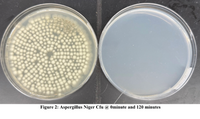
Do Air Purifiers Help With Mold? What They Can and Can’t Do By Michael Feldstein, Founder of Jaspr Do air purifiers help with mold? Yes. Air purifiers can help with mold by reducing airborne mold particles. But they cannot remove mold growing on walls, floors, furniture, or inside a building, and they cannot fix the moisture problem causing the mold. That distinction matters. The U.S. EPA says portable air cleaners may remove some particles generated by mold and may sometimes help reduce odors. But solving a mold problem requires addressing the moisture source and cleaning up the existing mold. Source: U.S. EPA, Guide to Air Cleaners in the Home I think about mold as two separate problems: The building problem Moisture and existing mold growth. The air problem Mold spores and other particles that have become airborne. An air purifier or air scrubber can help with the second. It does not replace dealing with the first. Can an air purifier remove mold spores from the air? Yes. A mechanical air cleaner can reduce airborne mold particles by pulling contaminated room air through a particle filter. Mold produces spores and other fragments that can become airborne. The filter matters. But there is another piece I think consumers overlook: The machine has to move enough contaminated air through that filter. A phenomenal filter sitting behind a weak fan can still clean a room slowly. That is why I would not choose an air cleaner for mold based only on a filter label. What is the best air purifier for mold? For airborne mold particles, I would choose a high-airflow air cleaner or air scrubber with enough clean-air delivery for the room, effective mechanical filtration, appropriate room sizing, and continuous operation you can comfortably live with. I would look for: High clean-air delivery Enough airflow for the room Effective mechanical particle filtration A well-sealed filter system Activated carbon if odor is also a concern Low enough noise to run continuously No intentional ozone production The EPA recommends choosing an air cleaner with a Clean Air Delivery Rate, or CADR, large enough for the room. Higher CADR means the machine can filter more particles and serve a larger space. Source: U.S. EPA, Guide to Air Cleaners in the Home For mold, I would put airflow and clean-air delivery near the top of the list. Why does airflow matter for mold? Because a filter cannot capture a mold particle until that particle reaches the machine. This sounds obvious, but it is the part of air cleaning people often miss. Imagine two machines. One has an extremely efficient filter but moves very little air. The other combines highly effective filtration with substantially greater clean-air delivery. In a real room, the second machine may remove airborne particles much faster because it is processing far more of the air you are actually breathing. Think about it this way: Capturing a very high percentage of a tiny amount of air can accomplish less than capturing a slightly lower percentage of a much larger amount of air. For a room air cleaner, you care about: How much clean air is being delivered back into the room? Not just the filter material in isolation. How much CADR do I need for mold? The right CADR depends on the size and volume of the room you are trying to clean. EPA sizing guidance gives the following approximate reference points for rooms with 8-foot ceilings: Room Size Approximate Minimum CADR 100 sq. ft. 65 CFM 200 sq. ft. 130 CFM 300 sq. ft. 195 CFM 400 sq. ft. 260 CFM 500 sq. ft. 325 CFM 600 sq. ft. 390 CFM Source: U.S. EPA, Guide to Air Cleaners in the Home Higher ceilings contain more air, so they may require more cleaning capacity. A 400-square-foot room with an 8-foot ceiling contains: 3,200 cubic feet of air. The same floor area with a 12-foot ceiling contains: 4,800 cubic feet of air. Same square footage. 50% more air. This is why I do not love giant claims like: Covers 2,000 square feet. My next question is: At what airflow and air-change rate? Is HEPA necessary for mold? A high-efficiency particle filter can be very effective for airborne mold particles, but the word HEPA alone does not tell you whether the complete air cleaner will perform well in your room. The EPA defines a HEPA filter as capable of removing at least 99.97% of airborne particles at approximately 0.3 microns under the relevant test conditions. Source: U.S. EPA, What Is a HEPA Filter? That is excellent filtration. But: You are not buying a filter. You are buying an air-cleaning system. I care about: How much air it moves Whole-machine clean-air delivery Room size Filter sealing Noise Runtime A great filter that processes very little room air is not necessarily the best machine for a mold-affected room. Is 0.3 microns the smallest particle an air filter can capture? No. The common 0.3-micron number is not a minimum particle-size cutoff. It is approximately the region that can be most difficult for high-efficiency fibrous filters to capture. The EPA explains that particles larger and smaller than approximately 0.3 microns can actually be captured at even greater efficiency. Source: U.S. EPA, What Is a HEPA Filter? So: 0.3 microns is not a wall. This is one reason I am skeptical of purifier marketing built around claims like: Filters particles down to X microns. The question I care more about is: How much contaminated room air can the complete machine actually process? What can an air purifier not do for mold? An air purifier cannot fix the source of a mold problem. It cannot: Repair a leaking roof Fix a plumbing leak Dry a wet wall cavity Remove mold growing inside drywall Lower structural moisture Replace proper remediation Prove a building is mold-free because the smell improves The EPA puts the principle very simply: Moisture control is the key to mold control. If mold is growing, clean up the mold and fix the water problem. Source: U.S. EPA, A Brief Guide to Mold, Moisture and Your Home That is why I think the right sequence is: Find the moisture. Fix the moisture. Remove the mold. Then scrub what is airborne. What humidity level helps prevent mold? Keeping indoor humidity controlled is one of the most important things you can do to reduce the conditions that support mold growth. The EPA generally recommends keeping indoor relative humidity below 60%, ideally around 30% to 50%. CDC recommends keeping humidity no higher than 50% when possible. Sources: U.S. EPA, A Brief Guide to Mold, Moisture and Your Home CDC, Mold This is why an air purifier and a dehumidifier solve different problems. Dehumidifier Addresses excess moisture. Air cleaner Addresses particles in the air. Sometimes you need both. Air purifier vs. dehumidifier for mold: which do I need? If excess humidity is causing the problem, you may need a dehumidifier. If airborne particles are the concern, an air cleaner can help. If you have both problems, you may need both. For example: If your basement stays at 70% relative humidity, filtration does not fix that. If you lower the humidity but leave mold-contaminated material in place, you have not completed the job either. And if you remediate the material but leave lots of airborne particles circulating through the space, filtration can still be useful. Each tool does a different job. Do I need professional mold remediation? It depends on the size, source, and complexity of the mold problem. The EPA says many homeowners can handle mold cleanup themselves when the affected area is smaller than roughly 10 square feet, provided they follow appropriate mold-cleanup guidance. Professional help may be appropriate when: Mold covers a larger area There has been significant water damage Contaminated water was involved Hidden mold is suspected HVAC systems may be contaminated People in the building may be particularly vulnerable Source: U.S. EPA, Mold Cleanup in Your Home CDC recommends additional caution for people with asthma, COPD, mold allergies, weakened immune systems, or other conditions that may make mold exposure more consequential. Source: CDC, Mold Clean Up Guidelines and Recommendations An air purifier should never give you false confidence that remediation is unnecessary. My perspective after years in mold restoration Before starting Jaspr, I spent roughly a decade working in disaster restoration. Floods. Fires. Water-damaged buildings. Mold. That background is a big reason we call Jaspr an air scrubber instead of just another air purifier. On restoration projects, we cared deeply about moving contaminated air through filtration. The industrial machines we used could move serious amounts of air. But they were built for job sites. They were loud. They were ugly. They were not something most people would want sitting beside their bed every night. That eventually became part of the idea behind Jaspr: Take the air-scrubbing mindset from restoration and build it into a machine people would actually want to live with and keep running. And there is one lesson from restoration that applies to every homeowner dealing with mold: Filtration is powerful, but source control comes first. If the drywall is moldy, deal with the drywall. If the pipe is leaking, fix the pipe. If the basement stays at 70% humidity, address the humidity. Then: Move a lot of air through good filtration. Is an air scrubber better than an air purifier for mold? Not simply because it is called an air scrubber. What matters is how much clean air the complete machine delivers, how well it filters particles, how it is sized for the room, and whether you can run it continuously. Traditional restoration air scrubbers are built around the idea of moving and filtering contaminated air. That philosophy makes sense to me. But I would still compare any home air scrubber against any home air purifier based on actual performance. Look at: CADR Airflow Room volume Filtration Noise Filter sealing Runtime Carbon The name does not clean the air. The machine does. Why does the filter seal matter? Because contaminated air that leaks around the filter does not receive the filtration you think you are paying for. A filter can have extraordinary efficiency. But if the machine allows air to bypass the filter around the edges, that bypass air does not receive the advertised filtration. EPA guidance for HEPA vacuums makes this same distinction, noting that a machine needs to be designed so intake air passes through the filter rather than leaking around it. Source: U.S. EPA, HEPA Vacuum Guidance So when I evaluate an air cleaner, I care about: The filter. But also: The housing. The seal. The airflow path. The fan. The complete machine matters. How has Jaspr performed against airborne mold? In third-party laboratory testing, Jaspr reduced measured airborne mold by 97.1% after one hour and 99.8% after two hours under the test conditions. Source: Jaspr Air Scrubber That wording matters. Airborne mold reduction. It does not mean Jaspr: Removed mold from drywall Fixed a leak Lowered building humidity Remediated a structure Made a moldy building safe It means the machine reduced measured airborne mold in the test environment. That is exactly how I think air-cleaner testing should be communicated. Test what the machine actually does. Report the result. Do not turn an air-filtration result into a claim about fixing a building. How does Jaspr approach mold filtration? Jaspr is designed as a high-airflow home air scrubber, with whole-machine clean-air delivery, particle filtration, activated carbon, PM2.5 sensing, and continuous operation in mind. Current Jaspr specifications include: Metric Jaspr Smoke CADR 340 CFM Dust CADR 356 CFM Pollen CADR 361 CFM Activated carbon 1 lb Sensors PM2.5 + VOC Source: Jaspr Air Scrubber I care about those numbers because they describe the whole machine, not just one piece of filter media. For mold, the question is not: Does it have a good filter? It is: How much contaminated room air can this machine repeatedly pull in, filter, and return as cleaner air? Does activated carbon help with mold smell? Activated carbon may help reduce some gases and odors associated with musty environments, but reducing an odor is not the same thing as removing mold. The EPA notes that activated carbon can help filter certain gases and that air cleaners may sometimes reduce odors associated with mold. Its effectiveness depends in part on how much adsorbent material is actually present. Source: U.S. EPA, Guide to Air Cleaners in the Home If the basement smells less musty after you turn on an air cleaner: Great. But: That is not evidence that the mold is gone. Find the source. How long should I run an air purifier for mold? If you are trying to reduce airborne particles, longer operation generally means more air is filtered. The EPA notes that higher fan speeds and longer runtimes generally increase the amount of air filtered. Source: U.S. EPA, Guide to Air Cleaners in the Home My preference is simple: Use a machine powerful enough that you can comfortably leave it running continuously. When particle levels are elevated, run it harder when practical. And keep the intake and exhaust unobstructed. An air cleaner cannot clean air it cannot move. Can one air purifier handle mold in a whole house? Do not assume one portable air cleaner can aggressively clean every room in a large or compartmentalized home. Air has to reach the machine. Closed doors matter. Walls matter. Multiple floors matter. High ceilings matter. The EPA notes that multiple portable air cleaners can be used when a space is larger than a single unit can serve. Source: U.S. EPA, Guide to Air Cleaners in the Home I would usually prioritize: Bedrooms Main living areas Basements or previously affected spaces Home offices Other frequently occupied rooms Can an air purifier prevent mold from growing? Not by itself. Mold growth is fundamentally a moisture problem. An air cleaner does not: Repair leaks Dry wet materials Lower structural moisture Meaningfully dehumidify a room Control: Leaks. Condensation. Humidity. Water damage. Then use filtration to reduce what is airborne. Will an air purifier kill mold? That is not the primary job of a mechanical air cleaner. The goal is simpler: Pull airborne particles out of the room and capture them in the filtration system. I am skeptical of products that shift the conversation toward exotic "killing" technologies while saying very little about how much clean air the complete machine actually delivers. The EPA recommends avoiding air cleaners that intentionally produce ozone and notes that some ionizing, plasma, and UV-containing technologies may have the potential to emit ozone. Source: U.S. EPA, Guide to Air Cleaners in the Home My preference is straightforward: Dirty air in. Filter it. Cleaner air out. Does an air purifier help with basement mold? Yes, it can help reduce airborne mold particles in a basement, but basements often have a moisture problem that must also be addressed. If humidity is high, investigate: Drainage Foundation moisture Plumbing leaks Condensation HVAC Dehumidification Then size the air cleaner appropriately for the space. If there is visible mold: Deal with the mold. Do not expect the air purifier to make it disappear. Do air purifiers help with mold allergies? Reducing airborne mold particles may reduce exposure, but individual health effects vary. CDC notes that indoor mold exposure can be associated with symptoms including cough, wheeze, respiratory symptoms, and asthma symptoms in susceptible people. People with allergies, asthma, underlying respiratory conditions, or weakened immune systems may be more sensitive. Source: CDC, Mold If you are experiencing symptoms or have a health condition that may make mold exposure more concerning, speak with a qualified healthcare professional. Bottom Line: Do air purifiers help with mold? Yes, with the airborne part of the problem. A capable high-airflow air cleaner can reduce airborne mold particles. But it cannot replace: Fixing leaks Controlling humidity Drying wet materials Removing contaminated material Proper mold remediation When choosing an air cleaner for mold, do not stop at a filter acronym. Look at the complete machine. Ask: How much clean air does it deliver? How much room air does it move? How large is the space? How well is the filter sealed? How long will I actually run it? Is there meaningful carbon if odor matters? Then handle the mold problem in the right order: Fix the moisture. Remove the mold. Then move a lot of air through good filtration. That's the formula. Frequently Asked Questions About Air Purifiers and Mold Do air purifiers remove mold spores? Air cleaners with effective mechanical filtration can capture airborne mold spores and other mold particles as contaminated room air passes through the filtration system. What is the best air purifier for mold? Look for a high-airflow air cleaner with strong clean-air delivery for the room, effective particle filtration, appropriate room sizing, a well-sealed filter, low enough noise for continuous use, and activated carbon if odor reduction matters. Is an air scrubber good for mold? Yes, an appropriately designed air scrubber can reduce airborne mold particles. It does not replace fixing moisture problems or removing mold growing in building materials. Should I run an air purifier all day if I have mold? For airborne-particle reduction, longer runtime generally provides more filtration. EPA guidance notes that higher fan speeds and longer operation increase the amount of air filtered. Is a dehumidifier or air purifier better for mold? They solve different problems. A dehumidifier addresses excess humidity. An air purifier addresses airborne particles. A mold problem may require both, along with source control and cleanup. Can an air purifier remove black mold? An air purifier can reduce airborne particles associated with mold, regardless of the mold's color. It cannot remove a mold colony growing on drywall, flooring, wood, or other materials. Can an air purifier remove mold smell? Activated carbon may help reduce some musty odors and gases, but odor reduction does not prove that the source of the mold has been removed. Does filter airflow matter for mold? Yes. A filter can only capture particles from air that actually reaches it. Whole-machine clean-air delivery is therefore an important part of reducing airborne mold particles in a room. Can one air purifier clean an entire house? Not necessarily. Walls, doors, floors, ceiling height, room layout, and air movement affect how much air can reach one portable machine. Larger homes may require multiple appropriately sized air cleaners. Does an air purifier prevent mold from coming back? Not by itself. Preventing mold growth primarily requires controlling moisture, leaks, condensation, and humidity. Sources U.S. Environmental Protection Agency. Guide to Air Cleaners in the Home. Portable air-cleaner sizing, CADR, airflow, runtime, activated carbon, ozone, and mold guidance.Read EPA guidance U.S. Environmental Protection Agency. What Is a HEPA Filter? Particle-filtration efficiency and the 0.3-micron misconception.Read EPA HEPA guidance U.S. Environmental Protection Agency. A Brief Guide to Mold, Moisture and Your Home. Moisture control, humidity, mold prevention, and cleanup.Read EPA mold guidance U.S. Environmental Protection Agency. Mold Cleanup in Your Home. Guidance on smaller mold areas and situations where professional help may be appropriate.Read EPA cleanup guidance Centers for Disease Control and Prevention. Mold. Mold exposure, respiratory effects, humidity, and susceptible populations.Read CDC mold guidance Centers for Disease Control and Prevention. Mold Clean Up Guidelines and Recommendations. Cleanup precautions and vulnerable populations.Read CDC cleanup guidance Jaspr. Air Scrubber Product Specifications and Airborne Mold Testing. Published CADR specifications, activated carbon, sensors, and third-party airborne mold reduction testing.Explore Jaspr
Read moreHEPA vs. ULPA: Why Airflow Matters More Than 99.97% | Jaspr
Primary Keyword: HEPA air purifier Secondary Keywords: HEPA vs ULPA, ULPA filter, is HEPA overrated, HEPA 99.97%, MPPS filter, most penetrating particle size, high airflow air purifier, air purifier airflow, CADR vs HEPA, air scrubber vs HEPA, air purifier filter seal Why HEPA Is Overrated: If Efficiency Is Everything, Why Don't We All Use ULPA? By Michael Feldstein, Founder of Jaspr If HEPA is so good, why don't we all use ULPA? Because maximum filter efficiency is not the same thing as maximum air-cleaning performance. Most people have heard of HEPA. Almost nobody has heard of ULPA. ULPA stands for Ultra-Low Penetration Air filtration. And ULPA filters can be substantially more efficient than HEPA filters. Under the ISO classification system described by ASHRAE, HEPA Group H filters range from approximately 99.95% to 99.995% efficiency at their Most Penetrating Particle Size, while ULPA Group U filters range from approximately 99.999% all the way to 99.999995% at MPPS. Read those numbers again. HEPA: 99.97-ish%. ULPA: 99.999%+ So if the best air cleaner is simply the machine with the highest filtration percentage, why aren't we all using ULPA filters in our bedrooms? Why does everybody stop at HEPA? Because the real engineering problem isn't: How do I capture the highest possible percentage of particles in one pass? It's: How do I remove the greatest amount of pollution from the air people are actually breathing? Those are not the same question. And understanding the difference changes how you should shop for an air purifier. What is a ULPA filter? ULPA is an extremely high-efficiency particle filter typically used in applications where extraordinary levels of particle control are required. Think: Semiconductor manufacturing. Pharmaceutical production. Cleanrooms. Nuclear applications. Highly controlled medical and industrial environments. ASHRAE describes both HEPA and ULPA filters as standard technologies for cleanrooms and other specialized environments requiring exceptionally low particle concentrations. ULPA is not fake. It is not inferior filtration. It is actually more efficient filtration. Which is exactly why ULPA is such a useful way to understand what's wrong with the consumer obsession with the word HEPA. If the biggest percentage automatically meant the best air cleaner: ULPA should have won. It didn't. Because filters exist inside systems. Why isn't every home air purifier ULPA? Because increasing filtration efficiency can increase resistance to airflow, and air cleaning depends on moving air as well as filtering it. The fan has to pull air through the filter. The more resistance the filtration system creates, the harder the fan must work to maintain airflow. The U.S. Department of Energy notes that the pressure drop of ULPA filters is frequently greater than that of standard HEPA filters. ASHRAE similarly warns that increasing filter efficiency can increase pressure drop and potentially reduce airflow if the system is not designed to compensate for it. Can engineers solve that? Of course. You can use more filter surface area. Better media. Deeper pleats. A stronger fan. A larger machine. More power. ASHRAE specifically notes that increasing pleated-filter surface area can reduce pressure drop. But now we've proven the point. We're designing an entire air-cleaning system. We're no longer shopping for the biggest percentage printed on a filter. Is HEPA bullshit? No. HEPA is excellent filtration technology. Treating “HEPA” as proof that an air purifier is excellent is what I think is bullshit. The EPA defines HEPA as a mechanical filter capable of theoretically removing at least 99.97% of particles around 0.3 microns under the relevant conditions. That's excellent. But consumers often see: 99.97% and interpret it as: This machine removes 99.97% of the pollution in my bedroom. That is not what the number means. The efficiency describes what happens to particles that actually travel through the filter. It doesn't tell you how much contaminated room air reaches that filter. It doesn't tell you how quickly the room gets cleaner. It doesn't tell you whether air leaks around the filter. And it doesn't tell you whether you'll tolerate running the machine all night. You're not buying a filter. You're buying an air-cleaning system. What does 0.3 microns actually mean? This may be the most misunderstood number in the entire air-purifier industry. People constantly say things like: “HEPA filters particles down to 0.3 microns.” That makes it sound as if 0.3 microns is the smallest particle HEPA can capture. It isn't. 0.3 microns is approximately the hardest particle size to capture, not the smallest. The EPA describes 0.3 microns as the “worst case” and explains that particles larger and smaller than that are captured with even higher efficiency. The technical concept behind this is called: MPPS. What is MPPS? MPPS means Most Penetrating Particle Size. It is the particle size that is hardest for a particular fibrous filter to capture. For most HEPA and ULPA filters, ASHRAE says the MPPS falls roughly between 0.1 and 0.3 microns, depending on characteristics including the filter material and air velocity. ISO 29463 actually specifies testing high-efficiency filters at their MPPS. This produces a filtration curve. Efficiency is high for larger particles. It decreases as particle size approaches the MPPS. Then something surprising happens. As particles become even smaller, efficiency starts increasing again. Why can filters capture particles smaller than 0.3 microns even better? Because very tiny particles don't behave like little cannonballs flying straight through holes in a net. They move erratically. One of the dominant mechanisms is called diffusion. Extremely small particles undergo Brownian motion, wandering irregularly through the air and increasing their chances of colliding with filter fibers. ASHRAE describes diffusion as an important capture mechanism for very small particles and notes that the lowest efficiency generally occurs around the MPPS. The EPA puts the conclusion even more simply: Particles larger or smaller than 0.3 microns are trapped with even higher efficiency. So: 0.3 microns is not a cliff. A 0.29-micron particle does not suddenly sneak through. And a 0.1-micron particle isn't automatically harder to capture than a 0.3-micron particle. That's why marketing something as: “Filters down to 0.3 microns” can create completely the wrong mental model. What matters more, 99.97% filtration or airflow? Here's the easiest way I know how to explain my entire philosophy around air cleaning. Would you rather have: 95% of $5 or: 99% of $1? 95% of $5 is: $4.75 99% of $1 is: $0.99 The percentage is lower. The result is dramatically bigger. Now replace dollars with air. Imagine two hypothetical machines, ignoring bypass and other variables for a moment. Machine A Machine B Filtration efficiency 99.97% 95% Air processed 100 CFM 500 CFM Simplified equivalent cleaned airflow ~100 CFM 475 CFM Which one would I rather have scrubbing a polluted room? Machine B. Not because 95% is magically better filtration. Obviously it isn't. But: 95% of a lot of air can clean far more air than 99.97% of very little air. That's the concept people miss. Your lungs don't breathe filtration percentages. They breathe air. Is 99.97% better than 95%? If every other variable is identical, absolutely. If two machines both process 500 CFM, have equally good seals, equal noise, equal power consumption, and one captures 99.97% while the other captures 95%: Give me 99.97%. That's obvious. But air-cleaner design doesn't happen in a spreadsheet where everything else magically stays equal. Filters create resistance. Fans have performance curves. Noise matters. Energy matters. Filter area matters. Machine size matters. And actual airflow matters. The question isn't: How high can we make one efficiency percentage? It is: What combination gives us the greatest useful clean-air delivery? What is CADR and why does it matter more than a HEPA badge? CADR, or Clean Air Delivery Rate, tells you how much useful filtered air the entire machine delivers. That's much closer to the question I care about. AHAM describes CADR as the volume of filtered air delivered by an air cleaner. The EPA uses CADR as a primary metric when recommending how consumers size portable air cleaners for rooms. Think about what CADR is trying to combine. Efficiency × airflow. That's the useful result. You can have phenomenal single-pass efficiency but terrible clean-air delivery. Or you can combine highly effective filtration with a huge amount of airflow and produce substantially more clean air. That's why I would much rather know: What's the smoke CADR? than simply: Does it say HEPA on the box? Does airflow change filter efficiency? Yes. Air velocity is one of the variables that can affect filtration efficiency and the MPPS. ASHRAE explains that filtration efficiency depends on particle size and, to a lesser extent, airflow through the filter. For a given filter, lower airflow rates can produce higher efficiency for certain smaller particles, which is one reason it is important to understand the airflow at which a filtration rating was measured. This doesn't mean legitimate testing is fake. Formal standards specify testing conditions. But it does mean: A filtration-efficiency percentage without the test conditions is incomplete information. I want to know: What was tested? At what flow? What was the filter face velocity? What was the pressure drop? And, most importantly: What happens when that filter is installed inside the complete machine running at the speed I actually use? Are HEPA tests performed at artificially low airflow? This is where I want to be careful. Legitimate HEPA testing standards do specify test conditions. It would be wrong to say that proper HEPA testing simply lets manufacturers choose any arbitrary airflow they want. ISO 29463 provides standardized methods for evaluating high-efficiency filters at MPPS, and DOE specifications include airflow-resistance requirements for qualifying HEPA filters. But there is still a huge distinction consumers need to understand: Testing the filter is not the same thing as testing the complete air purifier. A filter can produce an impressive laboratory efficiency result. That doesn't automatically tell you the whole machine's: CADR. Airflow. Noise. Room-cleaning speed. Or performance at a realistic operating setting. And ASHRAE notes that the same filter's actual performance can change with factors including air velocity, loading, installation, and bypass. So I don't want air-cleaner companies to stop publishing filter-efficiency testing. I want them to publish more. Tell me the filter efficiency. Then tell me: How much clean air does the finished machine deliver? Why is whole-machine testing more useful? Because I don't breathe air inside a filter-testing rig. I breathe air inside a bedroom. A complete air cleaner has: A fan. A filter. A housing. Seals. Airflow pathways. Controls. Different operating speeds. And leaks, if it isn't engineered properly. Whole-machine performance incorporates those variables. That's one reason CADR is useful. It evaluates the particle-removal performance of the appliance as a system rather than merely telling you about a piece of filter media. When I'm comparing machines, I want both types of information. Component performance tells me whether the engineering pieces are good. Whole-machine performance tells me whether those pieces work together. What does the filter seal have to do with HEPA performance? Almost everything. If dirty air can travel around the filter instead of through it, the theoretical efficiency of the filter media doesn't matter for that bypass air. This is another reason the HEPA badge can be misleading. You can buy extraordinary filtration media. Put it into a poorly sealed housing. Allow dirty air to sneak around the perimeter. And lose much of the benefit you were bragging about. EPA's guidance for HEPA vacuums makes exactly this distinction: the machine must be designed so that the air drawn into it passes through the HEPA filter rather than leaking around it. EPA specifically warns that simply retrofitting a HEPA filter into equipment that was not designed and sealed for it may not provide equivalent performance. ASHRAE makes the same point in HVAC systems. A high nominal efficiency does not guarantee high real-world efficiency when gaps, bypass, installation, velocity, and other system factors are involved. So when I hear: 99.97% filter my next question is: Great. How much of the machine's air is actually being forced through it? Can a tiny filter gap matter? Yes. Especially when you're obsessing over decimals. Think about how ridiculous this can become. We're arguing over: 99% versus: 99.9% versus: 99.97% while potentially letting some meaningful fraction of the airflow completely bypass the filter. ASHRAE warns that even small leakage through filter racks or around seals can significantly reduce installed filtration performance. So before I start worshipping the third decimal place of a filtration rating: Show me the seal. That's part of the machine too. Why does noise matter as much as filtration? Because an unplugged 99.97% filter has an effective CADR of: zero. I learned this firsthand during the 2016 Fort McMurray wildfire response. We put an industrial air scrubber into a homeowner's house. It was designed to move a lot of air. The homeowner unplugged it. It was too loud. That experience stayed with me. A machine can have extraordinary laboratory specifications. But if someone cannot tolerate living beside it: it stops cleaning air. That's why I don't think the goal for a residential air cleaner should be maximum airflow at any cost either. The goal is: the greatest amount of useful clean-air delivery that someone can comfortably run continuously. That's a more difficult design challenge. And I think it's the right one. Why we call Jaspr an air scrubber I came from restoration. Wildfires. Floods. Mold. Water-damaged buildings. In those environments, nobody cared about winning an acronym competition. The job was: Move contaminated air through effective filtration and keep doing it. That's what I mean by air scrubbing. I didn't want to put a screaming industrial restoration machine in people's bedrooms. But I also didn't want to build a tiny consumer purifier where filtration terminology mattered more than the amount of room air actually being cleaned. I wanted both. Serious airflow. Highly effective filtration. A well-designed airflow path. A sealed filtration system. Enough carbon to meaningfully address another class of pollutants. And a machine quiet enough that people leave it running. That's Jaspr's design philosophy. How does Jaspr think about filter efficiency? We don't think efficiency doesn't matter. It matters enormously. We think system performance matters more than any single component specification. Jaspr currently publishes whole-machine maximum CADR figures of: Particle Jaspr CADR Smoke 340 CFM Dust 356 CFM Pollen 361 CFM Jaspr also publishes 114 CFM of clean-air delivery at fan speed 1, its quietest operating setting, along with 1 lb of activated carbon and onboard PM2.5 and VOC sensing. Those are whole-machine specifications intended to tell you more about what the complete air scrubber is doing, rather than relying on one filter-efficiency claim. What should I ask instead of “Does it have HEPA?” If I'm buying an air cleaner, these are the questions I care about: What's the whole-machine CADR? How much air does it move? What clean-air delivery do I get at the quiet setting? What filtration efficiency does it achieve at the relevant airflow? What's the pressure drop across the filtration system? How is the filter sealed? Can air bypass the filter? How big is the room I'm asking it to clean? How much activated carbon or other gas-removal media is actually inside? Will I comfortably leave this machine running continuously? Now we're evaluating an air cleaner. Not shopping for a sticker. So should I buy a HEPA air purifier? Maybe. There are excellent air cleaners that use HEPA filters. There are mediocre air cleaners that use HEPA filters. The term alone doesn't answer the question. I would rather have someone buy a machine after understanding: airflow + filtration + sealing + room volume + runtime than simply walking into a store and saying: “It says HEPA, so I'm good.” That is the misconception I'm arguing against. Not HEPA itself. So what does ULPA teach us about HEPA? This is why I love the ULPA example. ULPA forces you to confront an obvious fact: There is no magical point at 99.97% where filtration engineering ends. We can go higher. A lot higher. We already know how. ULPA does it. So why don't we put ULPA in absolutely everything? Because when engineers design an air-cleaning system, they don't optimize one isolated number. They balance: capture efficiency with: airflow with: pressure drop with: filter area with: fan performance with: energy with: noise with: size with: cost with: the actual application. That's the lesson. HEPA isn't some mystical finish line. It's a filtration standard. The goal is clean air. Bottom Line: Is HEPA the most important thing in an air purifier? No. The goal of an air cleaner is not to own the most efficient filter. The goal is to remove as much pollution as practical from the air people are breathing. HEPA is great technology. ULPA is even more efficient technology. MPPS explains why 0.3 microns is not the particle-size cutoff most people think it is. Airflow explains why a phenomenal filter inside an underpowered machine may clean a room slowly. CADR gives you a better picture of the useful clean air the machine actually delivers. And sealing determines whether your dirty air even passes through that impressive filter in the first place. So stop asking only: Is it HEPA? Ask: How much clean air does it actually deliver? Because if I have to choose between: 99% of $1 and: 95% of $5 I'm taking the $4.75. Every time. Your lungs don't breathe filter-efficiency percentages. They breathe air. Frequently Asked Questions What is ULPA? ULPA stands for Ultra-Low Penetration Air filtration. Under ISO classifications described by ASHRAE, Group U ULPA filters range from approximately 99.999% to 99.999995% efficiency at their Most Penetrating Particle Size. They are commonly used in specialized cleanrooms, pharmaceutical, semiconductor, nuclear, and other highly controlled environments. Is ULPA better than HEPA? ULPA provides higher particle-capture efficiency than HEPA, but that does not automatically make a ULPA-equipped air cleaner better for every application. Airflow, pressure drop, fan design, filter area, noise, energy use, and overall clean-air delivery also matter. DOE notes that ULPA filter pressure drop is frequently greater than standard HEPA filter pressure drop. Why don't home air purifiers use ULPA? Some could. But extremely high-efficiency filtration may create more airflow resistance, requiring a system designed with sufficient filter surface area and fan capacity. Residential air cleaning is therefore an optimization problem rather than simply a competition for the highest single-pass efficiency. What does MPPS mean? MPPS means Most Penetrating Particle Size. It is the particle size that a particular filter captures least efficiently. For most HEPA and ULPA filters, it commonly falls around 0.1 to 0.3 microns, depending partly on filter characteristics and airflow. Is 0.3 microns the smallest particle HEPA can capture? No. EPA says particles larger and smaller than 0.3 microns are captured at even higher efficiency. The 0.3-micron figure represents approximately the difficult-to-capture region, not a minimum particle-size cutoff. Is 99.97% filtration better than 95%? At identical airflow and with all other variables equal, yes. But air-cleaner performance depends on both efficiency and the amount of air processed. A slightly lower single-pass efficiency combined with dramatically higher airflow can produce substantially more clean-air delivery. Is airflow more important than HEPA? Airflow and filtration efficiency work together. Once filtration is highly effective, the amount of contaminated air reaching the filter becomes extremely important. This is why whole-machine metrics such as CADR are useful when comparing portable air cleaners. Can filter efficiency change at different airflow rates? Yes. ASHRAE notes that filter efficiency depends partly on airflow and that it is important to know the airflow at which a filter is rated. The MPPS can also shift with filtration velocity. Does the seal around an air purifier filter matter? Yes. If air bypasses the filter, that air isn't receiving the advertised filtration. EPA specifically requires HEPA vacuums used in lead-renovation work to be designed so intake air passes through the HEPA filter without leaking around it. What matters most when choosing an air purifier? Look at the complete system: clean-air delivery, airflow, filtration efficiency, room size, filter sealing, performance at realistic fan speeds, noise, runtime, gas-removal media, and maintenance. Sources U.S. Environmental Protection Agency. What Is a HEPA Filter? HEPA efficiency, 0.3-micron particle size, and the fact that particles larger and smaller than the MPPS can be captured at higher efficiency. ASHRAE Handbook, Clean Spaces. HEPA and ULPA classifications, MPPS, filtration mechanisms, efficiency ranges, filter design, and typical applications. ASHRAE Handbook, Air Cleaners for Particulate Contaminants. HEPA/ULPA construction, airflow resistance, pressure drop, residential limitations, and system performance. U.S. Department of Energy. Handbook for Use With DOE-STD-1269-2022. Airflow resistance and the observation that ULPA filter pressure drop is frequently greater than standard HEPA. ISO 29463. International classification and standardized testing of high-efficiency filters at their Most Penetrating Particle Size. ASHRAE. How Do Particle Filters Work? Filtration mechanisms, airflow effects, resistance, and the importance of the airflow at which a filter is rated. ASHRAE RP-1649. Research comparing laboratory and installed filter performance, including effects from bypass, air velocity, loading, and installation. U.S. Environmental Protection Agency. HEPA-vacuum guidance explaining why a HEPA filter alone is insufficient if the machine allows air to leak around the filter.
Read moreBest Air Purifier for Wildfire Smoke: What Actually Works | Jaspr
Best Air Purifier for Wildfire Smoke: What Actually Works By Michael Feldstein, Founder of Jaspr What is the best air purifier for wildfire smoke? The best air purifier for wildfire smoke is a high-airflow air cleaner that can deliver enough clean air for the size of your room and run continuously at a noise level you can actually live with. For wildfire smoke, I would prioritize: Strong smoke CADR High clean-air delivery Effective fine-particle filtration Enough airflow for your room Activated carbon for some smoke gases and odors Low enough noise for continuous use Little or no ozone production The U.S. Environmental Protection Agency recommends choosing a portable air cleaner with a smoke CADR of at least two-thirds of the room's area in square feet and running it as often as possible during wildfire-smoke events. Source: U.S. EPA, Indoor Air Filtration. (epa.gov) I spent years working in wildfire, flood, mold, and disaster restoration before starting Jaspr. One of the biggest lessons that work taught me was simple: A filter can only clean the air that actually reaches it. That's why I care so much about airflow. When the air is dirty, you need to move a serious amount of it through an effective filtration system. That idea is a big part of why Jaspr exists. Do air purifiers actually work for wildfire smoke? Yes. A properly sized, high-airflow air purifier or air scrubber can reduce airborne wildfire-smoke particles inside your home. Wildfire smoke contains fine particulate matter, including PM2.5. Even with your windows closed, outdoor smoke can enter through: Doors Building leakage Ventilation systems HVAC equipment Gaps around windows Normal movement in and out of the home Once those particles are inside, an air cleaner can reduce their concentration by repeatedly pulling polluted room air through its filtration system. The EPA recommends using a portable air cleaner that is properly sized for the room and operating it as often as possible. Source: U.S. EPA, Wildland Fires and Smoke. (epa.gov) The important phrase is: properly sized. You can put an excellent filter inside a tiny machine. That doesn't mean it can quickly clean a large room. Why is high airflow important for wildfire smoke? High airflow matters because an air cleaner cannot remove a smoke particle until that particle reaches the machine. This sounds obvious. But it's one of the most overlooked parts of air cleaning. Imagine a room full of wildfire-smoke particles. Now imagine a machine that has excellent filtration but moves very little room air. The filter may do an excellent job on the particles that reach it. The problem is: Not enough polluted air is reaching it quickly enough. Now imagine another machine that combines effective filtration with high clean-air delivery. More contaminated air is pulled into the machine. More air gets filtered. More clean air is returned to the room. And the process keeps repeating. That's air scrubbing. The goal isn't simply: Own a great filter. The goal is: Move the air you're breathing through that filter over and over again. That is one of the biggest lessons I took from restoration into Jaspr. What is smoke CADR? Smoke CADR tells you how much cleaned air a machine delivers when filtering smoke-sized particles. CADR means Clean Air Delivery Rate. For wildfire smoke, it's one of the most useful numbers to compare. Current EPA wildfire guidance recommends a smoke CADR of at least two-thirds of the room's square footage for a typical room with an 8-foot ceiling. Source: U.S. EPA, Indoor Air Filtration. (epa.gov) That gives you a simple starting point: Room Size Minimum Smoke CADR Based on EPA Guidance 150 sq. ft. 100 CFM 300 sq. ft. 200 CFM 450 sq. ft. 300 CFM 600 sq. ft. 400 CFM Higher ceilings contain more air. That means they may require more cleaning capacity. The EPA recommends sizing up for ceilings above eight feet and considering multiple air cleaners when a space is too large for one machine. Source: U.S. EPA, Guide to Air Cleaners in the Home. (epa.gov) This is why I don't put much weight on claims like: "Covers up to 3,000 square feet." My next question is: At what fan speed and air-change rate? Without that information, the square-footage number doesn't tell you very much. What is the difference between airflow and CADR? Airflow tells you how much air is moving. CADR tells you how much cleaned air the machine is delivering. CFM means cubic feet per minute. It's a measure of airflow. A fan might move 500 CFM. That doesn't automatically mean the machine provides 500 CFM of clean-air delivery. Filtration affects how much useful cleaned air is ultimately being delivered. The EPA describes CADR as the volume of filtered air an air cleaner delivers. Source: U.S. EPA, Research on DIY Air Cleaners to Reduce Wildfire Smoke Indoors. (epa.gov) That's why I want to know both: How much air is this machine moving? And: How much clean air is it actually delivering? Is a high-airflow air scrubber better for wildfire smoke? A high-airflow air scrubber can be extremely effective for wildfire smoke when it combines strong clean-air delivery with effective particle filtration and is appropriately sized for the room. The word air scrubber by itself isn't magic. What matters is the philosophy behind it. In restoration, air scrubbing meant: Move contaminated air. Filter it. Return cleaner air. Keep doing it. That's the philosophy that ultimately led to Jaspr. I didn't want to take an industrial restoration machine and put it into somebody's bedroom. I wanted to take what I liked about those machines: serious air movement and redesign the experience around everyday life. Should I run my air scrubber 24/7 during wildfire smoke? During a wildfire-smoke event, continuous filtration generally provides more particle removal than intermittent filtration. The EPA recommends operating portable air cleaners as often as possible. For a cleaner-air room, EPA guidance recommends continuous operation at the highest fan setting you can comfortably tolerate. Source: U.S. EPA, Create a Clean Room to Protect Indoor Air Quality During a Wildfire. (epa.gov) That makes sense. Even with the house closed: Smoke can continue leaking inside. Exterior doors get opened. HVAC systems operate. People move through the house. Indoor activities create additional particles. Your air cleaner only works while air is moving through it. So runtime matters. And this leads to something I think people underestimate: Noise is an air-cleaning specification. Why does noise matter for wildfire smoke? An air scrubber that is too loud to keep running may be less effective in real life than a quieter machine that continuously delivers a meaningful amount of clean air. I learned this firsthand during the 2016 Fort McMurray wildfire response. We had placed an industrial air scrubber inside a homeowner's house. She unplugged it. It was simply too loud. It could have phenomenal airflow. It could have great filtration. But once it was unplugged: Its clean-air delivery was zero. That moment stuck with me. It became part of the thinking behind Jaspr. If you're designing an air scrubber for someone's home, maximum airflow can't be the only goal. People have to actually live beside it. Especially if it's going to run: In the bedroom While they're working While they're eating While they're sleeping All day during a wildfire The EPA similarly recommends considering noise in addition to CADR and room size when choosing wildfire filtration. Source: U.S. EPA, Indoor Air Filtration. (epa.gov) The best machine isn't necessarily the one with the biggest maximum airflow number. It's the machine that delivers enough clean air and stays on. Does activated carbon help with wildfire smoke? Yes. Activated carbon can help reduce some gases and odors associated with wildfire smoke, while particle filtration addresses airborne smoke particles. These are different jobs. Particle filtration captures particles. Activated carbon and other sorbent materials can help remove certain gases. The EPA recommends activated carbon or other gas-removal media when gases are a concern and notes that larger amounts of material generally perform better than very thin layers. Source: U.S. EPA, Guide to Air Cleaners in the Home. (epa.gov) So I wouldn't simply look for: "Includes carbon filter." I'd ask: How much activated carbon is actually inside the machine? A thin carbon sheet and a substantial amount of activated carbon are not the same thing. Can an air scrubber remove wildfire smoke smell? An air scrubber containing meaningful activated carbon may help reduce some wildfire-smoke odors and gases, but smell is not a reliable measure of overall air quality. Wildfire smoke is a mixture. There are particles. There are gases. There are odor-producing compounds. A room may still smell smoky even while particle levels are dropping. Likewise: A room smelling better does not prove that particle concentrations are low. That's why, when possible, I prefer measuring PM2.5 rather than relying entirely on what the air looks or smells like. How much airflow do I need for my room? Start with the actual volume of air in the room, not square footage alone. Imagine a bedroom measuring: 15 feet × 15 feet × 8 feet That contains: 1,800 cubic feet of air. Now imagine an air cleaner delivering 300 CFM of clean air. 300 CFM × 60 minutes = 18,000 cubic feet of clean-air delivery per hour 18,000 ÷ 1,800 = 10 equivalent air changes per hour Now change the ceiling from eight feet to twelve feet. The floor area didn't change. But there is 50% more air in the room. The same machine now provides fewer equivalent air changes per hour. This is why ceiling height matters. And it's one reason huge square-footage claims can be misleading. Source: U.S. EPA, Guide to Air Cleaners in the Home. (epa.gov) How quickly can an air scrubber clean wildfire smoke from a room? How quickly particle levels fall depends on clean-air delivery, room volume, continued smoke entering the building, and how well the air mixes throughout the space. More clean-air delivery generally means faster particle reduction, all else being equal. But a real house is not a sealed laboratory chamber. Smoke may continue entering. Doors open. The HVAC system moves air. Rooms connect to hallways. People walk around. Cooking creates additional particles. That's why I like thinking about air cleaning as an ongoing process rather than: "How many minutes until my air is clean?" During a wildfire event, the job is: Keep removing particles faster than they're being introduced. Where should I put an air purifier or air scrubber during wildfire smoke? Put it where people spend the most time and make sure the machine has enough space to move air freely. The EPA specifically recommends placing portable air cleaners in rooms where people spend the most time. Source: U.S. EPA, Wildfires and Indoor Air Quality. (epa.gov) I would usually prioritize: Bedrooms Children's rooms Main living areas Home offices Rooms occupied by people especially sensitive to smoke Don't bury the machine behind furniture. Don't block its intake. Don't obstruct its exhaust. And don't assume one machine downstairs is aggressively cleaning the air behind a closed bedroom door upstairs. An air scrubber can only clean air that can reach it. For a larger home, multiple appropriately sized machines can make much more sense than asking one portable air cleaner to clean everything. The EPA similarly recommends considering multiple air cleaners for larger spaces. Source: U.S. EPA, Guide to Air Cleaners in the Home. (epa.gov) What is a cleaner-air room? A cleaner-air room is one room in your home that you intentionally protect from wildfire smoke and filter more aggressively than the rest of the house. This can be extremely useful if you don't have enough clean-air delivery to aggressively filter the entire home. Choose a room where people can comfortably spend significant time. Usually: A bedroom A family room Another frequently occupied space Then: Keep windows and exterior doors closed as much as practical. Reduce outdoor smoke entering the room. Avoid generating unnecessary indoor particles. Run an appropriately sized air cleaner. Run it continuously at the highest practical setting. Spend more time in the cleaner room during heavy smoke. The EPA specifically recommends cleaner-air rooms as a way to reduce wildfire-smoke exposure indoors. Source: U.S. EPA, Create a Clean Room to Protect Indoor Air Quality During a Wildfire. (epa.gov) If I had limited filtration capacity: I'd clean the bedrooms first. You may spend eight uninterrupted hours there every night. How do I keep wildfire smoke out of my house? The best strategy combines reducing smoke entry with aggressively filtering the smoke that still gets inside. During smoky conditions, the EPA recommends: Staying indoors with windows and exterior doors closed. Using HVAC recirculation when appropriate. Closing fresh-air intakes when your system allows. Using a high-efficiency HVAC filter compatible with your system. Running portable air cleaners. For central HVAC systems, the EPA recommends MERV 13 or the highest-efficiency filter your system can safely accommodate. Source: U.S. EPA, Reduce Your Smoke Exposure. (epa.gov) The basic strategy is: Keep smoke out. Then: Aggressively filter what gets in. What should I avoid doing indoors during wildfire smoke? Avoid unnecessarily creating more particles inside your home while you're trying to remove wildfire particles. That may mean reducing: Burning candles Smoking Burning incense Using fireplaces Heavy frying or broiling Other activities that create significant indoor particles Otherwise your air scrubber is fighting pollution coming from both directions. Outside: wildfire smoke Inside: the particles you're creating yourself The goal is to lower the total particle load. Can I sleep with an air scrubber running? A residential air scrubber designed for continuous home use can generally be operated while you sleep according to the manufacturer's instructions. Bedrooms are one of the highest-value places for continuous filtration because you may spend eight consecutive hours there. For bedroom use, I would look at: Clean-air delivery Smoke CADR Noise at the speed you'll actually use Room sizing Ability to turn display lights off Activated carbon Filter cost Ozone production Ease of continuous use The important question isn't just: How powerful is it? It's: How much airflow can I comfortably live beside all night? Do air cleaners produce ozone? Some air-cleaning technologies can produce ozone. When choosing equipment for wildfire smoke, look for machines that produce little or no ozone. Ozone itself is an air pollutant and lung irritant. The EPA recommends choosing portable air cleaners that do not intentionally produce ozone and points consumers toward CARB-certified devices when selecting wildfire-smoke filtration. Source: U.S. EPA, Indoor Air Filtration. (epa.gov) When I'm trying to clean dirty air, my preference is straightforward: Dirty air in. Filter it. Cleaner air out. No need to intentionally add another pollutant. Can one air scrubber clean my entire house? Do not assume one portable air scrubber can effectively clean every room in a large or compartmentalized house. Walls matter. Closed doors matter. Multiple floors matter. Hallways matter. Air has to physically reach the machine before the machine can filter it. In larger homes, I would prioritize: Bedrooms Main living spaces Offices Frequently occupied rooms Multiple strategically placed air cleaners may provide more useful clean-air delivery than one large machine sitting far away from where people actually breathe. The EPA similarly recommends considering multiple air cleaners for larger spaces. Source: U.S. EPA, Guide to Air Cleaners in the Home. (epa.gov) Can a DIY box-fan air cleaner help with wildfire smoke? Yes. Properly constructed DIY air cleaners can reduce wildfire-smoke particles and may be a useful lower-cost option when commercial air cleaners are unavailable or unaffordable. EPA researchers have tested several box-fan designs. Their testing found that clean-air delivery can be improved by: Using better filters Increasing filter surface area Using multiple filters Adding a cardboard shroud Reducing airflow restrictions Source: U.S. EPA, Research on DIY Air Cleaners to Reduce Wildfire Smoke Indoors. (epa.gov) What I like about this research is that it comes back to the same basic idea: Clean-air delivery matters. If cost is the barrier, I'd much rather see someone use effective DIY filtration than sit in a smoky room with no filtration. The goal isn't to sell everyone an expensive appliance. The goal is cleaner air. Should I buy an air scrubber before wildfire season? If wildfire smoke regularly affects your area, preparing before the smoke arrives is much easier than buying filtration during a major event. The EPA specifically recommends purchasing portable air cleaners and replacement filters before wildfire season. Source: U.S. EPA, Prepare for Wildfire Smoke. (epa.gov) Before wildfire season: Make sure your air cleaner works. Check your filter. Keep replacement filters available. Decide which room will become your cleaner-air room. Understand your HVAC recirculation settings. Know which HVAC filter your system can support. Have a way to check outdoor air quality. Consider monitoring indoor PM2.5. You don't want to figure this out when the sky is already orange. When should I open my windows after wildfire smoke? When outdoor air quality improves and is cleaner than the trapped indoor air, ventilation can help flush accumulated pollutants from the building. The EPA recommends airing out your home when outdoor conditions improve, even if that improvement is temporary. Source: U.S. EPA, Wildfires and Indoor Air Quality. (epa.gov) The strategy can change throughout the day. When the outdoor air is terrible: Seal + recirculate + scrub the air. When outdoor air becomes significantly cleaner: Ventilate + refresh + keep scrubbing. How does Jaspr handle wildfire smoke? Jaspr was designed as a high-airflow home air scrubber, combining strong clean-air delivery with particle filtration, activated carbon, PM2.5 sensing, and a design intended for continuous use inside the home. Jaspr currently publishes the following maximum CADR specifications: Particle Jaspr CADR Smoke 340 CFM Dust 356 CFM Pollen 361 CFM Jaspr also publishes 114 CFM of clean-air delivery on fan speed 1, its quietest operating setting. The current filtration system contains 1 lb of activated carbon, while onboard PM2.5 and VOC sensors monitor changing indoor-air conditions. Source: Jaspr, Air Scrubber Product Specifications. (jaspr.co) During wildfire smoke, PM2.5 becomes particularly interesting. You can watch what happens when: Someone opens the front door. Outdoor smoke becomes worse. Indoor particle levels increase. Jaspr responds. Indoor PM2.5 begins dropping again. To me, that is much more meaningful than a little green light simply saying: "Your air is good." Why did wildfire restoration shape Jaspr? Before Jaspr, I spent years around equipment built for disasters. Those machines weren't subtle. They were industrial. They could be loud. They weren't designed around how your bedroom looked. But nobody in restoration pretended airflow didn't matter. When the building was contaminated: We moved air. Then I would look at the consumer air-purifier market and sometimes see the opposite. Beautiful. Quiet. Convenient. But occasionally moving surprisingly little air. I kept thinking: Why can't we have both? Why can't we take air movement as seriously as professional restoration equipment does and still make something people actually want in their bedroom? That's ultimately what became Jaspr. Not an industrial restoration scrubber dropped into your living room. And not another tiny purifier. A high-airflow home air scrubber. What is the best way to protect indoor air from wildfire smoke? If wildfire smoke was outside my own home, I'd think about it in this order: 1. Keep smoke outside Close windows and doors and reduce uncontrolled outdoor-air entry when smoke levels are high. 2. Recirculate indoor air Use HVAC recirculation when appropriate instead of unnecessarily pulling smoky outdoor air inside. 3. Improve HVAC filtration Use MERV 13 or the highest-efficiency filter your HVAC system can safely accommodate. 4. Scrub indoor air continuously Use appropriately sized portable air cleaners with strong clean-air delivery. 5. Prioritize bedrooms Put the most cleaning capacity where you and your family spend the longest uninterrupted amount of time. 6. Stop creating unnecessary particles inside Don't add candles, smoke, fireplace emissions, or unnecessary particle-heavy cooking while you're trying to clean wildfire smoke. 7. Monitor PM2.5 When possible, measure what's happening instead of judging the air entirely by smell or appearance. 8. Ventilate when outdoor air improves When clean outdoor air returns, bring it inside. 9. Follow emergency instructions An air scrubber is an exposure-reduction tool. It is not a reason to ignore an evacuation order. Bottom Line: What air cleaner should I buy for wildfire smoke? Choose a high-airflow air purifier or air scrubber with strong smoke CADR for your room size, enough clean-air delivery to repeatedly process the room, effective particle filtration, meaningful activated carbon if smoke gases and odors matter, and a noise level that allows continuous use. Don't choose based solely on: A huge square-footage claim A filter acronym A microscopic particle-size marketing claim The word purifier The word scrubber How good the machine looks in an advertisement Instead ask: How much contaminated room air can this machine pull in, clean, and return to the space where I'm breathing? That's the question wildfire restoration taught me to ask. And it's one of the questions that ultimately led to Jaspr. Keep smoke out. Move the air. Filter it. Keep scrubbing. That's the job. Frequently Asked Questions About Air Purifiers and Wildfire Smoke What air purifier is best for wildfire smoke? A high-airflow air cleaner with strong smoke CADR, effective particle filtration, enough clean-air delivery for the room, low enough noise for continuous operation, and activated carbon if reducing smoke gases and odors is important. Does high airflow help with wildfire smoke? Yes. Higher clean-air delivery allows an appropriately designed air cleaner to process more contaminated room air over time. Airflow alone is not enough, but airflow combined with effective filtration is fundamental to reducing airborne smoke particles. What CADR do I need for wildfire smoke? Current EPA wildfire guidance recommends a smoke CADR of at least approximately two-thirds of the room's area in square feet for a typical room with an 8-foot ceiling. Source: U.S. EPA, Indoor Air Filtration. (epa.gov) Is an air scrubber good for wildfire smoke? It can be. Look for strong smoke CADR, high clean-air delivery, effective particle filtration, appropriate room sizing, activated carbon where relevant, and a noise level you can live with continuously. Should I run an air scrubber 24/7 during wildfire smoke? During significant wildfire-smoke events, continuous filtration generally provides more particle removal than intermittent operation. EPA guidance recommends running portable air cleaners as often as possible. Source: U.S. EPA, Create a Clean Room to Protect Indoor Air Quality During a Wildfire. (epa.gov) Should I put an air scrubber in my bedroom during wildfire smoke? Bedrooms are often one of the highest-priority locations because you spend many consecutive hours there. Choose a machine with enough clean-air delivery for the room and a noise level that lets you keep it running. Does activated carbon help with wildfire smoke? Activated carbon can help adsorb certain gases and odor-producing compounds associated with wildfire smoke. Particle filtration handles the particulate component. Source: U.S. EPA, Guide to Air Cleaners in the Home. (epa.gov) Can an air scrubber remove PM2.5 from wildfire smoke? An appropriately designed air scrubber can reduce airborne PM2.5 by repeatedly pulling contaminated room air through its particle filtration system. The speed of reduction depends on clean-air delivery, room volume, continued smoke entry, and runtime. Can one air scrubber clean an entire house? Do not assume so. Closed doors, multiple floors, walls, hallways, and room layout all restrict air movement. Larger homes may benefit from multiple appropriately sized air cleaners. Source: U.S. EPA, Guide to Air Cleaners in the Home. (epa.gov) Can a box fan and furnace filter help with wildfire smoke? Yes. EPA research shows that properly designed DIY air cleaners can reduce wildfire-smoke particles. Increasing filter area, reducing airflow restrictions, and improving the design can increase clean-air delivery. Source: U.S. EPA, Research on DIY Air Cleaners to Reduce Wildfire Smoke Indoors. (epa.gov) Is it safe to stay home during a wildfire if I have an air scrubber? An air scrubber can help reduce indoor smoke exposure when it is otherwise safe to remain home. It does not replace evacuation instructions or emergency guidance from local authorities. Sources U.S. Environmental Protection Agency. Indoor Air Filtration. Guidance on smoke CADR, air-cleaner sizing, noise, ozone, HVAC filtration, and wildfire smoke. (epa.gov) U.S. Environmental Protection Agency. Wildland Fires and Smoke. Guidance on portable air cleaners, continuous operation, room sizing, and wildfire-smoke exposure. (epa.gov) U.S. Environmental Protection Agency. Guide to Air Cleaners in the Home. Guidance on CADR, room sizing, ceiling height, multiple air cleaners, and activated carbon. (epa.gov) U.S. Environmental Protection Agency. Create a Clean Room to Protect Indoor Air Quality During a Wildfire.Guidance on creating cleaner-air rooms and continuous filtration. (epa.gov) U.S. Environmental Protection Agency. Reduce Your Smoke Exposure. Guidance on HVAC recirculation, MERV 13 filtration, keeping smoke outside, and using portable air cleaners. (epa.gov) U.S. Environmental Protection Agency. Research on DIY Air Cleaners to Reduce Wildfire Smoke Indoors. Laboratory testing on clean-air delivery from different DIY air-cleaner configurations. (epa.gov) U.S. Environmental Protection Agency. Prepare for Wildfire Smoke. Guidance on preparing air cleaners and replacement filters before wildfire events. (epa.gov) Jaspr. Jaspr Air Scrubber Product Specifications. Published smoke, dust, and pollen CADR, activated carbon, PM2.5 and VOC sensing, sound levels, and low-speed clean-air delivery. (jaspr.co)
Read moreAir Scrubber vs. Air Purifier: What’s the Difference? | Jaspr
Air Scrubber vs. Air Purifier: What’s the Difference? By Michael Feldstein, Founder of Jaspr Short answer: For everyday home use, don’t choose based on whether the machine is called an “air purifier” or an “air scrubber.” Choose based on how effectively it cleans the air in your room, how much air it can process, how well it filters particles, and whether you’ll actually leave it running. Traditional air scrubbers are commonly used in restoration, construction, water-damage cleanup, and other demanding environments. Home air purifiers are generally designed for continuous everyday filtration. I spent years working in wildfire, flood, and mold restoration before starting Jaspr. That experience shaped how I think about indoor air. In restoration, we didn’t care very much about what a machine was called. We cared about whether it could move a serious amount of contaminated air through an effective filter. That philosophy eventually became Jaspr. We call Jaspr an air scrubber because of where it came from, not because the word “scrubber” automatically makes one machine better than another. Here’s what actually matters. What Is the Difference Between an Air Scrubber and an Air Purifier? An air purifier typically describes a machine designed for ongoing indoor air cleaning in bedrooms, living rooms, offices, and other occupied spaces. An air scrubber traditionally refers to portable filtration equipment used in professional restoration, construction, mold remediation, water-damage cleanup, and similar environments. Some professional restoration air scrubbers can also be connected to ducting or used to create negative-pressure containment. For example, the Dri-Eaz DefendAir HEPA 700 supports negative-pressure containment applications that the manufacturer says should be set up by appropriately trained professionals. See the manufacturer’s manual But the terminology overlaps. A machine marketed as an air scrubber can also be designed for everyday home use. And a product marketed as an air purifier can still move and filter a significant amount of air. The product name alone does not tell you which machine performs better. Feature Home Air Purifier Restoration Air Scrubber Typical purpose Daily filtration in bedrooms and living spaces Filtration during cleanup and restoration Performance to evaluate Particle clean-air delivery and room sizing Filtration and airflow appropriate to the project Everyday considerations Noise, appearance, controls, replacement filters Handling, maintenance, ducting, containment Ducting and negative pressure Usually not supported Available on some machines Best basis for choosing Your room and documented performance Project requirements and documented capabilities One other distinction matters. Some HVAC contractors sell permanently installed products using the term “air scrubber.” Those can use completely different technologies from portable HEPA filtration machines. If someone recommends an HVAC “air scrubber,” ask specifically what technology it uses rather than assuming that the shared name means the products work the same way. Why We Call Jaspr an Air Scrubber For me, the word scrubber comes from restoration. Before Jaspr, I spent years around industrial filtration equipment used after fires, floods, water damage, and mold problems. Those machines taught me a basic principle: A great filter only works on the air that actually reaches it. You need filtration. But you also need airflow. The problem was that traditional restoration equipment was built for job sites, not bedrooms. During the 2016 Fort McMurray wildfire response, we placed an industrial air scrubber in a customer’s home. She unplugged it. It was simply too loud to live with. That moment stuck with me. The machine might have been powerful, but if someone wouldn’t keep it running, that performance wasn’t very useful inside a home. That experience helped shape Jaspr. I wanted to take what I valued about restoration air scrubbers and build it into something designed for everyday life. A machine that takes airflow seriously. A machine that takes filtration seriously. But also a machine that can live in your bedroom, run while you sleep, and become part of your home instead of feeling like restoration equipment sitting in the corner. I’ve talked about that experience on The Dr. Gundry Podcast. That’s what air scrubber means to us. It describes the philosophy Jaspr came from. Do I Need an Air Scrubber or an Air Purifier for My Home? Start with the problem you’re trying to solve. A bedroom with pollen and pet dander is different from a home experiencing wildfire smoke. And both are very different from a professional mold-remediation project requiring containment. Your Situation What to Look For Dust, pollen, or pet dander in a bedroom A particle-filtering air cleaner appropriately sized for the room A large living area Enough clean-air delivery for the connected space Wildfire smoke entering your home A room-sized air cleaner with strong smoke-particle cleaning performance Visible mold or recurring musty smells Moisture investigation and cleanup, with filtration as a supplement Professional remediation requiring containment Equipment selected by the qualified contractor for that project These recommendations are consistent with EPA home air-cleaner guidance and EPA wildfire guidance. Before buying anything, write down: The size of the room The ceiling height The pollutant you’re most concerned about Whether this is everyday use or an active cleanup project Whether noise matters because the machine will run while you sleep How frequently replacement filters need to be changed What those filters cost Those answers tell you far more than the words air scrubber or air purifier printed on the box. Air Scrubber vs. Air Purifier for Mold If you’re concerned about airborne mold particles, focus on filtration and clean-air delivery. If you have mold growing inside the building, neither an air scrubber nor an air purifier replaces fixing the moisture problem and removing the mold. This distinction matters enormously. I came from the restoration world. We never considered filtration a substitute for fixing the source. If water is leaking into a wall and mold is growing behind the drywall, an air cleaner can capture airborne particles while the building problem continues getting worse. You have two different problems: The mold growing in the building. And: What is circulating through the air. They require different solutions. For an actual mold problem, think in this order: Find the moisture source Stop the moisture Remove or remediate contaminated materials when necessary Use air filtration to help manage what’s airborne The EPA identifies moisture control as central to controlling mold growth. Read the EPA’s mold and moisture guide If your basement repeatedly smells musty, don’t simply put an air purifier in the room and assume the problem is solved. Ask why it smells musty. Where is the moisture coming from? Is the humidity too high? Was there previous water damage? Could material behind a wall or underneath flooring be wet? Filtration can be extremely useful. But cleaner-smelling air does not prove that the underlying mold problem has been resolved. For professional mold remediation requiring containment or negative pressure, use equipment selected for that application by a qualified professional. A household appliance should never be assumed to meet professional containment requirements simply because someone calls it an air scrubber. Air Scrubber vs. Air Purifier for Wildfire Smoke For wildfire smoke, again, I care less about the product category and more about: How effectively does this machine remove smoke particles from the air in this room? Wildfire smoke is one of the reasons airflow matters so much. When smoke is entering your home, you don’t just want a technically impressive filter. You want to repeatedly move polluted room air through that filter. During smoke events, the EPA recommends creating a cleaner-air room, limiting outdoor smoke entry, and running an appropriately sized portable air cleaner continuously. Read the EPA cleaner-air room guidance If you’re comparing machines for wildfire smoke, ask about: Smoke CADR Room size Fan speed used to calculate the coverage claim Noise at the setting you’ll actually use Filter type Whether the machine intentionally produces ozone Also remember that smoke particles and smoke odor are not exactly the same problem. Particle filtration is designed to capture particles. Gas-removal media such as activated carbon can help address certain gases and odors. The EPA explains these differences in its Guide to Air Cleaners in the Home. And during an active emergency, air filtration is never a replacement for evacuation or public-safety instructions. Airflow vs. Filtration: Why Both Matter One of the biggest misconceptions in air cleaning is that the filter is the entire machine. It isn’t. Imagine you have an incredible filter. But the fan barely pulls any room air through it. The filter may perform beautifully on the small amount of air that passes through it, while polluted air throughout the rest of the room remains relatively untouched. This is why you have to think about: filtration efficiency × amount of air processed The goal is not simply to own a good filter. The goal is to move the air you’re breathing through that filter over and over again. That’s one of the biggest lessons I carried from restoration into Jaspr. CFM vs. CADR: What’s the Difference? This is where air-purifier marketing can get confusing. CFM means cubic feet per minute. It is a measure of airflow. CADR means Clean Air Delivery Rate. CADR is intended to describe how much cleaned air a machine delivers for a particular type of particle. These numbers should not automatically be treated as interchangeable. If a manufacturer tells you a fan moves 500 CFM of air, that does not automatically mean the machine has a CADR of 500 CFM. When comparing air cleaners, ask for documented particle-cleaning performance. How Do I Know Whether an Air Cleaner Is Powerful Enough? Start with the size of the space. A 400-square-foot room with an 8-foot ceiling contains: 3,200 cubic feet of air. A 400-square-foot room with a 12-foot ceiling contains: 4,800 cubic feet of air. Same floor area. Fifty percent more air. That matters. If we imagine an air cleaner with a particle CADR of 250 CFM: Room Volume Equivalent Air Changes Per Hour 400 sq. ft., 8-ft. ceiling 3,200 cu. ft. 4.69 ACH 400 sq. ft., 12-ft. ceiling 4,800 cu. ft. 3.13 ACH The basic calculation is: Equivalent air changes per hour = CADR × 60 ÷ room volume So the exact same air cleaner provides fewer equivalent air changes per hour in the taller room. These numbers are simply illustrations, not Jaspr performance claims. AHAM’s verified suggested room-sizing methodology uses approximately 4.8 equivalent air changes per hour as a reference point. Read AHAM’s room-sizing explanation This is why I like asking manufacturers a very simple question: At what fan speed and air-change rate does this machine cover the advertised room size? A huge square-footage claim means very little without knowing what assumptions produced it. What Should I Look for in a Bedroom Air Purifier? Bedrooms introduce another variable: You have to be willing to sleep beside the machine. A giant maximum-airflow number isn't very useful if the machine is so loud at that speed that you turn it down every night. When comparing bedroom air cleaners, look at: Cleaning performance Noise Room size Placement Display lighting Replacement-filter availability Filter cost Ease of use Published CADR is commonly measured at the machine’s highest fan setting. Meanwhile, the quietest advertised noise figure may come from the machine’s lowest setting. Those two marketing claims might describe completely different operating conditions. Ideally, compare air-cleaning performance and noise at the same fan speed. See EPA air-cleaner selection guidance This is another reason the Fort McMurray experience mattered so much to me. The best-performing machine on paper isn't necessarily the best machine for a bedroom. The best machine is the one that cleans enough air and actually stays on. Should an Air Cleaner Run All Day? For everyday indoor air quality, continuous filtration generally makes sense. Indoor air isn't static. You cook. You open doors. Your HVAC system runs. Pets move around. Dust gets disturbed. Outdoor pollution makes its way inside. People walk from room to room. Airborne particle levels continually change. A portable air cleaner can only filter particles while air is moving through it. That means runtime matters. EPA guidance notes that longer operating times and higher fan speeds generally result in more air being filtered. Of course, that brings us back to the same practical issue: Can you comfortably live with the machine while it’s running? Airflow, sound, filtration, and usability are not separate issues. They all determine how much cleaning happens in the real world. Is an Air Scrubber Better Than an Air Purifier? Not automatically. An air scrubber is not better simply because the manufacturer calls it a scrubber. An air purifier is not worse simply because it is marketed as a purifier. Instead, ask: How much clean air does it deliver? Look for documented particle-cleaning performance and understand the assumptions behind room-coverage claims. What type of filtration does it use? Different filters address different pollutants. Is it appropriately sized for my space? Square footage alone can be misleading. Ceiling height and room layout matter. How loud is it at the speed I’ll actually use? Maximum performance means little if you constantly turn the machine down or off. Can I live with it? A machine designed for a restoration site and one designed for your bedroom have completely different usability requirements. What does it cost to maintain? Replacement filters are part of owning an air cleaner. Is there evidence behind the claims? Look beyond marketing terminology. So Why Buy a Home Air Scrubber? Because there is a useful idea behind the restoration category. Take contaminated air seriously. Move it. Filter it. Do it repeatedly. That’s the part of professional air scrubbing that I wanted to bring into the home. Not the noise. Not the industrial box sitting in the middle of your bedroom. Not the restoration-job-site experience. The philosophy. That is what led us to Jaspr. We wanted something inspired by the machines I trusted in restoration, redesigned around the reality that people would be living, working, and sleeping beside it every day. Explore Jaspr’s current product details The Bottom Line The difference between an air scrubber and an air purifier is less important than most people think. Traditionally: Air purifiers are built for ongoing indoor air cleaning. Air scrubbers are associated with restoration, construction, and cleanup. But the terms overlap. For your home, don't buy the name. Buy the performance. Look at: Particle filtration Clean-air delivery Room size Air changes Noise Filter costs Maintenance Actual evidence behind the claims And if you’re dealing with something like mold, remember that air cleaning is only one piece of the solution. Fix the building problem first. Then clean the air. For me, that’s what the word scrubber has always meant: Get the unwanted stuff out of the air. That’s the idea Jaspr was built around. Frequently Asked Questions What is the main difference between an air scrubber and an air purifier? Air purifiers usually describe machines designed for everyday indoor air cleaning. Air scrubbers traditionally refer to portable filtration equipment used in restoration, construction, and cleanup. However, the terminology overlaps, so documented performance matters more than the product name. Is an air scrubber better than an air purifier? Not necessarily. Compare filtration, clean-air delivery, room sizing, noise, maintenance, and the machine’s intended use instead of assuming one category is automatically superior. Can I use an air scrubber in my bedroom? It depends on the specific machine. Professional restoration scrubbers may be loud and designed for temporary project use. A home air scrubber should be evaluated for noise, room suitability, placement, filtration, and ongoing maintenance. Is an air scrubber better for mold? An air scrubber can help capture airborne mold particles, but filtration does not replace fixing the moisture source or properly removing mold growing inside the building. Do air scrubbers remove wildfire smoke? An appropriately sized air cleaner with effective particle filtration can reduce airborne smoke particles. For wildfire smoke, compare smoke-particle cleaning performance, room size, filtration, and runtime rather than relying on the term “air scrubber.” Do I need both an air scrubber and an air purifier? Usually not simply because they have different names. Determine whether one machine provides the filtration and clean-air delivery your room requires. What is more important, HEPA filtration or airflow? Both matter. A highly efficient filter only captures particles from air that actually passes through it. Effective air cleaning requires both appropriate filtration and sufficient clean-air delivery. Is CFM the same thing as CADR? No. CFM is a general measure of airflow. CADR is intended to represent the delivery of cleaned air for a particular particle type. A general airflow specification should not automatically be treated as CADR. Will an air purifier remove all the dust in my house? No. Air filtration can reduce airborne particles, but it does not replace cleaning dust that has already settled on floors, furniture, and other surfaces. Read the EPA overview of air cleaners and filters Do I need a dehumidifier or an air purifier for a musty basement? They solve different problems. A dehumidifier helps reduce excess humidity. An air purifier filters airborne pollutants. Neither repairs a water leak or removes mold growing inside building materials. If a basement repeatedly smells musty, investigate the moisture source first. Read the EPA mold and moisture guidance
Read moreAir Purifier for Mold: What Actually Works | Jaspr
Air Purifier for Mold: What Actually Works (and What Doesn't) If you're looking for an air purifier for mold, here's the most important thing to understand: Yes, the right air purifier can significantly reduce airborne mold spores. But an air purifier cannot fix the moisture problem or remove mold growing inside your home. You need both. Find and fix the source of moisture. Remove existing mold when necessary. Filter the air to reduce the mold spores and other particles circulating through your home. The EPA is explicit about this. Air cleaners can help remove some particles generated by mold, but they do not solve the underlying mold and moisture problem. (epa.gov) Once you understand that distinction, choosing an air purifier for mold becomes much easier. Do Air Purifiers Help With Mold? Yes. Air purifiers can help with mold by capturing mold spores that become airborne. Mold reproduces by releasing tiny spores into the air. Those spores can move from room to room through normal air movement, HVAC systems, people walking through a space, cleaning, or disturbing contaminated materials. A high-efficiency particle filter can capture airborne mold spores as air passes through it. The EPA notes that HEPA filtration can theoretically remove at least 99.97% of airborne particles at 0.3 microns, including mold particles. (US EPA) But there is an important distinction: Filtering mold from the air is not the same thing as removing mold from your home. If mold is growing behind drywall because of a plumbing leak, no air purifier can repair the pipe or clean the wall cavity. Think of an air purifier as one part of your mold strategy. Stop the moisture. Remove the mold. Clean the air. What Is the Best Air Purifier for Mold? The best air purifier for mold should do one thing extremely well: Move a lot of contaminated air through an effective particle filter. People tend to obsess over filter terminology, but filtration efficiency is only half the equation. Airflow matters too. Imagine two air purifiers: Purifier A has an incredible filter but moves very little air. Purifier B has highly effective filtration and moves several times more air through the filter. For a real room, Purifier B can often clean the air much faster. The EPA recommends considering Clean Air Delivery Rate, or CADR, when sizing an air cleaner. Higher CADR generally means the machine can filter more particles and serve a larger area. (US EPA) Look for these five things in an air purifier for mold: 1. High-efficiency particle filtration Mold spores are particles. You want an effective mechanical filtration system designed to capture small airborne particles. 2. Serious airflow A filter only captures particles that actually reach it. More air moving through the filter means more opportunities to capture airborne spores. 3. Proper sizing A small desktop purifier trying to clean a large basement isn't going to accomplish much. The air cleaner should be appropriately sized for the room where you're using it. 4. Activated carbon Mold and damp environments can produce unpleasant musty odors. Particle filtration addresses airborne particles, while activated carbon can help filter certain gases and odors. The EPA notes that air cleaners combining high CADR with activated carbon can address both particles and some gases. (US EPA) 5. No intentional ozone production You don't need to intentionally add ozone to your indoor air to deal with mold. The EPA describes ozone as a lung irritant and recommends avoiding air cleaners that intentionally produce ozone. (US EPA) The Missing Piece: Airflow This is where many consumer air purifiers fall short. An air purifier might have a great filter, but if it barely moves air through it, cleaning a large room can take a long time. That matters with mold because you're trying to reduce particles that are actively circulating through a real environment. The goal isn't just owning a good filter. The goal is repeatedly moving the air you're breathing through that filter. This is why we prefer thinking about an air scrubber rather than simply an air purifier. Air scrubbers have traditionally been associated with restoration, construction, water damage, wildfire cleanup, and other environments where moving and filtering large amounts of air actually matters. Jaspr was created to bring that philosophy into the home. Why Jaspr Was Built Differently Jaspr was created by an air quality and restoration expert. That background matters because mold isn't an abstract indoor-air problem in the restoration world. It's something professionals encounter in water-damaged buildings every day. We wanted the power and principles of professional air scrubbing in a machine you would actually want running in your bedroom or living room. Jaspr continuously pulls room air through its filtration system and is designed to reduce airborne contaminants including mold spores, smoke, dust, pollen, allergens, pet dander, and fine particles. (Jaspr) And we tested it specifically against airborne mold. Jaspr's airborne mold testing In a controlled lab test, Jaspr achieved: 97.1% reduction in airborne mold after 1 hour 99.8% reduction in airborne mold after 2 hours Those results apply to the conditions of the laboratory test and should not be interpreted as Jaspr removing mold growing on surfaces or solving a moisture problem inside a building. (Jaspr) That's the distinction we think matters. Jaspr doesn't remediate mold. Jaspr scrubs airborne mold from the air moving through it. See the Jaspr Air Scrubber Can a HEPA Air Purifier Remove Mold Spores? Yes. A properly designed HEPA air purifier can capture airborne mold spores as they pass through the filter. According to the EPA, HEPA filters can theoretically remove at least 99.97% of particles measuring 0.3 microns, and particles larger or smaller than that most-penetrating size can be captured at even higher efficiencies. The EPA specifically includes mold among the airborne particles HEPA filters can capture. (US EPA) But don't make the mistake of comparing air purifiers based solely on a microscopic particle-size claim. You also need to ask: How much air can the machine actually move through the filter? A fantastic filter inside an underpowered machine isn't necessarily the best air cleaner for a large room. Does an Air Purifier Kill Mold? Usually, that's the wrong question. The objective of a mechanical air purifier is not necessarily to "kill" a mold spore. It's to get that particle out of the air you're breathing and trap it inside the filtration system. Be skeptical when air-cleaning products rely heavily on claims about "killing" or "destroying" contaminants while saying very little about actual airflow and filtration. For occupied homes, we favor straightforward mechanical filtration. Pull dirty air in. Pass it through a serious filter. Return cleaner air to the room. Repeat. Will an Air Purifier Get Rid of Black Mold? An air purifier can help capture airborne spores and particles associated with mold, including spores coming from a black-colored mold colony. It cannot remove the mold colony itself. Whether mold is black, green, white, or another color, the first priority remains finding the moisture source and properly addressing the mold growth. The CDC recommends removing mold you see or smell and fixing the underlying moisture problem. (CDC) So if you find visible mold: Don't put an air purifier beside it and consider the problem solved. Investigate why the mold is growing. Fix the leak, humidity issue, condensation, flooding, or other moisture source. Clean up or remediate the affected material appropriately. Then use strong air filtration to help manage what remains airborne. Air Purifier vs. Dehumidifier for Mold This isn't an either-or decision. They perform completely different jobs. A dehumidifier controls moisture. Mold needs moisture to grow. In humid environments, reducing excess humidity can make the environment less favorable for mold growth. The EPA generally recommends keeping indoor relative humidity between 30% and 50% when possible. (US EPA) An air purifier cleans particles from the air. Air purifiers don't meaningfully lower humidity. Instead, they pull airborne pollutants, including mold spores, into a filter. For a damp basement, for example, you might need: Moisture control + dehumidification + mold cleanup + continuous air filtration. Each solves a different part of the problem. What About an Air Purifier for Basement Mold? Basements are one of the places where powerful air filtration makes the most sense. They often combine several indoor-air challenges: Higher humidity Limited ventilation Dust Stored chemicals and VOCs Musty odors Potential mold growth If you are choosing an air purifier for basement mold, don't buy based purely on a massive "covers up to X square feet" number. Look at actual airflow or CADR. The EPA's sizing guidance illustrates why. For particle removal in a room with an 8-foot ceiling, its example recommendations rise from approximately 65 CFM CADR for 100 square feet to 390 CFM for 600 square feet. Higher ceilings can require even more capacity. (US EPA) The larger the space, the more airflow matters. Can an Air Purifier Remove a Musty Mold Smell? It can help, but again, find the source. A musty odor can be a clue that there is excess moisture or microbial growth somewhere in the building. Particle filtration captures particles. Activated carbon can help with certain gases and odors. But if your room smells musty because water is continuously entering a wall cavity, filtering the room doesn't eliminate the reason that smell exists. A recurring mold smell deserves investigation, not perfume. Where Should I Put an Air Purifier for Mold? Put the air purifier where the contaminated air actually needs to be cleaned. That could mean: A bedroom A basement A living room Near, but not inside, a recently remediated area A room affected by a past leak or water event Give the unit room to breathe. Avoid blocking the intake or exhaust with furniture, walls, curtains, or bedding. If you're trying to clean the air throughout an entire home, multiple appropriately sized machines will generally outperform expecting one portable purifier in a distant room to clean everything. With Jaspr, we commonly recommend one unit in each bedroom plus additional units in major living, cooking, office, or exercise spaces depending on the home's layout. (Jaspr) How Long Should You Run an Air Purifier for Mold? For ongoing indoor air quality, continuous filtration makes the most sense. Air pollution isn't a one-time event. Doors open. People walk around. HVAC systems turn on. Dust gets disturbed. Cooking produces particles. Outdoor pollution comes inside. Airborne particles continually change. EPA guidance notes that longer air-cleaner run times and higher fan speeds generally result in more air being filtered. (US EPA) That's why a good air purifier should be quiet enough that you'll actually leave it running. The best air cleaner isn't necessarily the one with the most impressive laboratory specification. It's the one that can move enough air and comfortably run in your real home, day after day. Does an Air Purifier Prevent Mold? No air purifier can guarantee that mold will not grow. Mold prevention is primarily about moisture control. The EPA describes moisture control as the key to controlling indoor mold growth. Water-damaged areas should also be dried quickly, generally within 24 to 48 hours, to help prevent mold growth. (US EPA) Air filtration adds another layer. It helps reduce the particles floating around your environment, but it does not make a wet building dry. The Bottom Line So, does an air purifier help with mold? Yes. A powerful air purifier can reduce airborne mold spores and other particles circulating through your home. But it should never be used as an excuse to ignore mold growth or water damage. If you suspect a mold problem, think in this order: 1. Find the moisture. 2. Fix the moisture. 3. Remove or remediate the mold. 4. Scrub the air. For the fourth step, focus on effective filtration, serious airflow, proper room sizing, and a machine you can comfortably run continuously. That's exactly why we built Jaspr. Not as another little air purifier. As an air scrubber for your home. In Jaspr's airborne mold lab test, it reduced airborne mold by 97.1% in one hour and 99.8% in two hours under the test conditions. (Jaspr) Because once mold and other pollutants make it into your air, there's only one place we want them to go: Into the filter. Not your lungs. Explore the Jaspr Air Scrubber Frequently Asked Questions About Air Purifiers and Mold Do air purifiers remove mold spores? Air purifiers with effective particle filtration can capture airborne mold spores as air moves through the machine. They do not remove mold growing on walls, flooring, furniture, or inside building materials. What type of air purifier is best for mold? Look for high-efficiency mechanical particle filtration, strong airflow or CADR, proper sizing for your room, and activated carbon if odor reduction is also important. Avoid relying on machines that intentionally produce ozone. Is HEPA good for mold? Yes. The EPA specifically identifies mold among the airborne particles that HEPA filtration can capture. (US EPA) Is an air purifier or dehumidifier better for mold? They solve different problems. A dehumidifier helps control moisture and humidity. An air purifier filters airborne particles. In a damp environment, you may benefit from both. Can an air purifier remove black mold? An air purifier can capture airborne particles and spores associated with mold, but it cannot remove a black mold colony growing on a surface. Visible mold and the underlying moisture problem should be addressed directly. Can an air purifier get rid of mold smell? An air purifier with activated carbon may help reduce certain odors, while particle filtration removes airborne particles. A persistent musty odor should still prompt you to investigate the source of moisture or mold. Should I run an air purifier all day if I have mold? Continuous filtration generally provides more ongoing particle removal than occasionally running the machine. The EPA notes that longer runtimes and higher fan speeds typically increase the amount of air filtered. (US EPA) Can an air purifier stop mold from coming back? Not by itself. Preventing mold growth requires controlling water and moisture. An air purifier can reduce airborne particles but cannot repair leaks, lower structural moisture, or replace proper mold cleanup. Sources U.S. Environmental Protection Agency, Guide to Air Cleaners in the Home. (US EPA) U.S. Environmental Protection Agency, What Is a HEPA Filter? (US EPA) U.S. Environmental Protection Agency, What Is Mold? (US EPA) Centers for Disease Control and Prevention, Mold. (CDC) Jaspr, Airborne Mold Lab Test and Air Scrubber Specifications. (Jaspr)
Read more
What is Considered High Humidity? Understanding Levels & Risks
What is Considered High Humidity? Everything You Need to Know Ever noticed the air in the room as heavy and sticky? That’s high humidity. When indoor humidity level rises above 60%, it can lead to more than just discomfort - it can be a breeding ground for mold, damage your home, and impact your health. You need to ensure good ventilation and use a dehumidifier and an air purifier in conjunction with a dehumidifier in case you suspect mold due to high humidity. In this blog, we will break down the discussion of high humidity levels into the following sections: What exactly is considered High Humidity? The dangers it brings (hint: Mold is just the beginning) How can you keep your space dry and safe? What Exactly is Considered High Humidity? High humidity is not just an inconvenience - it can impact the comfort of your home and worsen your health. But what exactly is considered high humidity? The term generally refers to high moisture levels in the air, and when the level is above 60%, you enter the “high humidity” zone. Sources of High Humidity Levels To fully understand high humidity, it is important to track household moisture sources. Here are some common sources that can contribute to elevated moisture levels indoors: Steamy showers release a lot of moisture into the air, especially in poorly ventilated bathrooms. Lack of ventilation causes excess moisture to be trapped indoors, particularly in small, enclosed spaces. A leaking roof might go unnoticed but introduces persistent moisture that raises the humidity level. Rainwater can seep through cracks if your home is not adequately sealed. The unventilated kitchen can become a source of high humidity due to steam from boiling water. What Percentage level is considered High Humidity? If you want to know the high humidity level in terms of percentage, you should note that: Anything between 45-55% is considered an optimal humidity level. When this level goes anything closer to or above 60%, it is considered high, and its risk becomes more pronounced. Signs that Your Home Has High Humidity Wondering if your home has high humidity or is at the edge of facing this risk? Look for these obvious signs. Condensation on Windows Stale and Musty Air Visible Mold Growth Warping Wood and Peeling Paint Why High Humidity Levels Need to be Checked Humdity is not just about comfort - though that is a big part of it. High Humidity levels can lead to: Mold Growth: Once humidity surpasses 60%, settled mold spores start producing as they find enough moisture content in the air. They will latch onto anything organic - such as drywall, wood, and carpets and begin to spread. Decreased Air Quality: When moisture lingers in the air, it reduces ventilation and airflow, making the environment feel stagnant and increasing the likelihood of harmful particles, allergens, and bacteria accumulating. Up Next: In the next section, we will explore the dangers associated with High Humidity Levels. The Dangers High Humidity Brings When humidity levels rise, it is not just discomfort you have to worry about - your health and home are also at risk. High moisture content in the air can trigger a range of problems that affect the overall quality of your life. Let’s discuss some dangers associated with excess humidity. Mold and Mildew Growth Mold thrives in the environment with excess moisture, and once it starts growing, it can spread quickly to virtually any organic surface in your home - be it the drywall, your carpets, or furniture. Mold spores in the air can trigger several respiratory issues and impact your health in several ways, such as causing skin problems. The only thing that will effectively help you in such cases would be using a reliable air purifier like Jaspr with activated carbon filters to filter these mold spores. Poor Indoor Air Quality High humidity does not just make the air feel heavy - it contributes to poor air quality. When moisture hangs in the air for too long, it can trap harmful particles such as dust, allergens, and even volatile organic compounds. With high moisture levels, airflow becomes stagnant, making it harder to circulate fresh air through your home. Respiratory Issues When humidity levels are high, it creates a perfect breeding ground for irritants like mold, mildew, and dust mites. Exposure to mold can trigger respiratory issues in people, and even without mold, dampness indoors causes various problems associated with the upper and lower respiratory systems. Skin Problems High humidity content in the indoor air can trap sweat on the surface of your skin, making it difficult for the body to release heat properly. This inability to sweat can lead to blocked pores and increased oil production, leading to breakouts. Increased Volatile Organic Compounds High humidity can accelerate the release of VOCs found in household items like paint, cleaning products, and furniture. VOCs are released at a faster rate, leading to poor indoor air quality and potential health risks. In severe cases, it can also cause damage to the nervous system. Fatigue and Discomfort If the humidity level is high, it can lead to you feeling constantly drained. This is because your body regulates its temperature by sweating, but sweat does not evaporate as efficiently in a humid environment - this leaves your body feeling sluggish and fatigued. High humidity also disrupts your sleep, leading to restless nights and poor sleep quality, as it is important to maintain optimal humidity levels to achieve better quality sleep. How Can You Keep Your Space Dry and Safe? Maintaining a dry and safe environment is crucial for comfort and health. You can implement various effective strategies to manage humidity levels in your home. Invest in a Dehumidifier One of the most effective tools for combating high humidity is a dehumidifier. Here is why you should consider adding one to your home. It draws moisture from the air, lowering humidity levels. Portable dehumidifiers allow you to target specific rooms where humidity is a concern. Use Air Purifiers While dehumidifiers are excellent for controlling moisture, using an air purifier in conjunction will significantly improve the air quality. It will combat any mold infestations that are there due to high moisture content. Air purifiers will filter mold spores, dust, or any other pollutants impacting air quality. Using air purifiers that have activated carbon filters, such as Jaspr will help eliminate odors, chemicals, and gases. Improve Ventilation Proper ventilation is key to preventing humidity buildup. Here is how you can enhance your airflow in your home. Turn on exhaust fans in the kitchen and bathrooms during cooking and showering. When weather allows, open windows to promote air circulation. Keep furniture and other items away from vents and airflow paths. Optimize Air Conditioning Your air conditioner also plays a vital role in reducing humidity. While it cools your home, it removes moisture from the air as part of its cooling process. Keep your home at a comfortable temperature, ideally at 68 degrees Fahrenheit, to help in moisture control. Ensure your AC is functioning properly by changing filters and having it serviced. Final Thoughts Navigating the complexities of high humidity is essential for maintaining a healthy and comfortable home. We explored what constitutes high humidity, pinpointing levels above 60% as a significant threat to mold growth and air quality issues. The dangers are far-reaching, impacting not only your living space but also your health. The good part is that tackling high humidity is not a struggle. By ensuring proper ventilation, utilizing dehumidifiers, and using air purifiers, you can keep your indoor atmosphere dry and safe. FAQs What humidity level is considered too high for my home? A humidity level above 60% is generally considered too high. At this level, the risk of mold growth and other moisture-related issues significantly increases. How can I tell if my home has high humidity? Signs of high humidity include condensation on windows, musty odors, and visible mold or mildew growth. You may also experience allergy and asthma symptoms. Using a hygrometer can also help you measure the humidity level. Can I use a dehumidifier and an air purifier at the same time? Yes! Using a dehumidifier and an air purifier together can enhance air quality in your home. The dehumidifier will reduce excess moisture, making it less hospitable for mold, while the air purifier can clean the air of pollutants and improve air quality indoors. Creating a Healthy Indoor Environment Managing humidity is more than a matter of comfort—it’s an investment in your health, your home, and your overall well-being. By being proactive about maintaining ideal humidity levels (between 45% and 55%), you can prevent mold, protect your home from damage, and enjoy cleaner, fresher air. When in doubt, combine prevention with purification: Control moisture with a dehumidifier Improve airflow through proper ventilation Capture harmful pollutants and mold spores with a high-quality air purifier At Jaspr, we believe that your indoor air should be as pure as possible. Whether you’re tackling high humidity or just looking to breathe cleaner, healthier air, tools like Jaspr can make a real difference. Take control of your air today—because a comfortable, dry, and safe home starts with the air you breathe. Learn more HERE.
Read more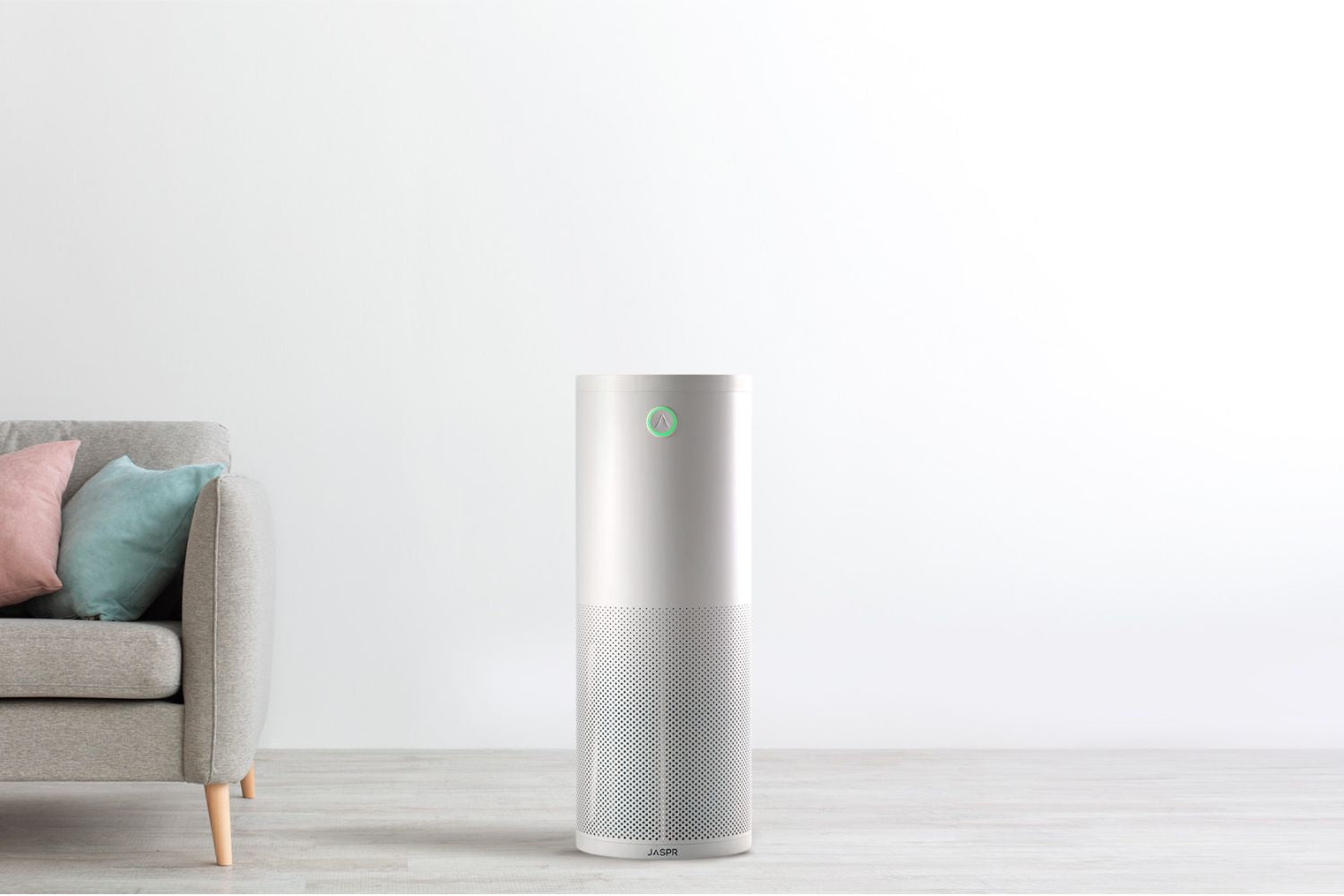
Can Air Purifiers Remove Microplastics?
Jaspr put its air scrubber to the test against microplastics—ultrafine particles increasingly found in the air we breathe. Discover why we ran this study, how we used latex beads to simulate airborne microplastics, and what our lab-tested results revealed about Jaspr’s ability to remove them from indoor air.
Read moreHEPA Explained
Everything you've wanted to know about HEPA (but were too afraid to ask) Posted by Mansour AbdulBaki What is a HEPA filter and how does it work? HEPA stands for High-Efficiency Particulate Air (filter). This is not a marketing claim but an actual certification label with standardized and very strictly tested performance requirements. What makes it a HEPA filter? The performance. During manufacturing, every single HEPA filter is tested 2-3 times each, depending on the certification standard, to ensure it meets the stringent performance required of the HEPA certification which is to capture a minimum of 99.97% of particles that are 0.3 microns in diameter. That particular size is chosen because ratings for these filters are based on the worst-case scenario – meaning that 99.97% is the minimum performance for HEPA filters against ALL particle sizes from the nanoscale to larger particles. How does HEPA work? Simply put, HEPA filtration is a physical process wherein a fan draws in air and drives it through a felt-like mesh of fibers, but don’t think of them like screen door filters. More accurately they are random webs of ceramic microfibers that inherently hold a surface charge to them. Each layer is so thin that the final few-millimeters-thick filter is actually composed of hundreds of layers of these webs - and that is key to their efficacy. Even though there are pathways for air around the fibers, the paths are so convoluted that particles of all different sizes find their way to getting captured by at least 1 of 4 main mechanisms. Each of those mechanisms differs according to the size of the particles in the air. These particle capture regimes and how they work are described below by largest to smallest particles. Sieving – Sieving occurs when fibers are so closely spaced and particles are so large that they cannot geometrically fit through the spaces between fibers and become lodged. This mechanism works predominantly on particles about 2 micron and larger. Particles remain stuck due to physical entrapment. Impaction – Particles of about 0.5 microns or larger are heavy enough that even as air moves through the filter media and changes direction to flow around the fibers, the inertia of these particles carries them forward despite the directional change of the air carrying them, causing them to impact the fibers of the filter and stick in place. These particles remain captured due to electrostatic adhesion. Interception – Medium sized particles without enough inertia to ignore the sudden twisting and turning of the air streams, continue to follow the air flow lines as they go around the filter fibers and are eventually trapped when they come into contact with the fiber along their way around them. The particles remain adhered due to electrostatic and van der Waal interactions. Diffusion – Particles smaller than about 0.25 microns are so light they do not actually flow with the air exactly. They may follow the general direction while also diffusing through the air and the filter pathways until they make contact with a fiber and become trapped through adhesion governed by van der Waal forces. The combined result of the four methods of filtration yields exceptionally high filtration efficiency of micro and nano-particles, with a NASA study confirming that HEPA filters provide “superior performance for removing virtually 100% of particulates”. The reason you will see the metric of trapping 99.97% of 0.3 micron particles is that scientists report the performance of the worst-case scenario. For HEPA filters, there is a phenomenological “weak point” at particles of sizes near 0.3 microns. Particles smaller and larger than this are more easily trapped by a HEPA filter with higher and higher capture efficiency as the particles get further - smaller or larger - from 0.3 microns. So, ratings for these filters are based on the worst-case scenario – meaning that 99.97% is the minimum performance for HEPA filters against ALL particle sizes from the nanoscale to larger particles. Put another way, you will never see more than 0.03% of particles of any size pass through a HEPA filter. For example, if you had 10,000 particles of 0.3 microns in diameter pass through a HEPA filter, a maximum of 3 out of the 10,000 particles would be allowed to pass through the filter. For particles larger and smaller than this size, even at the nanoscale, this would be even less i.e. 0, 1, or 2 particles per every 10,000. If you had 10,000 particles of 0.3 microns in diameter pass through a HEPA filter, a maximum of 3 out of the 10,000 particles would be allowed to pass through the filter. While we at Jaspr have been focused on helping healthcare providers, homeowners and businesses clear the air in their places of work to protect the health and safety of their staff and clients for years now, the spotlight on clean air really started to shine because of COVID-19. A March 2020 study published in the New England Journal of Medicine, showed the COVID-19 virus can stay viable and aerosolized for several hours. So, here is an explanation for the big question: Can HEPA filters capture COVID-19? The short answer is YES. Here’s why: COVID-19 primary particles or "virions" have been measured at about 0.1 microns (~100nm) and HEPA filters capture this range of particle sizes remarkably well ( >99.98% in a single pass). However, primary virus particles are not typically found on their own in the air. Virus particles ejected from an infected person are more likely to be found hitching a ride on larger particles in the form of aerosolized water droplets around 1 micron or larger with some recent studies showing viral material in healthcare air spaces in the >4 micron droplet range. While evaporation occurs for airborne virus-carrying droplets, the viral residues can remain aerosolized. Based on the discussion of HEPA filtration efficiency above, it is clear that, whether as a primary particle or attached to other droplets, HEPA filters can play an important role in significantly reducing the airborne population of virus and virus-carrying aerosols by 99.97% or more. As discussed, of the four capture mechanisms in HEPA filters, the one that dominates for virus-sized particles is diffusion. Larger bioaerosols carrying the virus will be captured through contributions from the diffusion mechanism as well as interception and impaction as the particles in question are larger in size. While HEPA filtration does not eliminate the threat the virus poses to human health, it is clear from the above discussion that HEPA-powered Air Purifiers can be used to reduce the risk of spreading COVID-19. Other protective measures are highly encouraged in conjunction with HEPA-based air purification, including washing hands with soap and warm water for a minimum of 20 seconds, avoiding touching the face, social distancing, and sanitization of possibly contaminated surfaces like tables and clothes using a cleaning spray or wipe. Do I really need to use a HEPA-certified air purifier in my practice or business? With hundreds of scientists around the globe citing data and urging the WHO to recognize that COVID-19 is an airborne biohazard, using a certified HEPA-powered filter to purify the air in at-risk spaces should be part of your standard protocol to protect the health of your patients, clients, and staff from this and other microbiological vectors to – just like your protocols for cleaning and sanitizing surfaces. Moreover, active air purification is becoming both an expectation from the public and a compliance requirement from governing and professional organizations. In the wake of COVID-19, many industry bodies are releasing guidelines around air quality in health practices, schools, and businesses. While many of these guidelines provide differing advice, one thing remains consistent: the importance of HEPA filtration. Ready to provide your clients and loved ones with a clean-air environment? Check out Jaspr.co
Read more