What We're Thinking About


Air Scrubbers for Large Rooms: Why Airflow Matters
Best Air Purifier for Large Rooms: How to Size It Correctly What is the best air purifier for a large room? For large rooms, the most useful specifications are: Room volume, not just floor area Airflow and whole-machine filtration performance Performance at realistic fan speeds Noise during continuous operation Room layout and air distribution Gas-removal media if VOCs and odors are a concern That leads to an important principle: Air cleaners clean a volume of air, not an area of flooring. Consider two rooms. Room A Room volume: Room B Room volume: But Room B contains: twice as much air. This is why a statement such as: needs another piece of information: At what air-change rate? Without that, two manufacturers can assign very different room-size claims to machines with similar clean-air delivery. It reflects both: how effectively particles are removed and how much air the machine processes. A simplified way to think about clean-air delivery is: airflow × removal efficiency With a recirculating portable air cleaner, the more precise term is often: The air cleaner is not literally replacing all indoor air with outdoor air. Instead, it is removing particles at a rate equivalent to supplying a certain volume of clean air. A useful approximation is: Where: Room volume = floor area × ceiling height For example: This calculation makes it much easier to compare air-cleaning capacity across different room sizes. Its formula is approximately: for a room with an 8-foot ceiling. For example: corresponds to an AHAM suggested room size of approximately: The machine did not become more powerful. The definition of “coverage” changed. EPA provides the following approximate guidance for particle removal in rooms with 8-foot ceilings: These estimates assume an 8-foot ceiling. Higher ceilings require additional capacity. This approach works for rooms much larger than those listed in standard sizing tables. Room volume: This demonstrates why the question: does not have one universal answer. The better question is: Assuming an 8-foot ceiling: Room volume: Approximate clean-air delivery requirements are: At these room sizes, using multiple portable air cleaners may be more practical than relying on one machine. EPA specifically notes that multiple air cleaners can be used when an area is larger than one available product can adequately serve. Why does ceiling height matter when sizing an air purifier? Ceiling height matters because it changes the total volume of air that needs to be cleaned. Ceiling Height Room Volume 8 ft 4,800 cu. ft. 10 ft 6,000 cu. ft. 12 ft 7,200 cu. ft. 16 ft 9,600 cu. ft. EPA's sizing guidance explicitly instructs consumers with ceilings higher than eight feet to consider a machine rated for a larger area. This is especially relevant for: Great rooms Vaulted ceilings Lofts Two-story living rooms Large open kitchens Modern open-plan homes Why does airflow matter more in large rooms? As room volume increases, more contaminated air must be moved through the filtration system to maintain the same cleaning rate. A particle cannot be captured until it reaches the air cleaner. This creates two separate requirements: Capture efficiency How effectively does the filtration system remove particles from the air that passes through it? Air delivery Both matter. An extremely efficient filter processing a small volume of air can provide less total room cleaning than a highly effective filter processing a substantially larger volume of air. For large rooms, high clean-air delivery becomes especially important because the total volume being treated is larger. For example, in an 8,000-cubic-foot room: Equivalent air changes: 1.9 per hour Equivalent air changes: 3.75 per hour Equivalent air changes: 5.6 per hour The room is identical. Only the clean-air-delivery rate changed. Does a large room need one big air purifier or multiple smaller units? assuming their performance is additive and both are operating simultaneously. Multiple units can also improve spatial distribution. This can be useful in rooms that are: Very long L-shaped Divided by furniture Connected to kitchens Open to hallways Spread across several activity zones EPA explicitly suggests multiple air cleaners when one unit is insufficient for the space. The polluted air still has to reach the machine. Can one air purifier clean an entire house? A portable air cleaner should not automatically be assumed to provide the same cleaning rate in every room of a house. Air movement between rooms is restricted by: Walls Closed doors Floors Hallways Staircases HVAC operation Pressure differences Room layout For homes with separate bedrooms and closed doors, placing air cleaners in individual occupied rooms can provide more predictable cleaning than relying exclusively on one central portable unit. EPA also advises considering the entire connected area for open floor plans and multiple units for spaces beyond one cleaner's capacity. Smoke Dust Pollen Why does fan speed matter? That creates an important purchasing question: What is the clean-air delivery at the fan speed I will actually use? A product may advertise: and separately advertise: very low noise without those measurements being taken at the same setting. For bedrooms, offices, and living spaces, performance at moderate and low fan speeds can be highly relevant. Why does noise matter for a large-room air purifier? Noise affects how much of the air cleaner's available capacity people actually use. Large spaces generally require more airflow. More airflow can require greater fan speed, which can increase sound. If the machine is uncomfortable at its highest setting and is continually operated at a much lower speed, the practical clean-air-delivery rate may be substantially below its advertised maximum. For this reason, useful specifications include: Sound level at those same speeds The practical objective is not simply maximum airflow. It is: high continuous clean-air delivery at a sound level appropriate for the room. Does placement affect large-room air cleaning? Yes. Restricting the intake or exhaust can reduce effective airflow and mixing. Air cleaners should generally have enough open space around their intake and outlet to move air freely. AHAM specifically advises giving portable air cleaners room to breathe because restricted airflow reduces performance. In a large room, placement should also consider where pollutants originate. Examples include: Cooking areas Exterior doors Fireplaces High-occupancy areas Pet areas Connected hallways However, portable filtration should not be placed so close to a pollution source that it creates a safety problem or interferes with ventilation requirements. Does activated carbon matter in a large-room air purifier? Activated carbon can matter when the objective includes gases, VOCs, or odors in addition to particles. Particle filtration and gas filtration solve different problems. EPA notes that activated carbon and other sorbent filters can remove some gases and that gas-removal performance generally benefits from having a substantial amount of sorbent material. This may be especially relevant in large connected living spaces containing: Kitchens New furniture Paint Cleaning products Flooring Smoke Other VOC sources How much area can one Jaspr clean? Its published specifications also include: PM2.5 and VOC sensors 1 lb of activated carbon Quiet on its lowest setting. Source: Jaspr Air Scrubber product specifications. Assuming an 8-foot ceiling: These are mathematical estimates: They do not account for factors such as continued pollutant entry, imperfect room mixing, doors, walls, furniture, or other real-world conditions. The calculation is: It means the equivalent cleaning rate decreases as room volume increases. That distinction is important. One Jaspr: Approximate result: Two Jasprs: Approximate result: Three Jasprs: Approximate result: Real buildings are more complicated, but the method is useful because it makes the assumptions transparent. What should you look for in an air purifier for a large room? A technically useful comparison should include at least the following: How much clean air does the complete device deliver? Particularly useful when fine particles and PM2.5 are a priority. 3. Room volume Use floor area × ceiling height. How aggressively is the machine cleaning that volume? 5. Performance at realistic fan speeds 6. Noise Will the machine actually be operated at the speed required? 7. Air distribution Can contaminated air throughout the room reasonably reach the machine? 8. Particle filtration The filtration system must effectively remove the particles reaching it. 9. Gas-removal media Activated carbon or other appropriate sorbent media may be useful when gases or odors are a concern. 10. Multiple-unit strategy Large or irregular spaces may benefit from distributed filtration. Bottom line: What is the best air purifier for a large room? The best air purifier for a large room is one that provides enough whole-machine clean-air delivery for the room's volume and the cleaning rate you want. Instead: 1. Calculate the room volume. Floor area × ceiling height. 2. Decide how aggressively you want to clean the space. Higher equivalent air changes mean faster particle removal, all else being equal. 3. Calculate the clean-air delivery required. 5. Consider realistic operation. Noise, placement, fan speed, room layout, and runtime all affect practical performance. The most useful question is not: It is: “How much clean air does it deliver into the volume of air I am actually trying to clean?” That is a much more meaningful way to size an air cleaner. Frequently Asked Questions What is a good air-change rate for an air purifier? Does ceiling height affect air purifier sizing? Yes. Higher ceilings increase room volume. EPA's sizing guidance assumes an 8-foot ceiling and recommends choosing more capacity for taller spaces. Are two air purifiers better than one? They can be. Multiple machines increase total clean-air delivery and can improve distribution across large or irregular spaces. EPA recommends considering multiple units when a space exceeds the capacity of one cleaner. Does an air purifier work less effectively on low speed? It still filters air, but clean-air delivery generally decreases with lower fan speed. EPA notes that higher fan speeds typically result in more air being filtered. Sources Jaspr is an air scrubber, inspired by the commercial air scrubbers used in restoration work and built for the home. A cold rolled steel body. High airflow. Activated carbon that helps reduce odors. Quiet on its lowest setting. Independently lab tested by LMS Technologies.
Read moreWildfire Smoke at Home: The Air Scrubber Approach
Best Air Purifier for Wildfire Smoke: What Actually Works By Michael Feldstein, Founder of Jaspr What is the best air purifier for wildfire smoke? The best air purifier for wildfire smoke is a high-airflow air cleaner that can deliver enough clean air for the size of your room and run continuously at a noise level you can actually live with. For wildfire smoke, I would prioritize: High clean-air delivery Effective fine-particle filtration Enough airflow for your room Activated carbon for some smoke gases and odors Low enough noise for continuous use Little or no ozone production Source: U.S. EPA, Indoor Air Filtration. (epa.gov) I spent years working in wildfire, flood, mold, and disaster restoration before starting Jaspr. One of the biggest lessons that work taught me was simple: A filter can only clean the air that actually reaches it. That's why I care so much about airflow. When the air is dirty, you need to move a serious amount of it through an effective filtration system. That idea is a big part of why Jaspr exists. Do air purifiers actually work for wildfire smoke? Yes. A properly sized, high-airflow air purifier or air scrubber can reduce airborne wildfire-smoke particles inside your home. Wildfire smoke contains fine particulate matter, including PM2.5. Even with your windows closed, outdoor smoke can enter through: Doors Building leakage Ventilation systems HVAC equipment Gaps around windows Normal movement in and out of the home Once those particles are inside, an air cleaner can reduce their concentration by repeatedly pulling polluted room air through its filtration system. The EPA recommends using a portable air cleaner that is properly sized for the room and operating it as often as possible. Source: U.S. EPA, Wildland Fires and Smoke. (epa.gov) The important phrase is: properly sized. You can put an excellent filter inside a tiny machine. That doesn't mean it can quickly clean a large room. Why is high airflow important for wildfire smoke? High airflow matters because an air cleaner cannot remove a smoke particle until that particle reaches the machine. This sounds obvious. But it's one of the most overlooked parts of air cleaning. Imagine a room full of wildfire-smoke particles. Now imagine a machine that has excellent filtration but moves very little room air. The filter may do an excellent job on the particles that reach it. The problem is: Not enough polluted air is reaching it quickly enough. Now imagine another machine that combines effective filtration with high clean-air delivery. More contaminated air is pulled into the machine. More air gets filtered. More clean air is returned to the room. And the process keeps repeating. That's air scrubbing. The goal isn't simply: Own a great filter. The goal is: Move the air you're breathing through that filter over and over again. That is one of the biggest lessons I took from restoration into Jaspr. For wildfire smoke, it's one of the most useful numbers to compare. Source: U.S. EPA, Indoor Air Filtration. (epa.gov) That gives you a simple starting point: Higher ceilings contain more air. That means they may require more cleaning capacity. The EPA recommends sizing up for ceilings above eight feet and considering multiple air cleaners when a space is too large for one machine. Source: U.S. EPA, Guide to Air Cleaners in the Home. (epa.gov) This is why I don't put much weight on claims like: My next question is: At what fan speed and air-change rate? It's a measure of airflow. Filtration affects how much useful cleaned air is ultimately being delivered. Source: U.S. EPA, Research on DIY Air Cleaners to Reduce Wildfire Smoke Indoors. (epa.gov) That's why I want to know both: How much air is this machine moving? And: How much clean air is it actually delivering? Is a high-airflow air scrubber better for wildfire smoke? A high-airflow air scrubber can be extremely effective for wildfire smoke when it combines strong clean-air delivery with effective particle filtration and is appropriately sized for the room. The word air scrubber by itself isn't magic. What matters is the philosophy behind it. In restoration, air scrubbing meant: Move contaminated air. Filter it. Return cleaner air. Keep doing it. That's the philosophy that ultimately led to Jaspr. I didn't want to take an industrial restoration machine and put it into somebody's bedroom. I wanted to take what I liked about those machines: serious air movement and redesign the experience around everyday life. Should I run my air scrubber 24/7 during wildfire smoke? During a wildfire-smoke event, continuous filtration generally provides more particle removal than intermittent filtration. The EPA recommends operating portable air cleaners as often as possible. For a cleaner-air room, EPA guidance recommends continuous operation at the highest fan setting you can comfortably tolerate. Source: U.S. EPA, Create a Clean Room to Protect Indoor Air Quality During a Wildfire. (epa.gov) That makes sense. Even with the house closed: Smoke can continue leaking inside. Exterior doors get opened. HVAC systems operate. People move through the house. Indoor activities create additional particles. Your air cleaner only works while air is moving through it. So runtime matters. And this leads to something I think people underestimate: Noise is an air-cleaning specification. Why does noise matter for wildfire smoke? An air scrubber that is too loud to keep running may be less effective in real life than a quieter machine that continuously delivers a meaningful amount of clean air. I learned this firsthand during the 2016 Fort McMurray wildfire response. We had placed an industrial air scrubber inside a homeowner's house. She unplugged it. It was simply too loud. It could have phenomenal airflow. It could have great filtration. But once it was unplugged: Its clean-air delivery was zero. That moment stuck with me. It became part of the thinking behind Jaspr. If you're designing an air scrubber for someone's home, maximum airflow can't be the only goal. People have to actually live beside it. Especially if it's going to run: In the bedroom While they're working While they're eating While they're sleeping All day during a wildfire Source: U.S. EPA, Indoor Air Filtration. (epa.gov) The best machine isn't necessarily the one with the biggest maximum airflow number. It's the machine that delivers enough clean air and stays on. Does activated carbon help with wildfire smoke? Yes. Activated carbon can help reduce some gases and odors associated with wildfire smoke, while particle filtration addresses airborne smoke particles. These are different jobs. Particle filtration captures particles. Activated carbon and other sorbent materials can help remove certain gases. The EPA recommends activated carbon or other gas-removal media when gases are a concern and notes that larger amounts of material generally perform better than very thin layers. Source: U.S. EPA, Guide to Air Cleaners in the Home. (epa.gov) So I wouldn't simply look for: "Includes carbon filter." I'd ask: How much activated carbon is actually inside the machine? A thin carbon sheet and a substantial amount of activated carbon are not the same thing. Can an air scrubber remove wildfire smoke smell? An air scrubber containing meaningful activated carbon may help reduce some wildfire-smoke odors and gases, but smell is not a reliable measure of overall air quality. Wildfire smoke is a mixture. There are particles. There are gases. There are odor-producing compounds. A room may still smell smoky even while particle levels are dropping. Likewise: A room smelling better does not prove that particle concentrations are low. That's why, when possible, I prefer measuring PM2.5 rather than relying entirely on what the air looks or smells like. How much airflow do I need for my room? Imagine a bedroom measuring: 15 feet × 15 feet × 8 feet That contains: 18,000 ÷ 1,800 = Now change the ceiling from eight feet to twelve feet. The floor area didn't change. This is why ceiling height matters. Source: U.S. EPA, Guide to Air Cleaners in the Home. (epa.gov) How quickly can an air scrubber clean wildfire smoke from a room? How quickly particle levels fall depends on clean-air delivery, room volume, continued smoke entering the building, and how well the air mixes throughout the space. More clean-air delivery generally means faster particle reduction, all else being equal. But a real house is not a sealed laboratory chamber. Smoke may continue entering. Doors open. The HVAC system moves air. Rooms connect to hallways. People walk around. Cooking creates additional particles. That's why I like thinking about air cleaning as an ongoing process rather than: "How many minutes until my air is clean?" During a wildfire event, the job is: Keep removing particles faster than they're being introduced. Where should I put an air purifier or air scrubber during wildfire smoke? Put it where people spend the most time and make sure the machine has enough space to move air freely. The EPA specifically recommends placing portable air cleaners in rooms where people spend the most time. Source: U.S. EPA, Wildfires and Indoor Air Quality. (epa.gov) I would usually prioritize: Bedrooms Children's rooms Main living areas Home offices Rooms occupied by people especially sensitive to smoke Don't bury the machine behind furniture. Don't block its intake. Don't obstruct its exhaust. And don't assume one machine downstairs is aggressively cleaning the air behind a closed bedroom door upstairs. An air scrubber can only clean air that can reach it. For a larger home, multiple appropriately sized machines can make much more sense than asking one portable air cleaner to clean everything. The EPA similarly recommends considering multiple air cleaners for larger spaces. Source: U.S. EPA, Guide to Air Cleaners in the Home. (epa.gov) What is a cleaner-air room? A cleaner-air room is one room in your home that you intentionally protect from wildfire smoke and filter more aggressively than the rest of the house. This can be extremely useful if you don't have enough clean-air delivery to aggressively filter the entire home. Choose a room where people can comfortably spend significant time. Usually: A bedroom A family room Another frequently occupied space Then: Keep windows and exterior doors closed as much as practical. Reduce outdoor smoke entering the room. Avoid generating unnecessary indoor particles. Run an appropriately sized air cleaner. Run it continuously at the highest practical setting. Spend more time in the cleaner room during heavy smoke. The EPA specifically recommends cleaner-air rooms as a way to reduce wildfire-smoke exposure indoors. Source: U.S. EPA, Create a Clean Room to Protect Indoor Air Quality During a Wildfire. (epa.gov) If I had limited filtration capacity: I'd clean the bedrooms first. You may spend eight uninterrupted hours there every night. How do I keep wildfire smoke out of my house? The best strategy combines reducing smoke entry with aggressively filtering the smoke that still gets inside. During smoky conditions, the EPA recommends: Staying indoors with windows and exterior doors closed. Using HVAC recirculation when appropriate. Closing fresh-air intakes when your system allows. Using a high-efficiency HVAC filter compatible with your system. Running portable air cleaners. For central HVAC systems, the EPA recommends MERV 13 or the highest-efficiency filter your system can safely accommodate. Source: U.S. EPA, Reduce Your Smoke Exposure. (epa.gov) The basic strategy is: Keep smoke out. Then: Aggressively filter what gets in. What should I avoid doing indoors during wildfire smoke? Avoid unnecessarily creating more particles inside your home while you're trying to remove wildfire particles. That may mean reducing: Burning candles Smoking Burning incense Using fireplaces Heavy frying or broiling Other activities that create significant indoor particles Otherwise your air scrubber is fighting pollution coming from both directions. Outside: wildfire smoke Inside: the particles you're creating yourself The goal is to lower the total particle load. Can I sleep with an air scrubber running? A residential air scrubber designed for continuous home use can generally be operated while you sleep according to the manufacturer's instructions. Bedrooms are one of the highest-value places for continuous filtration because you may spend eight consecutive hours there. For bedroom use, I would look at: Clean-air delivery Noise at the speed you'll actually use Room sizing Ability to turn display lights off Activated carbon Filter cost Ozone production Ease of continuous use The important question isn't just: How powerful is it? It's: How much airflow can I comfortably live beside all night? Do air cleaners produce ozone? Some air-cleaning technologies can produce ozone. When choosing equipment for wildfire smoke, look for machines that produce little or no ozone. Ozone itself is an air pollutant and lung irritant. The EPA recommends choosing portable air cleaners that do not intentionally produce ozone and points consumers toward CARB-certified devices when selecting wildfire-smoke filtration. Source: U.S. EPA, Indoor Air Filtration. (epa.gov) When I'm trying to clean dirty air, my preference is straightforward: Dirty air in. Filter it. Cleaner air out. No need to intentionally add another pollutant. Can one air scrubber clean my entire house? Do not assume one portable air scrubber can effectively clean every room in a large or compartmentalized house. Walls matter. Closed doors matter. Multiple floors matter. Hallways matter. Air has to physically reach the machine before the machine can filter it. In larger homes, I would prioritize: Bedrooms Main living spaces Offices Frequently occupied rooms Multiple strategically placed air cleaners may provide more useful clean-air delivery than one large machine sitting far away from where people actually breathe. The EPA similarly recommends considering multiple air cleaners for larger spaces. Source: U.S. EPA, Guide to Air Cleaners in the Home. (epa.gov) Can a DIY box-fan air cleaner help with wildfire smoke? Yes. Properly constructed DIY air cleaners can reduce wildfire-smoke particles and may be a useful lower-cost option when commercial air cleaners are unavailable or unaffordable. EPA researchers have tested several box-fan designs. Their testing found that clean-air delivery can be improved by: Using better filters Increasing filter surface area Using multiple filters Adding a cardboard shroud Reducing airflow restrictions Source: U.S. EPA, Research on DIY Air Cleaners to Reduce Wildfire Smoke Indoors. (epa.gov) What I like about this research is that it comes back to the same basic idea: Clean-air delivery matters. If cost is the barrier, I'd much rather see someone use effective DIY filtration than sit in a smoky room with no filtration. The goal isn't to sell everyone an expensive appliance. The goal is cleaner air. Should I buy an air scrubber before wildfire season? If wildfire smoke regularly affects your area, preparing before the smoke arrives is much easier than buying filtration during a major event. The EPA specifically recommends purchasing portable air cleaners and replacement filters before wildfire season. Source: U.S. EPA, Prepare for Wildfire Smoke. (epa.gov) Before wildfire season: Make sure your air cleaner works. Check your filter. Keep replacement filters available. Decide which room will become your cleaner-air room. Understand your HVAC recirculation settings. Know which HVAC filter your system can support. Have a way to check outdoor air quality. Consider monitoring indoor PM2.5. You don't want to figure this out when the sky is already orange. When should I open my windows after wildfire smoke? When outdoor air quality improves and is cleaner than the trapped indoor air, ventilation can help flush accumulated pollutants from the building. The EPA recommends airing out your home when outdoor conditions improve, even if that improvement is temporary. Source: U.S. EPA, Wildfires and Indoor Air Quality. (epa.gov) The strategy can change throughout the day. When the outdoor air is terrible: Seal + recirculate + scrub the air. When outdoor air becomes significantly cleaner: Ventilate + refresh + keep scrubbing. How does Jaspr handle wildfire smoke? Jaspr was designed as a high-airflow home air scrubber, combining strong clean-air delivery with particle filtration, activated carbon, PM2.5 sensing, and a design intended for continuous use inside the home. Independently lab tested by LMS Technologies, including smoke particles. The current filtration system contains 1 lb of activated carbon, while onboard PM2.5 and VOC sensors monitor changing indoor-air conditions. Source: Jaspr, Air Scrubber Product Specifications. (jaspr.co) During wildfire smoke, PM2.5 becomes particularly interesting. You can watch what happens when: Someone opens the front door. Outdoor smoke becomes worse. Indoor particle levels increase. Jaspr responds. Indoor PM2.5 begins dropping again. To me, that is much more meaningful than a little green light simply saying: "Your air is good." Why did wildfire restoration shape Jaspr? Before Jaspr, I spent years around equipment built for disasters. Those machines weren't subtle. They were industrial. They could be loud. They weren't designed around how your bedroom looked. But nobody in restoration pretended airflow didn't matter. When the building was contaminated: We moved air. Then I would look at the consumer air-purifier market and sometimes see the opposite. Beautiful. Quiet. Convenient. But occasionally moving surprisingly little air. I kept thinking: Why can't we have both? Why can't we take air movement as seriously as professional restoration equipment does and still make something people actually want in their bedroom? That's ultimately what became Jaspr. Not an industrial restoration scrubber dropped into your living room. And not another tiny purifier. A high-airflow home air scrubber. What is the best way to protect indoor air from wildfire smoke? If wildfire smoke was outside my own home, I'd think about it in this order: 1. Keep smoke outside Close windows and doors and reduce uncontrolled outdoor-air entry when smoke levels are high. 2. Recirculate indoor air Use HVAC recirculation when appropriate instead of unnecessarily pulling smoky outdoor air inside. 3. Improve HVAC filtration Use MERV 13 or the highest-efficiency filter your HVAC system can safely accommodate. 4. Scrub indoor air continuously Use appropriately sized portable air cleaners with strong clean-air delivery. 5. Prioritize bedrooms Put the most cleaning capacity where you and your family spend the longest uninterrupted amount of time. 6. Stop creating unnecessary particles inside Don't add candles, smoke, fireplace emissions, or unnecessary particle-heavy cooking while you're trying to clean wildfire smoke. 7. Monitor PM2.5 When possible, measure what's happening instead of judging the air entirely by smell or appearance. 8. Ventilate when outdoor air improves When clean outdoor air returns, bring it inside. 9. Follow emergency instructions An air scrubber is an exposure-reduction tool. It is not a reason to ignore an evacuation order. Bottom Line: What air cleaner should I buy for wildfire smoke? Don't choose based solely on: A filter acronym A microscopic particle-size marketing claim The word purifier The word scrubber How good the machine looks in an advertisement Instead ask: How much contaminated room air can this machine pull in, clean, and return to the space where I'm breathing? That's the question wildfire restoration taught me to ask. And it's one of the questions that ultimately led to Jaspr. Keep smoke out. Move the air. Filter it. Keep scrubbing. That's the job. Frequently Asked Questions About Air Purifiers and Wildfire Smoke What air purifier is best for wildfire smoke? Does high airflow help with wildfire smoke? Yes. Higher clean-air delivery allows an appropriately designed air cleaner to process more contaminated room air over time. Airflow alone is not enough, but airflow combined with effective filtration is fundamental to reducing airborne smoke particles. Source: U.S. EPA, Indoor Air Filtration. (epa.gov) Is an air scrubber good for wildfire smoke? Should I run an air scrubber 24/7 during wildfire smoke? During significant wildfire-smoke events, continuous filtration generally provides more particle removal than intermittent operation. EPA guidance recommends running portable air cleaners as often as possible. Source: U.S. EPA, Create a Clean Room to Protect Indoor Air Quality During a Wildfire. (epa.gov) Should I put an air scrubber in my bedroom during wildfire smoke? Bedrooms are often one of the highest-priority locations because you spend many consecutive hours there. Choose a machine with enough clean-air delivery for the room and a noise level that lets you keep it running. Does activated carbon help with wildfire smoke? Activated carbon can help adsorb certain gases and odor-producing compounds associated with wildfire smoke. Particle filtration handles the particulate component. Source: U.S. EPA, Guide to Air Cleaners in the Home. (epa.gov) Can an air scrubber remove PM2.5 from wildfire smoke? An appropriately designed air scrubber can reduce airborne PM2.5 by repeatedly pulling contaminated room air through its particle filtration system. The speed of reduction depends on clean-air delivery, room volume, continued smoke entry, and runtime. Can one air scrubber clean an entire house? Do not assume so. Closed doors, multiple floors, walls, hallways, and room layout all restrict air movement. Larger homes may benefit from multiple appropriately sized air cleaners. Source: U.S. EPA, Guide to Air Cleaners in the Home. (epa.gov) Can a box fan and furnace filter help with wildfire smoke? Yes. EPA research shows that properly designed DIY air cleaners can reduce wildfire-smoke particles. Increasing filter area, reducing airflow restrictions, and improving the design can increase clean-air delivery. Source: U.S. EPA, Research on DIY Air Cleaners to Reduce Wildfire Smoke Indoors. (epa.gov) Is it safe to stay home during a wildfire if I have an air scrubber? An air scrubber can help reduce indoor smoke exposure when it is otherwise safe to remain home. It does not replace evacuation instructions or emergency guidance from local authorities. Sources U.S. Environmental Protection Agency. Wildland Fires and Smoke. Guidance on portable air cleaners, continuous operation, room sizing, and wildfire-smoke exposure. (epa.gov) U.S. Environmental Protection Agency. Create a Clean Room to Protect Indoor Air Quality During a Wildfire.Guidance on creating cleaner-air rooms and continuous filtration. (epa.gov) U.S. Environmental Protection Agency. Reduce Your Smoke Exposure. Guidance on HVAC recirculation, MERV 13 filtration, keeping smoke outside, and using portable air cleaners. (epa.gov) U.S. Environmental Protection Agency. Research on DIY Air Cleaners to Reduce Wildfire Smoke Indoors. Laboratory testing on clean-air delivery from different DIY air-cleaner configurations. (epa.gov) U.S. Environmental Protection Agency. Prepare for Wildfire Smoke. Guidance on preparing air cleaners and replacement filters before wildfire events. (epa.gov) Jaspr is an air scrubber, inspired by the commercial air scrubbers used in restoration work and built for the home. A cold rolled steel body. High airflow. Activated carbon that helps reduce odors. Quiet on its lowest setting. Independently lab tested by LMS Technologies.
Read moreAir Scrubber vs. Air Purifier: What’s the Difference? | Jaspr
Air Scrubber vs. Air Purifier: What’s the Difference? By Michael Feldstein, Founder of Jaspr Short answer: For everyday home use, don’t choose based on whether the machine is called an “air purifier” or an “air scrubber.” Choose based on how effectively it cleans the air in your room, how much air it can process, how well it filters particles, and whether you’ll actually leave it running. Traditional air scrubbers are commonly used in restoration, construction, water-damage cleanup, and other demanding environments. Home air purifiers are generally designed for continuous everyday filtration. I spent years working in wildfire, flood, and mold restoration before starting Jaspr. That experience shaped how I think about indoor air. In restoration, we didn’t care very much about what a machine was called. We cared about whether it could move a serious amount of contaminated air through an effective filter. That philosophy eventually became Jaspr. We call Jaspr an air scrubber because of where it came from, not because the word “scrubber” automatically makes one machine better than another. Here’s what actually matters. What Is the Difference Between an Air Scrubber and an Air Purifier? An air purifier typically describes a machine designed for ongoing indoor air cleaning in bedrooms, living rooms, offices, and other occupied spaces. An air scrubber traditionally refers to portable filtration equipment used in professional restoration, construction, mold remediation, water-damage cleanup, and similar environments. Some professional restoration air scrubbers can also be connected to ducting or used to create negative-pressure containment. For example, the Dri-Eaz DefendAir 700 supports negative-pressure containment applications that the manufacturer says should be set up by appropriately trained professionals. But the terminology overlaps. A machine marketed as an air scrubber can also be designed for everyday home use. And a product marketed as an air purifier can still move and filter a significant amount of air. The product name alone does not tell you which machine performs better. Feature Home Air Purifier Restoration Air Scrubber Typical purpose Daily filtration in bedrooms and living spaces Filtration during cleanup and restoration Performance to evaluate Particle clean-air delivery and room sizing Filtration and airflow appropriate to the project Everyday considerations Noise, appearance, controls, replacement filters Handling, maintenance, ducting, containment Ducting and negative pressure Usually not supported Available on some machines Best basis for choosing Your room and documented performance Project requirements and documented capabilities One other distinction matters. Some HVAC contractors sell permanently installed products using the term “air scrubber.” Those can use completely different technologies from portable high-efficiency filtration machines. If someone recommends an HVAC “air scrubber,” ask specifically what technology it uses rather than assuming that the shared name means the products work the same way. Why We Call Jaspr an Air Scrubber For me, the word scrubber comes from restoration. Before Jaspr, I spent years around industrial filtration equipment used after fires, floods, water damage, and mold problems. Those machines taught me a basic principle: A great filter only works on the air that actually reaches it. You need filtration. But you also need airflow. The problem was that traditional restoration equipment was built for job sites, not bedrooms. During the 2016 Fort McMurray wildfire response, we placed an industrial air scrubber in a customer’s home. She unplugged it. It was simply too loud to live with. That moment stuck with me. The machine might have been powerful, but if someone wouldn’t keep it running, that performance wasn’t very useful inside a home. That experience helped shape Jaspr. I wanted to take what I valued about restoration air scrubbers and build it into something designed for everyday life. A machine that takes airflow seriously. A machine that takes filtration seriously. But also a machine that can live in your bedroom, run while you sleep, and become part of your home instead of feeling like restoration equipment sitting in the corner. I’ve talked about that experience on The Dr. Gundry Podcast. That’s what air scrubber means to us. It describes the philosophy Jaspr came from. Do I Need an Air Scrubber or an Air Purifier for My Home? Start with the problem you’re trying to solve. A bedroom with pollen and pet dander is different from a home experiencing wildfire smoke. And both are very different from a professional mold-remediation project requiring containment. Your Situation What to Look For Dust, pollen, or pet dander in a bedroom A particle-filtering air cleaner appropriately sized for the room A large living area Enough clean-air delivery for the connected space Wildfire smoke entering your home A room-sized air cleaner with strong smoke-particle cleaning performance Visible mold or recurring musty smells Moisture investigation and cleanup, with filtration as a supplement Professional remediation requiring containment Equipment selected by the qualified contractor for that project These recommendations are consistent with EPA home air-cleaner guidance and EPA wildfire guidance. Before buying anything, write down: The size of the room The ceiling height The pollutant you’re most concerned about Whether this is everyday use or an active cleanup project Whether noise matters because the machine will run while you sleep How frequently replacement filters need to be changed What those filters cost Those answers tell you far more than the words air scrubber or air purifier printed on the box. Air Scrubber vs. Air Purifier for Mold If you’re concerned about airborne mold particles, focus on filtration and clean-air delivery. If you have mold growing inside the building, neither an air scrubber nor an air purifier replaces fixing the moisture problem and removing the mold. This distinction matters enormously. I came from the restoration world. We never considered filtration a substitute for fixing the source. If water is leaking into a wall and mold is growing behind the drywall, an air cleaner can capture airborne particles while the building problem continues getting worse. You have two different problems: The mold growing in the building. And: What is circulating through the air. They require different solutions. For an actual mold problem, think in this order: Find the moisture source Stop the moisture Remove or remediate contaminated materials when necessary Use air filtration to help manage what’s airborne The EPA identifies moisture control as central to controlling mold growth. Read the EPA’s mold and moisture guide If your basement repeatedly smells musty, don’t simply put an air purifier in the room and assume the problem is solved. Ask why it smells musty. Where is the moisture coming from? Is the humidity too high? Was there previous water damage? Could material behind a wall or underneath flooring be wet? Filtration can be extremely useful. But cleaner-smelling air does not prove that the underlying mold problem has been resolved. For professional mold remediation requiring containment or negative pressure, use equipment selected for that application by a qualified professional. A household appliance should never be assumed to meet professional containment requirements simply because someone calls it an air scrubber. Air Scrubber vs. Air Purifier for Wildfire Smoke For wildfire smoke, again, I care less about the product category and more about: How effectively does this machine remove smoke particles from the air in this room? Wildfire smoke is one of the reasons airflow matters so much. When smoke is entering your home, you don’t just want a technically impressive filter. You want to repeatedly move polluted room air through that filter. During smoke events, the EPA recommends creating a cleaner-air room, limiting outdoor smoke entry, and running an appropriately sized portable air cleaner continuously. Read the EPA cleaner-air room guidance If you’re comparing machines for wildfire smoke, ask about: Room size Fan speed used to calculate the coverage claim Noise at the setting you’ll actually use Filter type Whether the machine intentionally produces ozone Also remember that smoke particles and smoke odor are not exactly the same problem. Particle filtration is designed to capture particles. Gas-removal media such as activated carbon can help address certain gases and odors. The EPA explains these differences in its Guide to Air Cleaners in the Home. And during an active emergency, air filtration is never a replacement for evacuation or public-safety instructions. Airflow vs. Filtration: Why Both Matter One of the biggest misconceptions in air cleaning is that the filter is the entire machine. It isn’t. Imagine you have an incredible filter. But the fan barely pulls any room air through it. The filter may perform beautifully on the small amount of air that passes through it, while polluted air throughout the rest of the room remains relatively untouched. This is why you have to think about: filtration efficiency × amount of air processed The goal is not simply to own a good filter. The goal is to move the air you’re breathing through that filter over and over again. That’s one of the biggest lessons I carried from restoration into Jaspr. This is where air-purifier marketing can get confusing. It is a measure of airflow. These numbers should not automatically be treated as interchangeable. When comparing air cleaners, ask for documented particle-cleaning performance. How Do I Know Whether an Air Cleaner Is Powerful Enough? Start with the size of the space. Same floor area. Fifty percent more air. That matters. The basic calculation is: An air purifier is an appliance. An air scrubber is a machine. Jaspr is an air scrubber, its own category, built around high airflow and a cold rolled steel body rather than a spec sheet. These numbers are simply illustrations, not Jaspr performance claims. Read AHAM’s room-sizing explanation This is why I like asking manufacturers a very simple question: At what fan speed and air-change rate does this machine cover the advertised room size? What Should I Look for in a Bedroom Air Purifier? Bedrooms introduce another variable: You have to be willing to sleep beside the machine. A giant maximum-airflow number isn't very useful if the machine is so loud at that speed that you turn it down every night. When comparing bedroom air cleaners, look at: Cleaning performance Noise Room size Placement Display lighting Replacement-filter availability Filter cost Ease of use Meanwhile, the quietest advertised noise figure may come from the machine’s lowest setting. Those two marketing claims might describe completely different operating conditions. Ideally, compare air-cleaning performance and noise at the same fan speed. See EPA air-cleaner selection guidance This is another reason the Fort McMurray experience mattered so much to me. The best-performing machine on paper isn't necessarily the best machine for a bedroom. The best machine is the one that cleans enough air and actually stays on. Should an Air Cleaner Run All Day? For everyday indoor air quality, continuous filtration generally makes sense. Indoor air isn't static. You cook. You open doors. Your HVAC system runs. Pets move around. Dust gets disturbed. Outdoor pollution makes its way inside. People walk from room to room. Airborne particle levels continually change. A portable air cleaner can only filter particles while air is moving through it. That means runtime matters. EPA guidance notes that longer operating times and higher fan speeds generally result in more air being filtered. Of course, that brings us back to the same practical issue: Can you comfortably live with the machine while it’s running? Airflow, sound, filtration, and usability are not separate issues. They all determine how much cleaning happens in the real world. Is an Air Scrubber Better Than an Air Purifier? Not automatically. An air scrubber is not better simply because the manufacturer calls it a scrubber. An air purifier is not worse simply because it is marketed as a purifier. Instead, ask: How much clean air does it deliver? Look for documented particle-cleaning performance and understand the assumptions behind room-coverage claims. What type of filtration does it use? Different filters address different pollutants. Is it appropriately sized for my space? How loud is it at the speed I’ll actually use? Maximum performance means little if you constantly turn the machine down or off. Can I live with it? A machine designed for a restoration site and one designed for your bedroom have completely different usability requirements. What does it cost to maintain? Replacement filters are part of owning an air cleaner. Is there evidence behind the claims? Look beyond marketing terminology. So Why Buy a Home Air Scrubber? Because there is a useful idea behind the restoration category. Take contaminated air seriously. Move it. Filter it. Do it repeatedly. That’s the part of professional air scrubbing that I wanted to bring into the home. Not the noise. Not the industrial box sitting in the middle of your bedroom. Not the restoration-job-site experience. The philosophy. That is what led us to Jaspr. We wanted something inspired by the machines I trusted in restoration, redesigned around the reality that people would be living, working, and sleeping beside it every day. Explore Jaspr’s current product details The Bottom Line The difference between an air scrubber and an air purifier is less important than most people think. Traditionally: Air purifiers are built for ongoing indoor air cleaning. Air scrubbers are associated with restoration, construction, and cleanup. But the terms overlap. For your home, don't buy the name. Buy the performance. Look at: Particle filtration Clean-air delivery Room size Air changes Noise Filter costs Maintenance Actual evidence behind the claims And if you’re dealing with something like mold, remember that air cleaning is only one piece of the solution. Fix the building problem first. Then clean the air. For me, that’s what the word scrubber has always meant: Get the unwanted stuff out of the air. That’s the idea Jaspr was built around. Frequently Asked Questions What is the main difference between an air scrubber and an air purifier? Air purifiers usually describe machines designed for everyday indoor air cleaning. Air scrubbers traditionally refer to portable filtration equipment used in restoration, construction, and cleanup. However, the terminology overlaps, so documented performance matters more than the product name. Is an air scrubber better than an air purifier? Not necessarily. Compare filtration, clean-air delivery, room sizing, noise, maintenance, and the machine’s intended use instead of assuming one category is automatically superior. Can I use an air scrubber in my bedroom? It depends on the specific machine. Professional restoration scrubbers may be loud and designed for temporary project use. A home air scrubber should be evaluated for noise, room suitability, placement, filtration, and ongoing maintenance. Is an air scrubber better for mold? An air scrubber can help capture airborne mold particles, but filtration does not replace fixing the moisture source or properly removing mold growing inside the building. Do air scrubbers remove wildfire smoke? An appropriately sized air cleaner with effective particle filtration can reduce airborne smoke particles. For wildfire smoke, compare smoke-particle cleaning performance, room size, filtration, and runtime rather than relying on the term “air scrubber.” Do I need both an air scrubber and an air purifier? Usually not simply because they have different names. Determine whether one machine provides the filtration and clean-air delivery your room requires. What is more important, high-efficiency filtration or airflow? Both matter. A highly efficient filter only captures particles from air that actually passes through it. Effective air cleaning requires both appropriate filtration and sufficient clean-air delivery. Will an air purifier remove all the dust in my house? No. Air filtration can reduce airborne particles, but it does not replace cleaning dust that has already settled on floors, furniture, and other surfaces. Read the EPA overview of air cleaners and filters Do I need a dehumidifier or an air purifier for a musty basement? They solve different problems. A dehumidifier helps reduce excess humidity. An air purifier filters airborne pollutants. Neither repairs a water leak or removes mold growing inside building materials. If a basement repeatedly smells musty, investigate the moisture source first. Read the EPA mold and moisture guidanceJaspr is an air scrubber, inspired by the commercial air scrubbers used in restoration work and built for the home. A cold rolled steel body. High airflow. Activated carbon that helps reduce odors. Quiet on its lowest setting. Independently lab tested by LMS Technologies.
Read more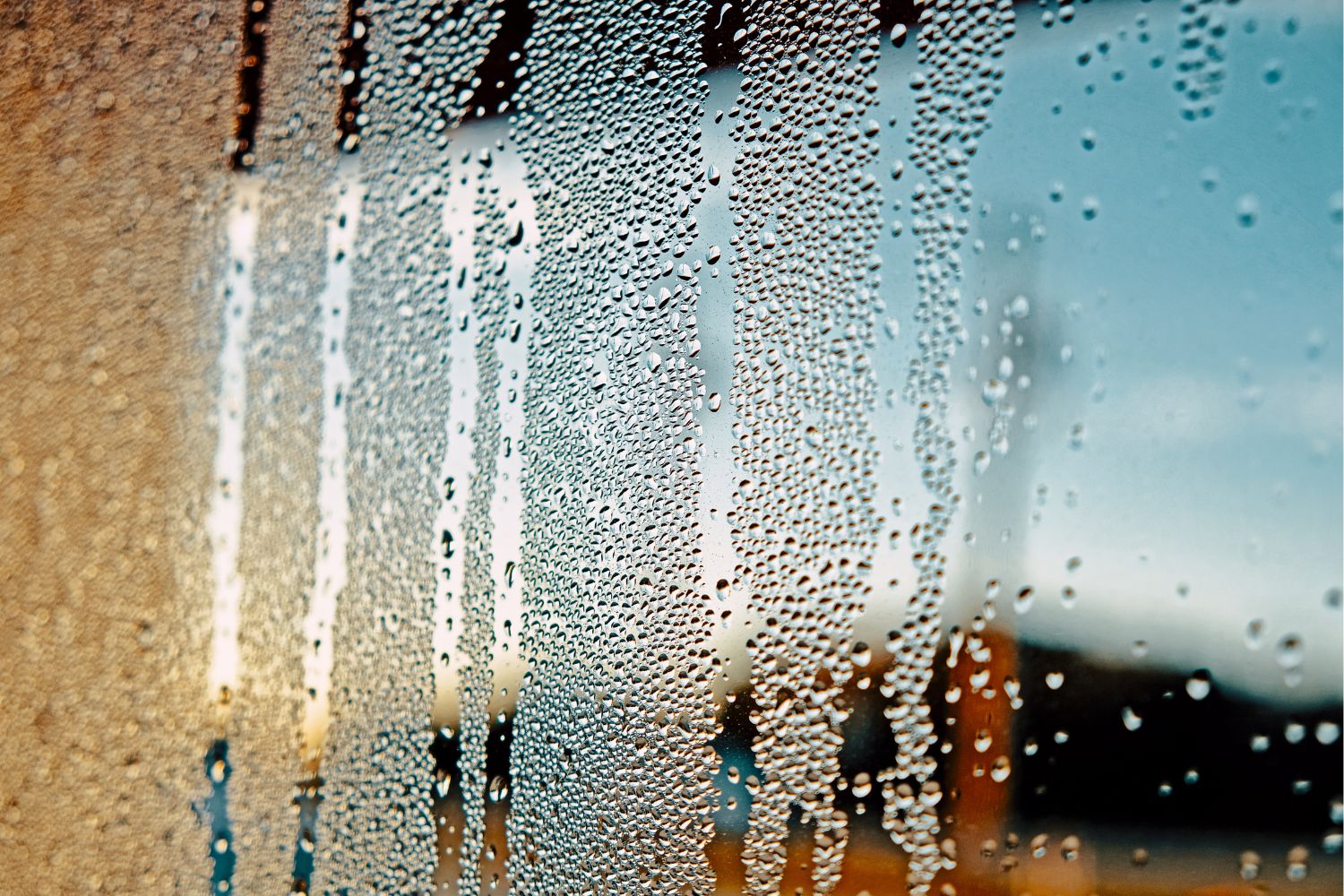
What is Considered High Humidity? Understanding Levels & Risks
What is Considered High Humidity? Everything You Need to Know Ever noticed the air in the room as heavy and sticky? That’s high humidity. When indoor humidity level rises above 60%, it can lead to more than just discomfort - it can be a breeding ground for mold, damage your home, and impact your health. You need to ensure good ventilation and use a dehumidifier and an air purifier in conjunction with a dehumidifier in case you suspect mold due to high humidity. In this blog, we will break down the discussion of high humidity levels into the following sections: What exactly is considered High Humidity? The dangers it brings (hint: Mold is just the beginning) How can you keep your space dry and safe? What Exactly is Considered High Humidity? High humidity is not just an inconvenience - it can impact the comfort of your home and worsen your health. But what exactly is considered high humidity? The term generally refers to high moisture levels in the air, and when the level is above 60%, you enter the “high humidity” zone. Sources of High Humidity Levels To fully understand high humidity, it is important to track household moisture sources. Here are some common sources that can contribute to elevated moisture levels indoors: Steamy showers release a lot of moisture into the air, especially in poorly ventilated bathrooms. Lack of ventilation causes excess moisture to be trapped indoors, particularly in small, enclosed spaces. A leaking roof might go unnoticed but introduces persistent moisture that raises the humidity level. Rainwater can seep through cracks if your home is not adequately sealed. The unventilated kitchen can become a source of high humidity due to steam from boiling water. What Percentage level is considered High Humidity? If you want to know the high humidity level in terms of percentage, you should note that: Anything between 45-55% is considered an optimal humidity level. When this level goes anything closer to or above 60%, it is considered high, and its risk becomes more pronounced. Signs that Your Home Has High Humidity Wondering if your home has high humidity or is at the edge of facing this risk? Look for these obvious signs. Condensation on Windows Stale and Musty Air Visible Mold Growth Warping Wood and Peeling Paint Why High Humidity Levels Need to be Checked Humdity is not just about comfort - though that is a big part of it. High Humidity levels can lead to: Mold Growth: Once humidity surpasses 60%, settled mold spores start producing as they find enough moisture content in the air. They will latch onto anything organic - such as drywall, wood, and carpets and begin to spread. Decreased Air Quality: When moisture lingers in the air, it reduces ventilation and airflow, making the environment feel stagnant and increasing the likelihood of harmful particles, allergens, and bacteria accumulating. Up Next: In the next section, we will explore the dangers associated with High Humidity Levels. The Dangers High Humidity Brings When humidity levels rise, it is not just discomfort you have to worry about - your health and home are also at risk. High moisture content in the air can trigger a range of problems that affect the overall quality of your life. Let’s discuss some dangers associated with excess humidity. Mold and Mildew Growth Mold thrives in the environment with excess moisture, and once it starts growing, it can spread quickly to virtually any organic surface in your home - be it the drywall, your carpets, or furniture. Mold spores in the air can trigger several respiratory issues and impact your health in several ways, such as causing skin problems. The only thing that will effectively help you in such cases would be using a reliable air purifier like Jaspr with activated carbon filters to filter these mold spores. Poor Indoor Air Quality High humidity does not just make the air feel heavy - it contributes to poor air quality. When moisture hangs in the air for too long, it can trap harmful particles such as dust, allergens, and even volatile organic compounds. With high moisture levels, airflow becomes stagnant, making it harder to circulate fresh air through your home. Respiratory Issues When humidity levels are high, it creates a perfect breeding ground for irritants like mold, mildew, and dust mites. Exposure to mold can trigger respiratory issues in people, and even without mold, dampness indoors causes various problems associated with the upper and lower respiratory systems. Skin Problems High humidity content in the indoor air can trap sweat on the surface of your skin, making it difficult for the body to release heat properly. This inability to sweat can lead to blocked pores and increased oil production, leading to breakouts. Increased Volatile Organic Compounds High humidity can accelerate the release of VOCs found in household items like paint, cleaning products, and furniture. VOCs are released at a faster rate, leading to poor indoor air quality and potential health risks. In severe cases, it can also cause damage to the nervous system. Fatigue and Discomfort If the humidity level is high, it can lead to you feeling constantly drained. This is because your body regulates its temperature by sweating, but sweat does not evaporate as efficiently in a humid environment - this leaves your body feeling sluggish and fatigued. High humidity also disrupts your sleep, leading to restless nights and poor sleep quality, as it is important to maintain optimal humidity levels to achieve better quality sleep. How Can You Keep Your Space Dry and Safe? Maintaining a dry and safe environment is crucial for comfort and health. You can implement various effective strategies to manage humidity levels in your home. Invest in a Dehumidifier One of the most effective tools for combating high humidity is a dehumidifier. Here is why you should consider adding one to your home. It draws moisture from the air, lowering humidity levels. Portable dehumidifiers allow you to target specific rooms where humidity is a concern. Use Air Purifiers While dehumidifiers are excellent for controlling moisture, using an air purifier in conjunction will significantly improve the air quality. It will combat any mold infestations that are there due to high moisture content. Air purifiers will filter mold spores, dust, or any other pollutants impacting air quality. Using air purifiers that have activated carbon filters, such as Jaspr will help eliminate odors, chemicals, and gases. Improve Ventilation Proper ventilation is key to preventing humidity buildup. Here is how you can enhance your airflow in your home. Turn on exhaust fans in the kitchen and bathrooms during cooking and showering. When weather allows, open windows to promote air circulation. Keep furniture and other items away from vents and airflow paths. Optimize Air Conditioning Your air conditioner also plays a vital role in reducing humidity. While it cools your home, it removes moisture from the air as part of its cooling process. Keep your home at a comfortable temperature, ideally at 68 degrees Fahrenheit, to help in moisture control. Ensure your AC is functioning properly by changing filters and having it serviced. Final Thoughts Navigating the complexities of high humidity is essential for maintaining a healthy and comfortable home. We explored what constitutes high humidity, pinpointing levels above 60% as a significant threat to mold growth and air quality issues. The dangers are far-reaching, impacting not only your living space but also your health. The good part is that tackling high humidity is not a struggle. By ensuring proper ventilation, utilizing dehumidifiers, and using air purifiers, you can keep your indoor atmosphere dry and safe. FAQs What humidity level is considered too high for my home? A humidity level above 60% is generally considered too high. At this level, the risk of mold growth and other moisture-related issues significantly increases. How can I tell if my home has high humidity? Signs of high humidity include condensation on windows, musty odors, and visible mold or mildew growth. You may also experience allergy and asthma symptoms. Using a hygrometer can also help you measure the humidity level. Can I use a dehumidifier and an air purifier at the same time? Yes! Using a dehumidifier and an air purifier together can enhance air quality in your home. The dehumidifier will reduce excess moisture, making it less hospitable for mold, while the air purifier can clean the air of pollutants and improve air quality indoors. Creating a Healthy Indoor Environment Managing humidity is more than a matter of comfort—it’s an investment in your health, your home, and your overall well-being. By being proactive about maintaining ideal humidity levels (between 45% and 55%), you can prevent mold, protect your home from damage, and enjoy cleaner, fresher air. When in doubt, combine prevention with purification: Control moisture with a dehumidifier Improve airflow through proper ventilation Capture harmful pollutants and mold spores with a high-quality air purifier At Jaspr, we believe that your indoor air should be as pure as possible. Whether you’re tackling high humidity or just looking to breathe cleaner, healthier air, tools like Jaspr can make a real difference. Take control of your air today—because a comfortable, dry, and safe home starts with the air you breathe. Learn more HERE.
Read more
Airborne Microplastics: The Air Scrubber Approach
Jaspr put its air scrubber to the test against microplastics—ultrafine particles increasingly found in the air we breathe. Discover why we ran this study, how we used latex beads to simulate airborne microplastics, and what our lab-tested results revealed about Jaspr’s ability to remove them from indoor air.
Read more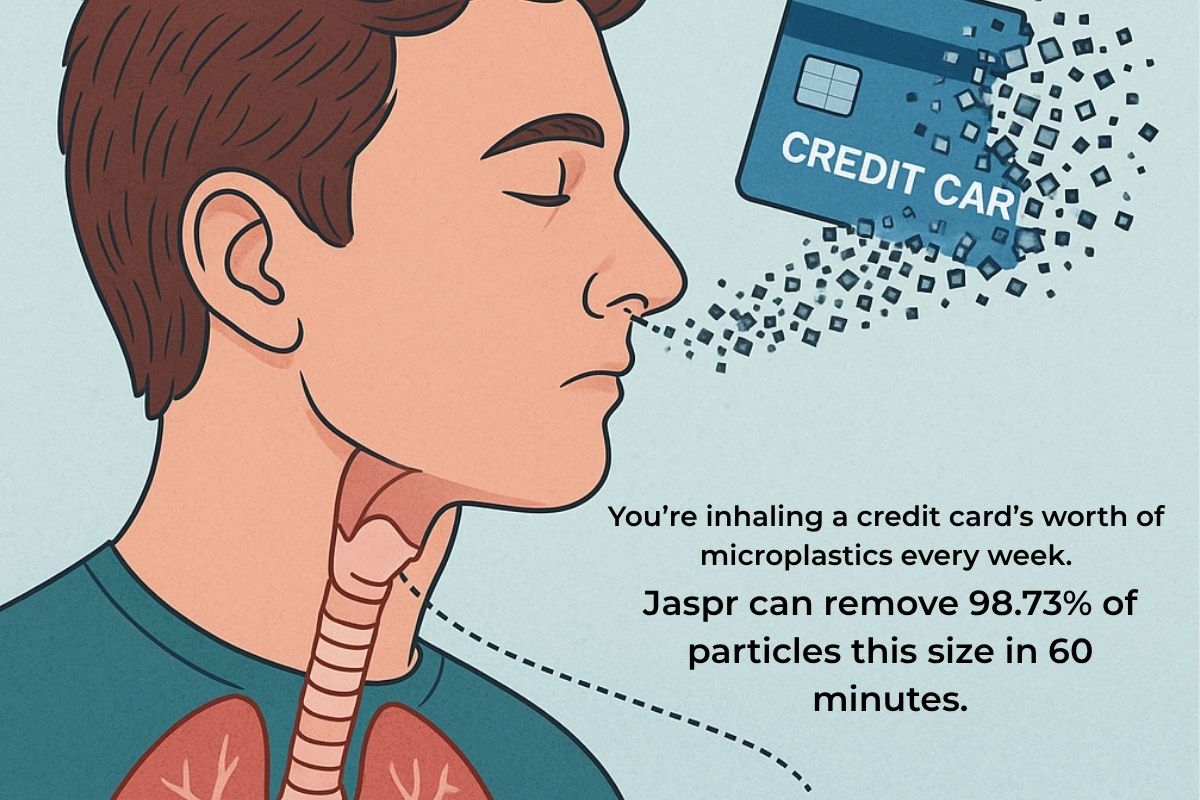
🧫 You’re Breathing Microplastics — Here’s What You Can Do About It
Microplastics aren’t just in oceans—they’re in the air you breathe. This article explains how they get into your home, the hidden health risks, and and how an independently lab-tested air scrubber fits in.
Read more
Cedar Fever in Austin: What It Is, Why It’s Brutal, and How to Protect Your Home
If you’ve lived in Austin for more than a minute, you’ve probably heard someone complain about “cedar fever.” Maybe you’ve even experienced it firsthand—waking up in the middle of winter with itchy eyes, a runny nose, and a sore throat that feels suspiciously like the start of a cold. But it’s not a cold. It’s cedar fever, and in Central Texas, it hits harder than almost anywhere else in the country. As a local Austin company dedicated to helping people breathe better indoors, we at Jaspr know just how miserable cedar fever can be. In this post, we’ll break down everything you need to know about this seasonal allergy nightmare—and how to take real steps toward relief, especially at home. What Is Cedar Fever? Cedar fever isn’t a virus, and despite the name, it doesn’t usually involve a fever. It’s actually a seasonal allergic reaction to pollen released by Ashe juniper trees , which are commonly (but inaccurately) referred to as “mountain cedars.” When Is Cedar Fever Season in Austin? Cedar season typically runs from mid-December through early March , with peak pollen levels in January . The worst days usually come right after a cold front, when dry, windy air causes the trees to burst open and release their pollen all at once. Pollen counts during this season are some of the highest in the entire country , which is why even people who don’t usually suffer from seasonal allergies often feel the effects while living in Austin. Symptoms of Cedar Fever Cedar fever symptoms often mimic the flu or a cold, leading many people to misdiagnose what’s really going on—especially during the pandemic years when anything with a sore throat sent us into high alert. Here’s what you might experience: Sneezing fits Runny or congested nose Itchy, watery, or burning eyes Post-nasal drip Coughing Sore throat (often from sinus drainage) Fatigue or low energy Mild headache or sinus pressure Occasional low-grade fever (rare, but possible) One of the most frustrating aspects of cedar fever is how it disrupts sleep and daily comfort. You might feel fine in the morning, but by the afternoon, your symptoms flare up. Or you might toss and turn at night due to congestion, only to wake up feeling even worse. Why Cedar Fever Is So Bad in Austin 1. The Trees Themselves Ashe juniper (aka mountain cedar) trees are extremely common in the Texas Hill Country and surrounding regions. These trees thrive in dry, rocky soil, and they cover thousands of acres across Central Texas. They're here to stay—and they shed pollen like it's their job. 2. The Weather Austin’s dry, windy winters make it easy for pollen to travel. Cold fronts, in particular, act like pollen-launchers—cracking open the trees and sending clouds of pollen flying through the air. If you’ve ever walked outside and seen what looks like yellow smoke coming from the trees, you’ve witnessed a pollen release in action. 3. The Terrain Austin’s geography, with its rolling hills and deep valleys, allows pollen to settle and linger in the air. It gets trapped in the atmosphere and around your home, making it hard to escape—even when you're indoors. How Cedar Pollen Gets Inside Your Home Even if you keep your windows closed and stay indoors during peak pollen days, cedar pollen can still make its way inside: On your clothes and hair: After spending time outside, pollen clings to your clothing and gets tracked inside. Through open doors and windows: Even brief ventilation can invite pollen in, especially if it’s windy. On pets: Dogs and cats that go outdoors often bring pollen back in on their fur. Through HVAC systems: Without high-efficiency filters, many HVAC systems circulate outdoor air containing allergens. Once inside, cedar pollen doesn’t just go away. It settles into carpets, furniture, bedding, and surfaces—contributing to ongoing symptoms even after outdoor counts drop. How to Protect Yourself From Cedar Fever Fighting back against cedar fever takes a combination of prevention, indoor air protection, and symptom management . ✅ Check the Pollen Forecast Sites like Pollen.com or local allergy trackers like KVUE or KXAN will tell you when pollen counts are highest. Plan your outdoor time accordingly and avoid strenuous activity on peak days. ✅ Keep Doors and Windows Closed It might be tempting to enjoy the cool winter air, but doing so can invite pollen in. Keep your home sealed as much as possible during cedar season. ✅ Change Clothes and Shower After spending time outside, remove your clothes and shower to remove pollen from your body and hair. This reduces the spread of allergens inside your home. ✅ Clean Your Home Often Dust, vacuum with a high-efficiency filter, and wash bedding frequently to minimize pollen buildup indoors. ✅ Use a High-Performance Air Purifier This is where Jaspr makes a difference. Why Austinites Choose Jaspr for Cedar Season Jaspr is a local Austin business, by people who know how rough cedar season gets. Our high-performance air purifier is designed to help capture airborne particles, including the microscopic cedar pollen that triggers allergy symptoms. Here’s why Jaspr is different: Real-time air quality monitoring that automatically adjusts when pollen levels spike Quiet on its lowest setting. High airflow, built to run all day. No app required—just plug in and breathe easy Commercial-grade filtration in a sleek, home-friendly design Final Thoughts Cedar fever might be part of the Austin experience—but suffering through it doesn’t have to be. With a few smart steps and the right protection, you can take back your air and feel like yourself again. Breathe easy this season—with help from your local Austin air experts. 👉 Shop the Jaspr Air Purifier Jaspr is an air scrubber, inspired by the commercial air scrubbers used in restoration work and built for the home. A cold rolled steel body. High airflow. Activated carbon that helps reduce odors. Quiet on its lowest setting. Independently lab tested by LMS Technologies.
Read more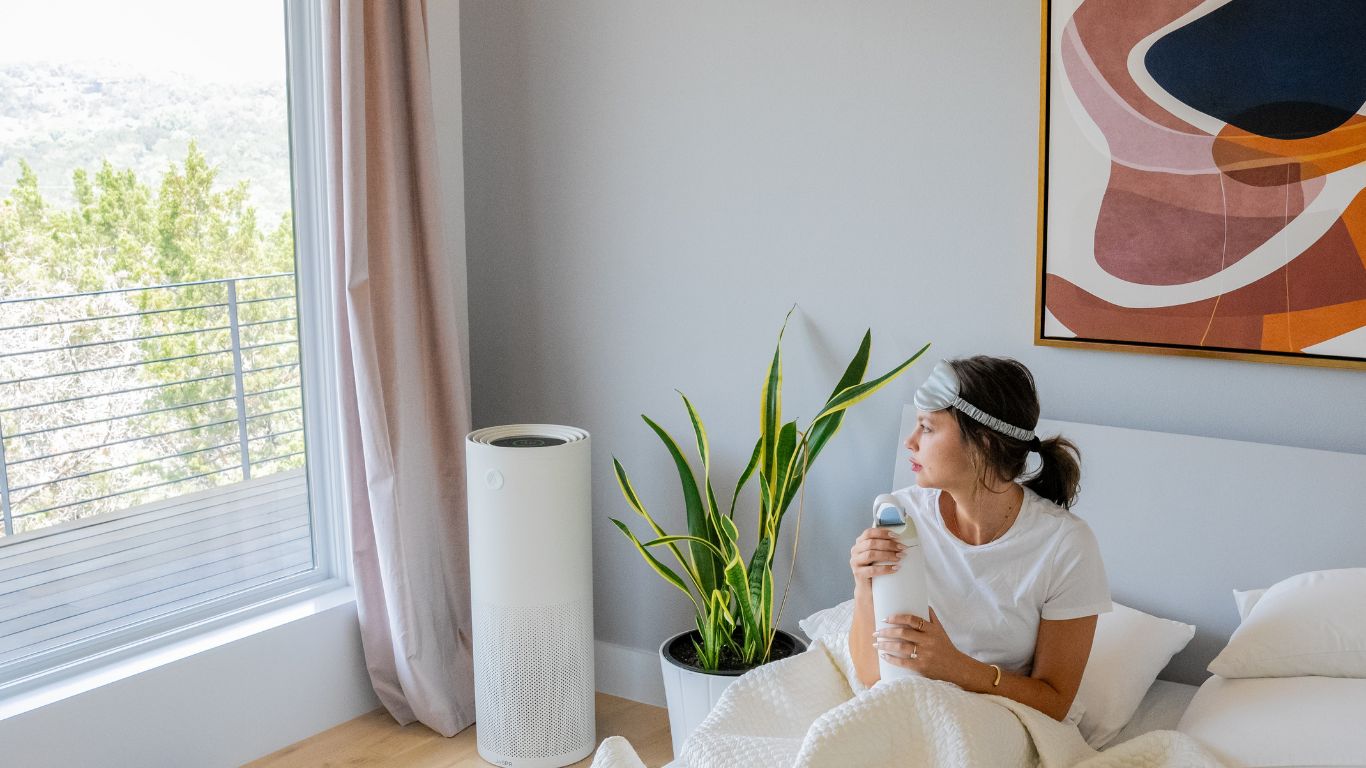
The Benefits of Having an Air Purifier in Your Bedroom
The Benefits of Having an Air Purifier in Your Bedroom The bedroom is where we spend a third of our lives, making it essential for rest and rejuvenation. However, airborne particles like dust, allergens, and pollutants can disrupt sleep and impact health. Adding an air purifier to your bedroom can create a cleaner, more comfortable space, enhancing sleep quality and overall wellness. Here are the top benefits of having an air purifier in your bedroom. 1. Improved Sleep Quality Clean, fresh air has been shown to improve sleep. Pollutants like dust mites, pet dander, pollen, and mold spores can trigger allergies, cause nasal congestion, and disrupt breathing during sleep. An air purifier filters out these allergens, reducing night-time congestion and allowing for deeper, uninterrupted sleep. Key Benefit: Many users report fewer disturbances and more restful sleep when they add an air purifier to their bedroom. 2. Reduced Allergies and Asthma Symptoms Allergens can trigger symptoms like sneezing, coughing, and itchy eyes, making it harder to fall and stay asleep. For those with asthma, airborne particles can lead to night-time wheezing and breathlessness. High-efficiency air purifiers with high-efficiency filters can trap fine airborne particles and irritants. Key Benefit: Cleaner air can lessen the frequency and severity of allergy and asthma symptoms, particularly during peak allergy seasons. 3. Less Dust and Easier Cleaning Dust accumulates quickly, especially in the bedroom. It settles on surfaces, irritates the respiratory system, and can lead to a constant need for cleaning. An air purifier can reduce airborne dust particles, leading to a noticeable decrease in dust buildup. Key Benefit: Enjoy a cleaner bedroom environment with less time spent dusting and a lower chance of respiratory irritation from dust particles. 4. Reduced Exposure to VOCs and Indoor Pollutants Bedrooms often contain sources of volatile organic compounds (VOCs), such as mattresses, furniture, and carpeting, which can emit low levels of chemicals over time. Air purifiers with activated carbon filters are effective at capturing VOCs and other indoor pollutants, helping to maintain a safer, toxin-free bedroom environment. Key Benefit: Cleaner air, free from chemical pollutants, supports long-term health and reduces the risk of respiratory discomfort from VOCs. 5. Elimination of Odors and Fresh, Inviting Air Odors from pets, cooking, and household products can linger in bedrooms, affecting comfort. An air purifier helps remove odors, leaving the air feeling fresher. This is especially useful for pet owners or those sensitive to smells, as it creates a more pleasant and relaxing bedroom environment. Key Benefit: By neutralizing odors, air purifiers create a fresh, welcoming space that enhances relaxation and comfort. 6. Increased Comfort for Pets and Their Owners If you share your bedroom with pets, an air purifier can be a game-changer. Pets shed dander, hair, and other particles that can irritate allergies and asthma. Air purifiers help capture pet-related allergens, keeping the air cleaner and ensuring a more comfortable sleeping environment for both you and your furry friends. Key Benefit: Enjoy pet companionship without the constant irritation of pet dander and allergens in the air. 7. Better Protection During Flu and Allergy Seasons During flu season, air purifiers can capture viruses and bacteria in the air, reducing the chance of airborne illness spread. For allergy sufferers, an air purifier can help remove pollen and other seasonal allergens, creating a sanctuary for relief from outdoor irritants. Key Benefit: Air purifiers provide year-round support, but they’re especially beneficial during high-risk seasons like flu and allergy times. Key Takeaways Placing an air purifier in your bedroom offers multiple benefits, including: • Better sleep quality and reduced allergies • Less dust and cleaner surfaces • Fewer odors and fresher air • Pet-friendly air quality • Added protection during flu and allergy seasons At Jaspr, we specialize in high-quality air purifiers designed to enhance indoor air in every room. Explore our selection to find the perfect model for your bedroom and start enjoying cleaner, healthier air tonight.
Read more
Do Air Purifiers Dry the Air and Help with Humidity?
Air purifiers are designed to improve indoor air quality by capturing airborne particles like dust, allergens, mold spores, and even odors. But many wonder if air purifiers also impact humidity levels—specifically, if they dry out the air or can help reduce excess humidity.
Read more