What We're Thinking About

The Effects a Humidifier has on Indoor Air Quality
Dry throats and snoring normally have people reaching for a humidifier - it seems like an easy solution. When we're starting to feel the effects of dry air, we know we need to add moisture to it. There's more to it than that. There are certainly benefits of using a humidifier, but there are risks attached. In our quest to ensure we're all breathing cleaner air, we must first consider how humidifiers affect our indoor air quality (IAQ). Is using a humidifier the right way to go? Humidifier Basics Most people know a humidifier adds moisture to the air but there's more to consider. To further understand humidifiers and their effect on our everyday lives, we need to know how they work, what types of humidifiers there are, and what we're hoping to get out of them. Let's figure out if you should actually be installing a humidifier. Types of Humidifiers and How they Work Ultrasonic humidifiers create cool or warm mist using ultrasonic sound vibrations. Cool mist humidifiers use high-speed rotating disks to produce a cool mist. Evaporative humidifiers use fans to push air through a moistened absorbent material to create humidity. Steam vaporizer humidifiers release steam by heating water with an electrical heating element. Ideal Outcome The ideal outcome of purchasing a humidifier might vary from person to person. A humidifier will add moisture to the air but this can serve many things: Ideally, you want a humidifier that adds moisture to the air, helps with any problems you have due to dry air and doesn't cause further problems. There lies the rub; humidifiers will solve one problem while creating another. 4 Factors that Determine the Success of Humidifiers 1. The Type of Humidifier Ultrasonic and impeller humidifiers are more known to expel microorganisms and minerals. Evaporative and steam vaporizer humidifiers are less likely to expel pollutants into the air but they can allow for the growth of microorganisms if filled with standing water. 2. The Type of Water The type of water used in your humidifier has an impact on how it can affect your indoor air quality. Tap water is filled with minerals so when it is aerosolized, minerals that can be digested as water become minerals that are not safe to be inhaled. To avoid dispersing these particulates into the air, use distilled bottled water. Distilled water will have a significantly lower concentration of minerals. Do not use bottles labelled 'spring', 'artesian', or 'mineral' which are rich with minerals. An experiment ran by Awair tested different types of water in a humidifier showing the difference water can make in the amount of fine dust released into the air. 3. The Humidity Level An optimal humidity level is between 30% and 50%. When humidity levels are lower than 30%, you're most likely to experience the above symptoms. When the humidity levels are higher than 50%, dust mites and mold are more likely to flourish and send additional particulates into the air causing further health problems. This is outlined well by Air Quality Canada: 4. The Cleaning Frequency It is very important to keep your humidifier as clean as possible. Where water (especially standing water) is present, germs can grow - at an even higher rate as the humidity levels climb. Anything that grows in your humidifier will blow into the air you breathe if not cleaned. To keep germs, microorganisms, and scale from affecting your air quality, clean your humidifier daily and follow the manufacturer's guidelines. The Benefits and Risks of a Humidifier Benefits A properly functioning humidifier can alleviate allergy symptoms by soothing dry coughs, eyes, throats, and noses. It can also help with bloody noses, congestion, as well as headaches, and migraines. Risks Fine Dust: Fine dust is made up of particulates with a diameter of fewer than 2.5 micrometers. You can fit 40 fine dust particles across the width of a single strand of hair. Their minute size allows them to sneak into your lungs unnoticed and thus, your bloodstream. Exposure to fine dust particles can have serious effects on your health: Too much moisture: If the humidifier isn't monitored and too much moisture is being added to the air, mold, fungus, and microorganisms will thrive. Condensate from excess moisture can deteriorate furniture, walls, and the humidifier's surrounding area. Particulates: Without diligent cleaning, your humidifier can become infested with mold, germs, and scale which will then be dispersed into the air and inhaled into your lungs. Humidifier Considerations Do you need a humidifier? Do the risks outweigh the benefits? They can as long as you make the right choices. Use a steam humidifier and clean it regularly Use distilled water Maintain a humidity level of 30% to 50% Use a HEPA air purifier to mitigate any particles that do enter the air
Read more
Indoor Air isn't as Clean as it Smells
Written by Brittany German Have you ever left your home for a day or two and come back to this weird odour, but nothing has actually changed in your home? What if I told you that odour was there before you left, but you just didn't notice? Humans are the most adaptable species on the planet, of course, our noses are not exempt from this! We actually develop a form of nose blind to the odours within a space that we are consistently in. We just don't realize it. So what does this mean for the quality of our indoor air if we can't notice odours? It means the air is not necessarily as clean as it smells... More often than not, the air inside can be far more contaminated than the air outside, or in extreme external conditions, almost as bad. Wildfire Smoke and Indoor Air Quality (IAQ) It is currently wildfire season (extreme external conditions) in British Columbia, BC. Interior BC is experiencing dangerously high levels of air contamination: The higher the number, the more severe the health effects can be to those exposed to this air for longer than 24 hours. Sensitive groups are more at risk. Residents of Kamloops and other areas in BC affected by wildfire smoke are at risk as the unhealthy air begins to affect their indoor air quality. A healthy number for indoor air in British Columbia typically ranges around 5 but during wildfire season, with outdoor air reaching levels of 200 to 250, your indoor air can reach unhealthy levels in the low 100's without you even knowing. It's easily undetected, when you've spent the day outside smelling fire all day, coming into your house the air will comparatively smell much cleaner. However, without a way to monitor the IAQ, your nose may very well be fooling you. Just because you don't smell the contaminants in the air, doesn't mean they aren't there. Especially when you've adapted to worse air. How Does Smoke Affect Indoor Air Quality? Staying indoors during wildfire season is safer, but not bulletproof. The contaminated outdoor air can enter your home through the windows, through your ventilation system, and through any cracks, joints, or openings. Your home is not completely sealed off from what's around it. Smoke Inhalation Risks Burning wood and other organic materials produce gases and fine particles. These particles can then enter your eyes or be inhaled. Once these particles are in your system, you'll likely begin experiencing some of the following symptoms: For those in the sensitive groups that have chronic heart and lung diseases, the inhaled particles can be deadly. What Can You Do To Make Wildfire Season Safer? To lower the amount of smoke you may be inhaling during wildfire season, you can do the following: Purchase an air purifier with a TRUE-HEPA filter that reads/monitors and displays IAQ Use face masks Control air circulation using your HVAC system Avoid activities that will produce even more particulates Drink water Stock up on medication The BCCDC says to "prepare for the worst" as this year's wildfires have the potential of being equally or more devastating than the previous 2016 and 2020 wildfires. Make sure you prepare for wildfire season accordingly; when you can't smell the smoke anymore, don't be fooled. Going nose blind happens when we are consistently exposed to the same smells. Don't just rely on your nose to judge your air quality. Using an air purifier that monitors and shows you accurate readings of the IAQ in addition to the above recommendations is a great way to ensure that your air inside is safe to breathe.
Read more
Patient Reassurance: Dental Office Aerosols
Dental office aerosols are not a new problem but we are constantly developing new ways to purify the air. Learn how to address the aerosols in your office and reassure your patients at the same time.
Read more
Why You Should Treat Every Patient As Covid Positive (CoV+)
Written by Brittany German Main Takeaways Dental workers have the most dangerous job Treating every patient like they're CoV+ makes everyone safer You will attract and retain patients and staff The most dangerous job in North America is the dental worker and that is before the added risks of Covid-19. There are many other jobs that sound much more dangerous. However, nuclear equipment technician and chemical plant operator rank lower than dentists and dental assistants on the danger scale - not to mention the hundreds of other jobs that seem very dangerous, but still don't outrank the risk for dental workers. During a pandemic, dental workers which includes dentists, dental hygienists, and dental lab technicians, are at an even higher risk based on their contact with others, physical proximity, and exposure to diseases. Dentists are constantly performing aerosol generating procedures (AGPs) that fill the air with hazardous bio-aerosols. These aerosols can linger in the air for hours, making dental workers the highest risk for respiratory illnesses. It's all entirely preventable. If you treat every patient like they're Covid positive (CoV+), you lower the risk of transmission, create the safest environment, reassure patients and staff, and as a result, treat more patients. How to Treat Every Patient as CoV+ In Dentistry Uncensored, Dr. Fotinos says, "Every patient that sits in the chair could potentially be infectious, and so we have to do the same thing from patient to patient." The Layering Strategy Implement a process to thoroughly screen your patients, make sure you're cleaning surfaces and filtering the air. And don't forget your PPE for the whole team: gloves, gowns, eyewear, and masks. You can find dentist specific CDC guidelines which "are intended to apply to all patients, not just those with suspected or confirmed SARS-CoV-2 infection." Creating the Safest Environment By following health and safety guidelines and layering safety protocols to treat all patients like they're CoV+, you will effectively be creating the safest environment where it is unlikely that any harmful contaminants will remain in the air. With proper air filtration using a True HEPA filter you'll see the following capture efficiency rates: Dr. Fotinos notes that he doesn't see us moving away from these protocols come the end of a pandemic, so you'll also be creating safer procedures for the future. With these protocols in place and a powerful air purifier, there is a much lower chance of airborne diseases and therefore lower rates of Covid - and all other airborne diseases - in dental offices. Patient and Staff Reassurance Creating the safest environment isn't just about safety, it's also about the feeling of security that comes with it. Both patients and staff will benefit from an environment where they know they are safe and in which they feel comfortable. Patients By explaining to your patients how you're working to keep them safe, they will not feel intimidated by all of the new protocols from the pandemic, rather they will also feel taken care of. A dental offices efforts to ensure safety will make patients feel like you're investing in their health and safety which will improve the dentist-patient relationship. This patient reassurance is crucial if you want to see them returning to your office and raving about their experience to others. Staff It is getting more competitive to hire great hygienists and dental support staff. Now more than ever, hygienists are evaluating potential employers based on the safety of the workplace. There is no denying that a great team is the backbone of any high-performing dental office. Attract and Impress Your Patients Jaspr customers use the Jaspr as a visual prompt to discuss their health and safety protocols during new patient visits. For new or returning patients who haven't yet had the opportunity to see the Jaspr air purifier at work, this is your chance to reach out with an email or a phone call. Explain to your patients how you have their safety in mind and that you'd be happy to give them a tour and an explanation of your layering strategies. Patients at dental offices with an air purifier are extremely appreciative of the investment their dentist has made to keep them and their families safe. Dr. Barakat from Villanova Dental Studio says when he opens his next dental office, even if the pandemic is behind us, "it's not going to stop me from buying these. I'll still buy them because now this is a new normal." By following suit, your office becomes a trailblazer for other dental offices and even other industries. You gain your competitive edge. What Could Go Wrong if You don't Treat Every Patient like They're CoV+? What if you don't do any of this? You raise the chances of an infectious patient coming in and transmitting an airborne disease to you, your staff and the other patients visiting your dental office. What is the cost of your business being featured in the local news as the source of an infectious outbreak? What's the Overall Outcome? Treat every patient like they're CoV+. In addition to keeping your staff and patients safe, you're helping mitigate the Covid-19 virus and other airborne diseases, you're setting an example for other offices and businesses to do the same, and as the leading authority in health and safety right now, you remain on top.
Read more
Patient Reassurance: Why it Matters
What is patient reassurance and how can you leverage it to thrive during the pandemic? It's one thing to be safe, it's another thing to feel safe. Learn how your dental office can thrive with patient reassurance.
Read more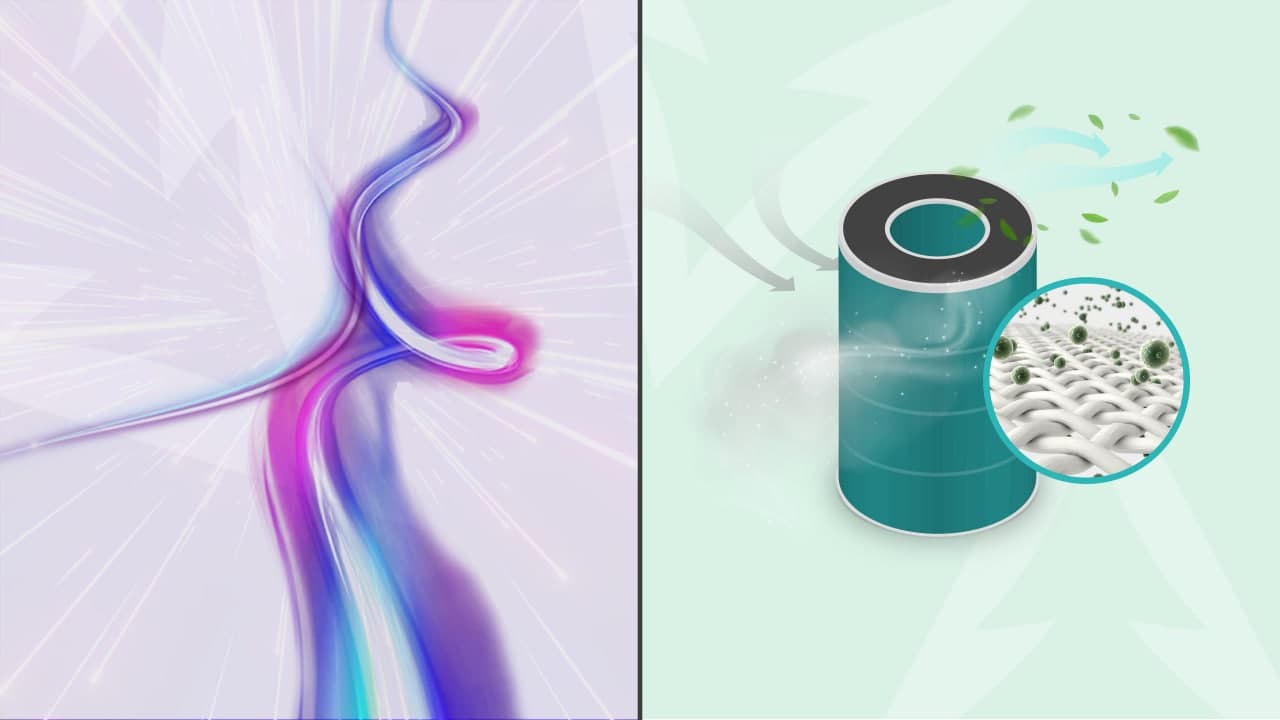
Choosing Between UV Air Purifiers and HEPA Filter Purification
UV, UV-C, or HEPA? With all these air purification acronyms it's hard to choose the best one for your office. Use our guide to make the right choice.
Read more
The Three Pillars of Health
What are the three pillars of health? We drink clean water, we eat good food, but we breathe contaminated air. Let's treat air the same way we treat our other intakes.
Read more
Monitoring Air Quality: Volatile Organic Compounds
Monitoring indoor air quality is important to gauge the level of volatile organic compounds you're breathing. Learn what these are and how you can purify your air.
Read more
Sick Building Syndrome: What it is and How to Prevent it
Sick Building Syndrome is often mistaken for allergies, or the seasonal flu. Actually, it's because of poor indoor air quality in many sealed office buildings. Learn about Sick Building Syndrome and how can you prevent it.
Read more