

Gases: the part of the air you can’t sweep up
One little can of paint, one small room, and the part of the air you can’t see at all.

From the notebook
You open a little can of paint to fix a scuff on a desk drawer. Ten seconds later, the whole room knows about it.
No specks. No sunbeam sparkle. Nothing to sweep up or wipe off. Just paint, somehow everywhere, in the air.
Paint is one of the products EPA says can release VOCs, a family of gases that can run up to ten times higher indoors than out.[1]
Lab notebook: particles: you can see the big ones / gases: you can’t see any of them / EPA: it can linger after you stop ✓
The oh-wow part: The painting took ten minutes. The air can stay elevated long after you’re done.[1]
The easy version
- VOCs are emitted as gases from certain solids or liquids, and many run up to ten times higher indoors than out.[1]
- Gases don’t settle. EPA notes elevated VOC levels “can persist in the air long after the activity is completed.”[1]
- Start with the source and fresh air. Most filters are designed for particles or gases, not both.[2]
Why you can't sweep a gas
Particles are like glitter: annoying, but eventually it lands and you can vacuum it up. Gases are more like a rumor. Once it’s out, it’s in every room.
A particle has a size, so sooner or later it can land. VOCs aren’t particles; they’re gases.[1] EPA says elevated concentrations can persist in the air long after the activity is completed, and gases can even leak from closed containers.[1] You can’t dust for that.

Meet the gases
Five things in this guide are gas, or part gas. Here they are, each with its own page.
All gas
no specks at all
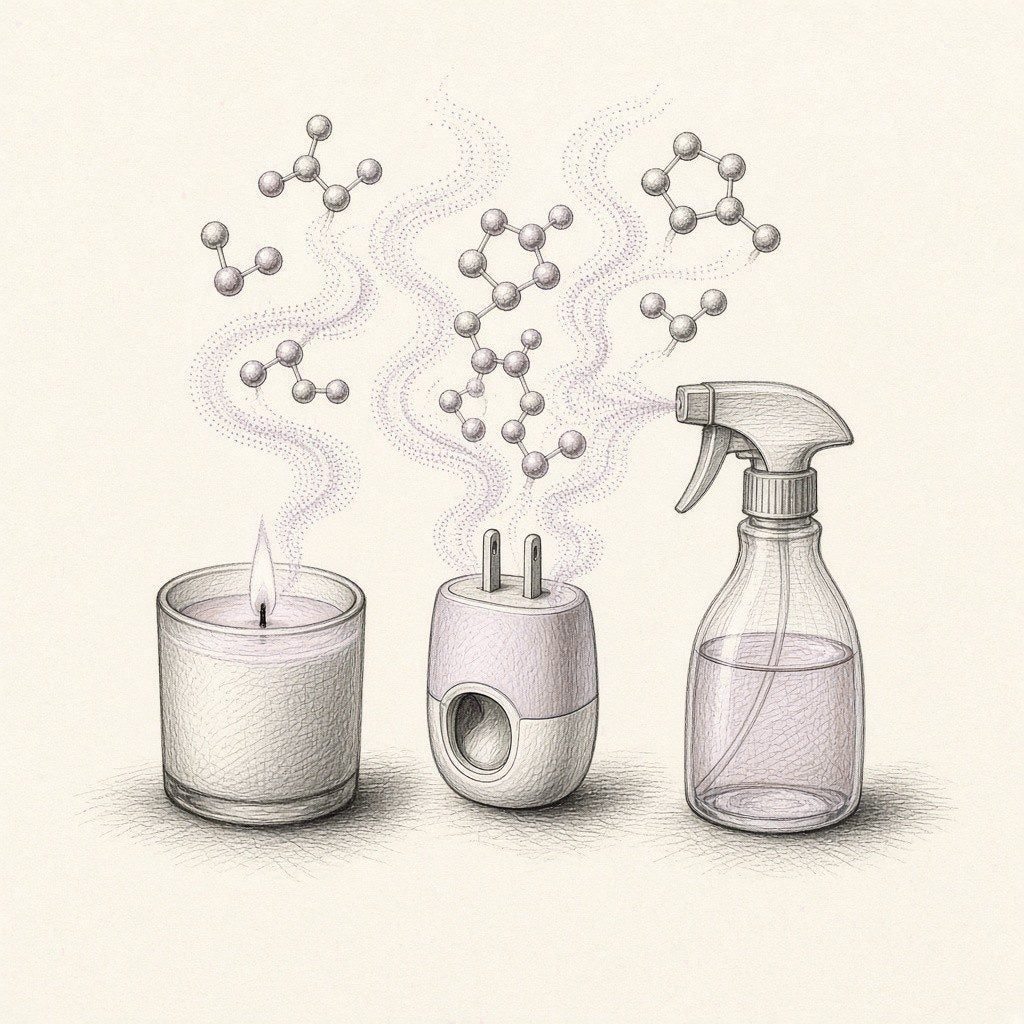 Chemical fumes (VOCs)From paints, cleansers, aerosol sprays, air fresheners, moth repellents, hobby supplies and stored fuels.[1]
 Carbon dioxide (CO2)From you, every exhale. Indoor levels run higher than outdoor, more so as outdoor air per person shrinks.[3]
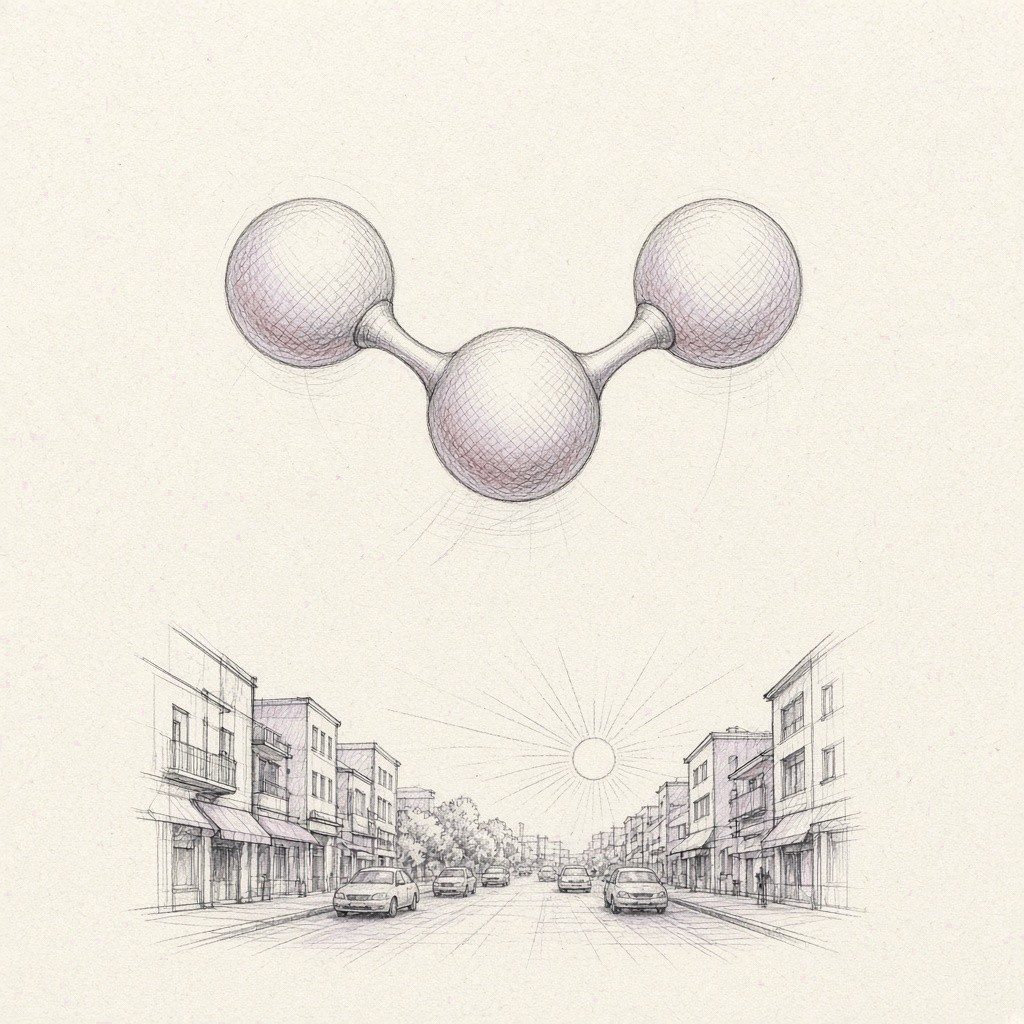 Ozone
A bit of both
gas plus fine particles
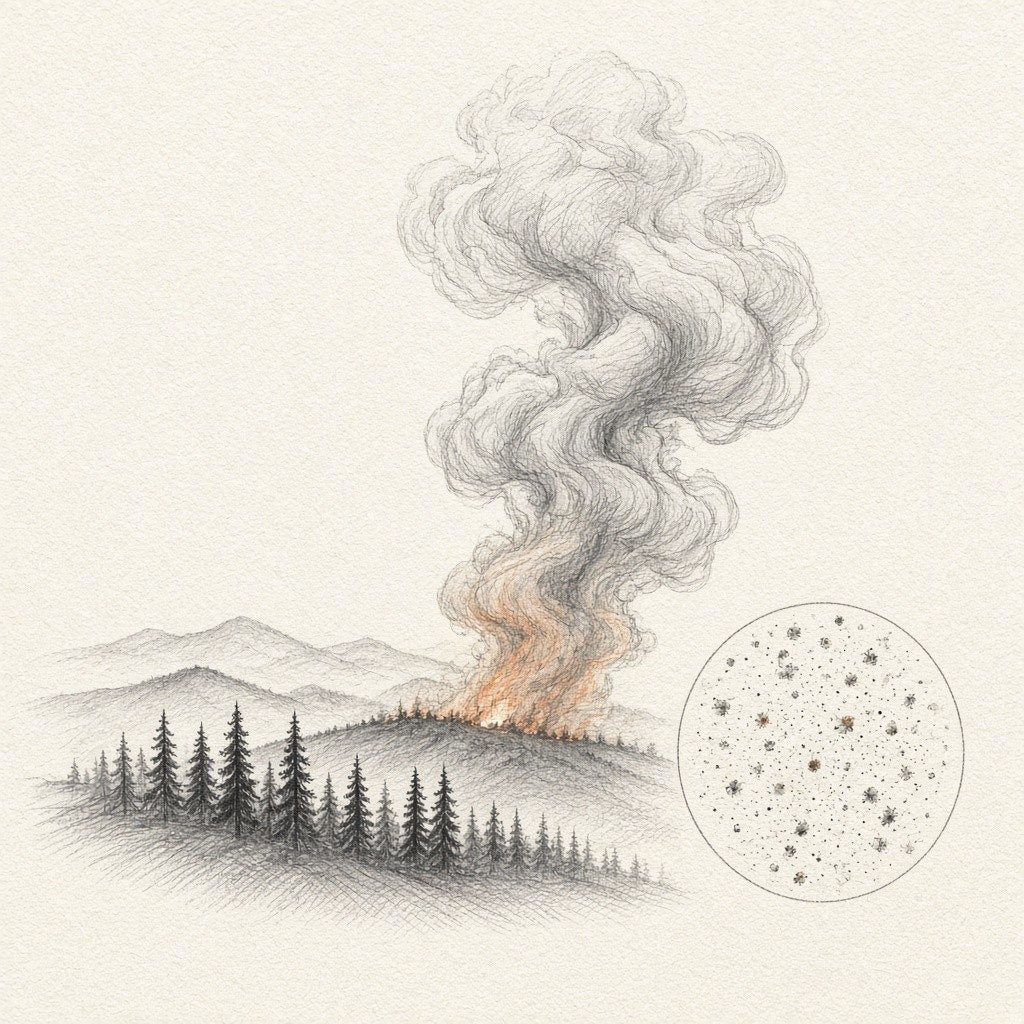 Wildfire smokeA mix of gases and fine particles that starts outdoors; some can get inside.[6]
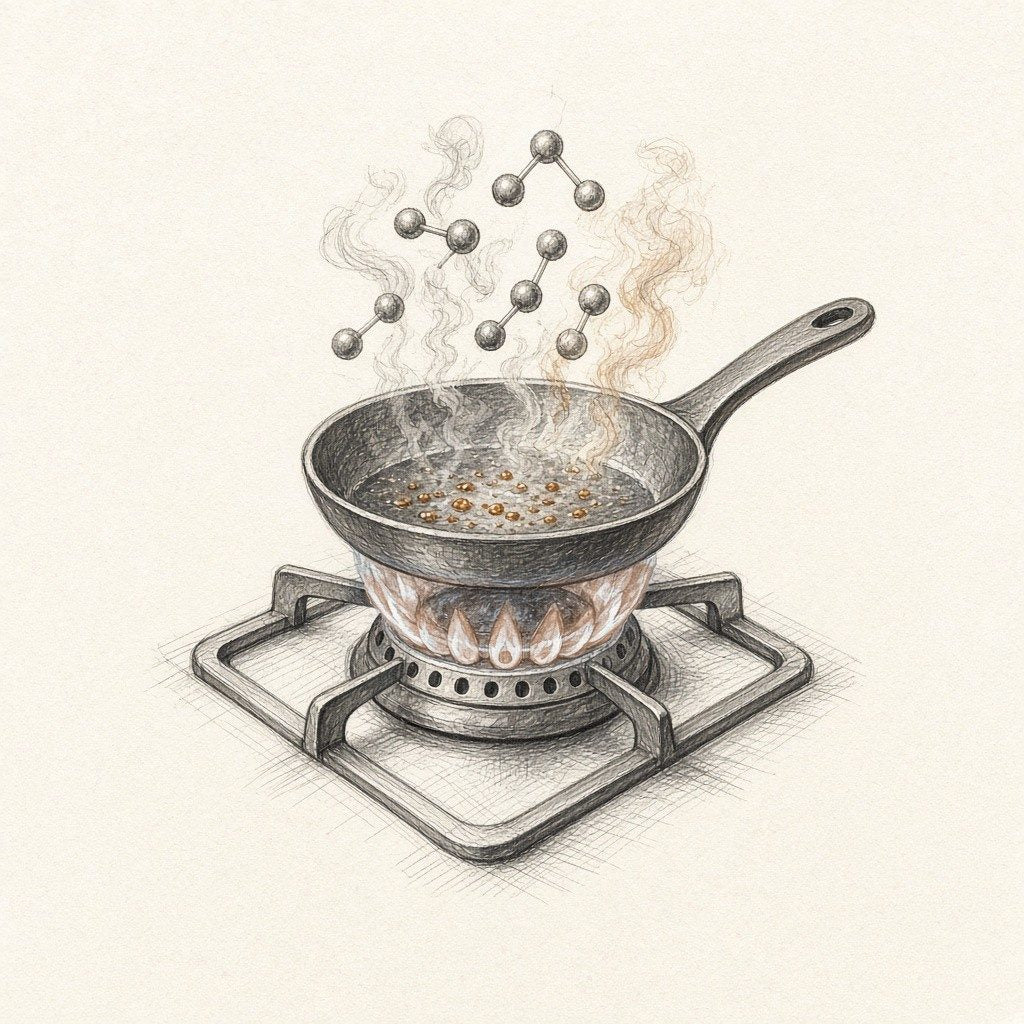 Cooking fumesGas stoves are a main indoor source of NO2. With one, indoor levels often exceed outdoor.[7]
So what do I actually do?
Lid back on, window open. Turns out that’s EPA’s advice, more or less, and in the right order.
Source first. EPA’s VOC advice: identify and, if possible, remove the source; throw away partially full containers of old or unneeded chemicals safely; and never mix household care products unless the label says to.[1]
Then air it out. Increase ventilation when using products that emit VOCs.[1] For gas stoves, EPA says to install and use an exhaust fan vented to the outdoors.[7] For CO2, the gap between indoor and outdoor levels grows as outdoor air per person shrinks, so more outdoor air is the lever.[3]
Filters come third, and they need the right kind. EPA: most filters are designed to filter either particles or gases, so many air cleaners contain two filters, one for particles and another for gases.[2] To filter gases, EPA points to activated carbon or another filter designed to remove gases, and says they work better with more material: the thicker the better. There’s no widely used rating system for gas filters.[2]
One thing not to try: ozone generators. EPA says they are not effective at removing carbon monoxide or formaldehyde,[4] and that intentional ozone generators should not be used in occupied spaces.[5]

Sources
- [1]US EPA, Volatile Organic Compounds’ Impact on Indoor Air QualityAgency guide
- [2]US EPA, Guide to Air Cleaners in the HomeAgency guide
- [3]Satish et al.2012), Environmental Health Perspectives 120:1671-1677 (Controlled exp.
- [4]US EPA, Ozone Generators that are Sold as Air CleanersAgency guide
- [5]US EPA, Residential Air Cleaners: A Technical Summary, 3rd ed.2018) (Agency guide
- [6]US EPA, Wildfires and Indoor Air QualityAgency guide
- [7]US EPA, Nitrogen Dioxide’s Impact on Indoor Air QualityAgency guide
Citing an agency or study doesn’t mean it endorses any product. Field names are ours. The science isn’t.
