

Contents
Part I. Start here The trunk of the tree.
- Air 101: why you should careentry 1
- Indoor Air 101entry 2
- How to read this guide: the evidence laddercoming soon
- Glossary of air wordscoming soon
Part II. The things The things floating in your air, one page each.
Part III. Rooms Explore by room.
- Rooms, same air, different neighborhoodsentry 1
- Bedroom air: a small room with the door shut (replaces "The bedroom: the air at night"; sleep-and-air merged in)entry 2
- Window open or closed? The dorm-room CO2 experimententry 3
- Particles at night, memory in the morningentry 4
- The whole house: HVAC fan On or Auto?entry 5
- The kitchen: stoves and cooking fumescoming soon
- The bathroom: humidity and moldcoming soon
- The garage, kids' rooms and the open windowcoming soon
Part IV. People & places Who breathes it, and where.
- Clean Air at Workentry 1
- Your office air is taking a quiz tooentry 2
- Ventilation and sick daysentry 3
- Clean Air for Employeesentry 4
- Classroom air filters and test scoresentry 5
- Chess players and indoor airentry 6
- Pets and the air you sharecoming soon
- Kids and indoor aircoming soon
Part V. Research The research, annotated.
- Research, the receipts, annotated (with the study library below it)entry 1
- Air & Health: what the research looks atentry 2
- Annotated paper of the monthcoming soon
Part VI. Tools & how-to Things you can do this afternoon.
- How to test your home airentry 1
- The particle size chartcoming soon
- Sizing air cleaning for a roomcoming soon
- A humidity cheat sheetcoming soon
Part VII. From the workshop Made by Jaspr, and labeled that way.
- Confessions of an air snobentry 1
- Why one size, and why steelentry 2
We help you see the invisible.
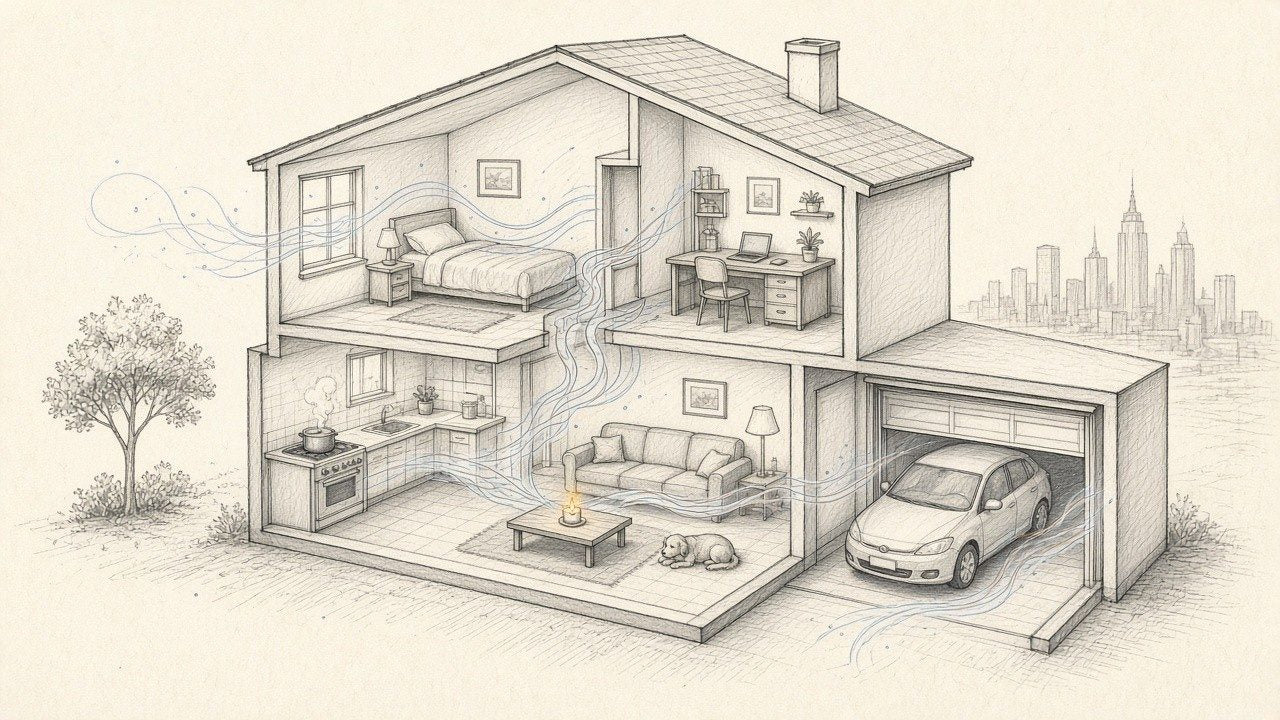
Here's a funny thing about air: you use it all day, every day, and almost never look at it. Mostly because you can't.
An average human hair is about 70 micrometers wide, roughly 30 times wider than the largest fine particle floating past your nose. And Americans, on average, spend about 90 percent of their time indoors, where the concentrations of some pollutants are often 2 to 5 times higher than typical outdoor concentrations. So the air you breathe most is probably the air you've thought about least.
That's what this guide is for. We'll show you what's in there, what the research found, and what's worth knowing, in plain words, with every fact linked to its source. No scare stories. Just a clearer look at something you do all day.
Why air gets overlooked
You can't see most of it
Dust, dirt, soot and smoke can be big or dark enough to spot. Others are so small that only an electron microscope can find them.
Source: US EPA, Particulate Matter (PM) BasicsEven the countryside has an indoors
EPA studies found levels of about a dozen common organic pollutants 2 to 5 times higher inside homes than outside, whether the homes were rural or highly industrial.
Source: US EPA, The Inside StoryMany gases run higher indoors
Concentrations of many VOCs, the gases that drift off paints, cleaners and air fresheners, are consistently higher indoors than outdoors, up to ten times higher, says EPA.
Source: US EPA, VOCs' Impact on Indoor Air QualityContents
The whole guide on one page, like the contents of a book. Everything links to a real page, or says “coming soon” until it does.
Part I. Start here The trunk of the tree.
- Air 101: why you should careentry 1
- Indoor Air 101entry 2
- How to read this guide: the evidence laddercoming soon
- Glossary of air wordscoming soon
Part II. The things The things floating in your air, one page each.
Part III. Rooms Explore by room.
- Rooms, same air, different neighborhoodsentry 1
- Bedroom air: a small room with the door shut (replaces "The bedroom: the air at night"; sleep-and-air merged in)entry 2
- Window open or closed? The dorm-room CO2 experimententry 3
- Particles at night, memory in the morningentry 4
- The whole house: HVAC fan On or Auto?entry 5
- The kitchen: stoves and cooking fumescoming soon
- The bathroom: humidity and moldcoming soon
- The garage, kids' rooms and the open windowcoming soon
Part IV. People & places Who breathes it, and where.
- Clean Air at Workentry 1
- Your office air is taking a quiz tooentry 2
- Ventilation and sick daysentry 3
- Clean Air for Employeesentry 4
- Classroom air filters and test scoresentry 5
- Chess players and indoor airentry 6
- Pets and the air you sharecoming soon
- Kids and indoor aircoming soon
Part V. Research The research, annotated.
- Research, the receipts, annotated (with the study library below it)entry 1
- Air & Health: what the research looks atentry 2
- Annotated paper of the monthcoming soon
Part VI. Tools & how-to Things you can do this afternoon.
- How to test your home airentry 1
- The particle size chartcoming soon
- Sizing air cleaning for a roomcoming soon
- A humidity cheat sheetcoming soon
Part VII. From the workshop Made by Jaspr, and labeled that way.
- Confessions of an air snobentry 1
- Why one size, and why steelentry 2
The pillars
The things in your air
Twelve things, one card each. Hang time tells you whether it floats, settles, or is a gas.
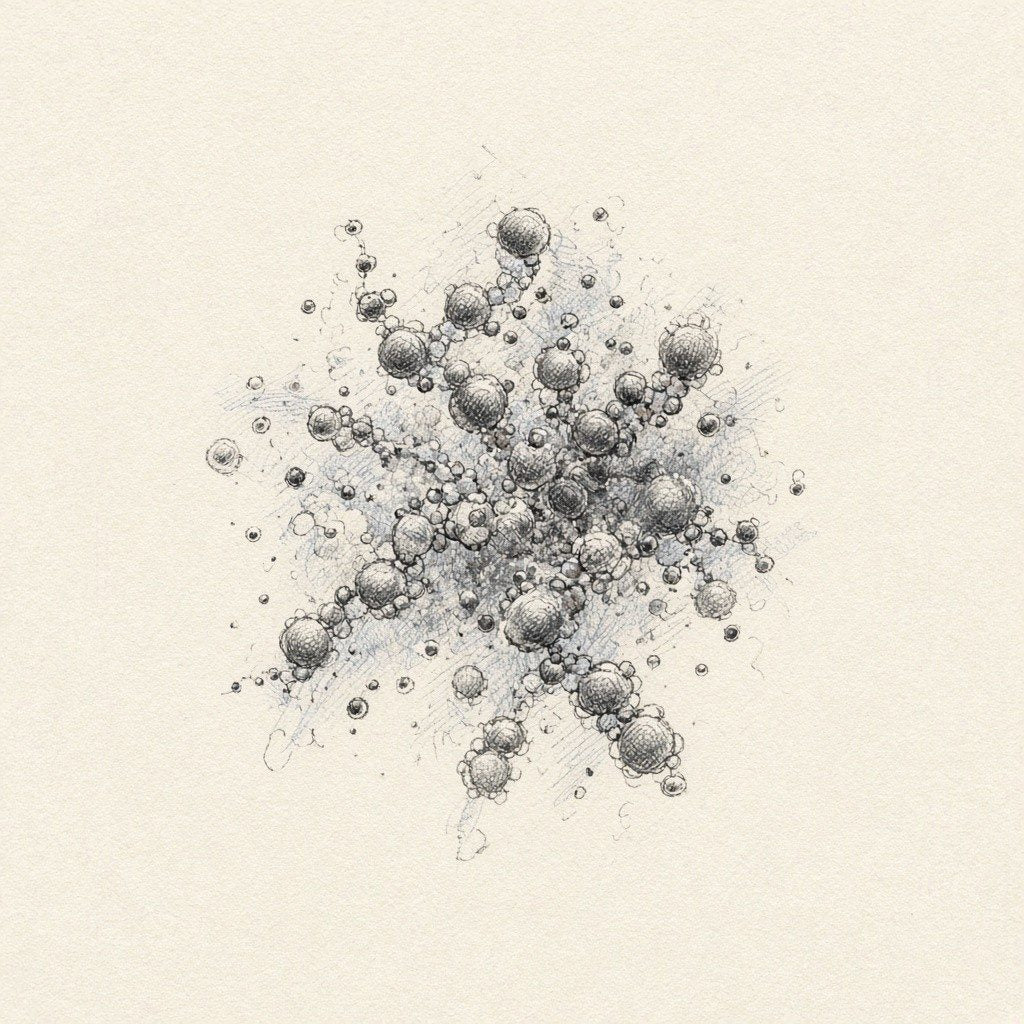 Fine particlesParticula subtilis
Floats. Too small to see, too common to ignore.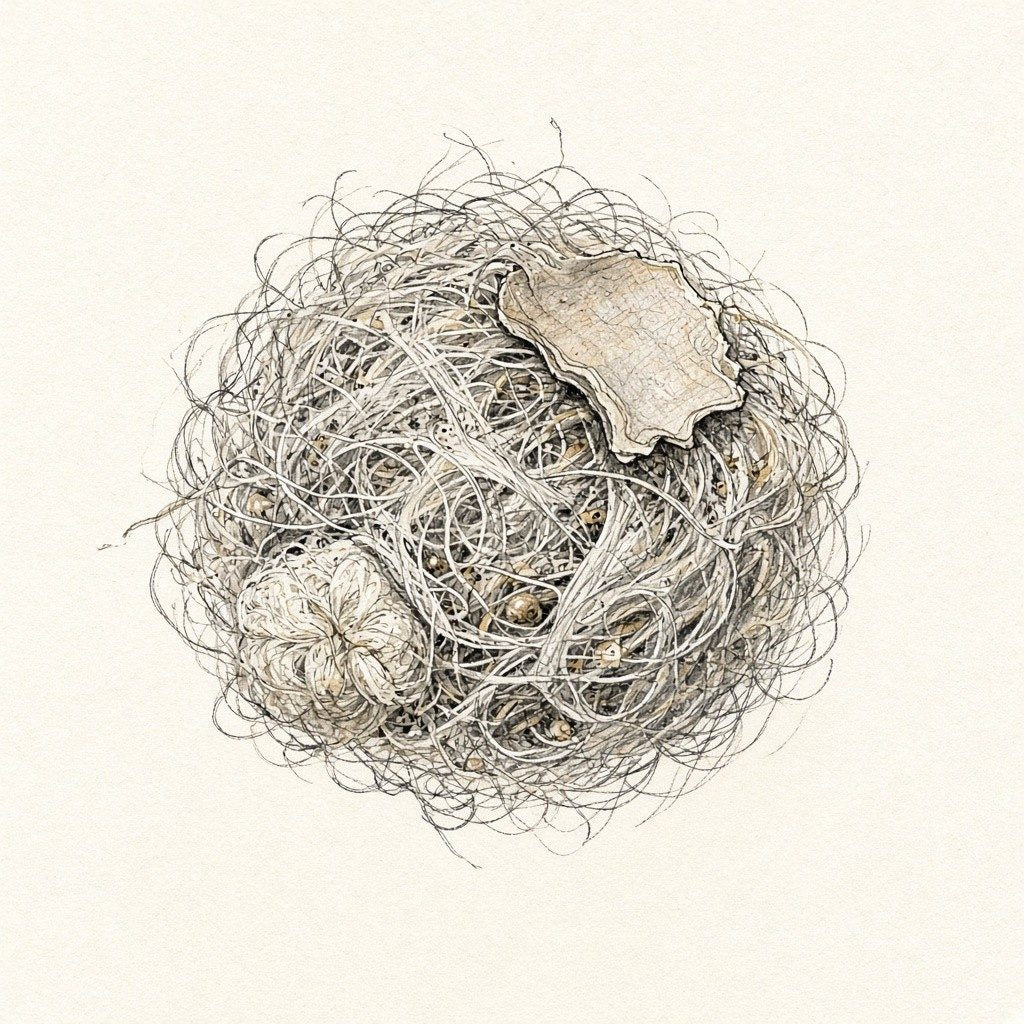 DustPulvis domesticus
Settles. The dust bunny is a whole ecosystem. Please don't name it. Mold sporesSporae fungorum
Floats. Mold is a moisture detector with a very bad attitude.coming soon PollenPollen vagans
Settles. Plants mailing love letters. Your couch is not the address.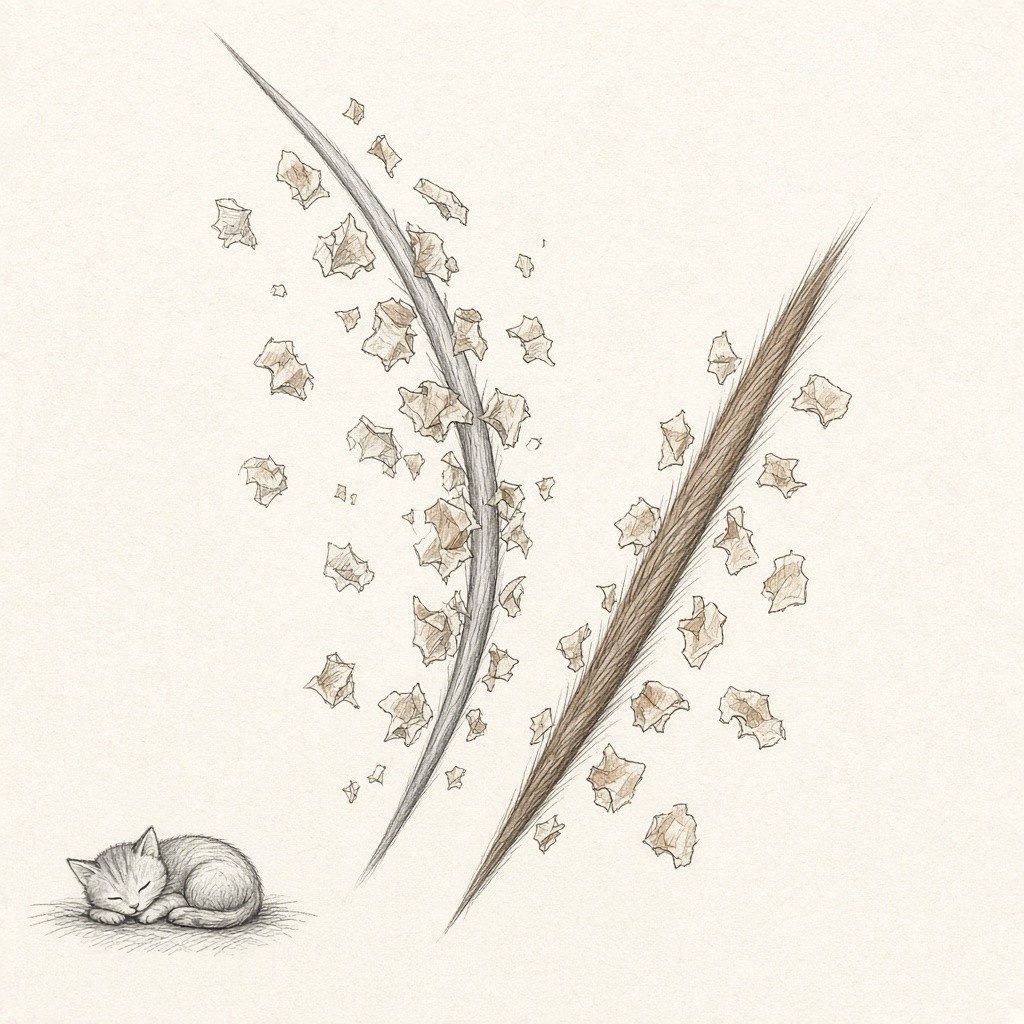 Pet danderFurfur animalium
Floats. Your cat isn't dusty. Your cat is generous. Dust mitesDermatophagoides
Settles. Tiny roommates. They do not pay rent.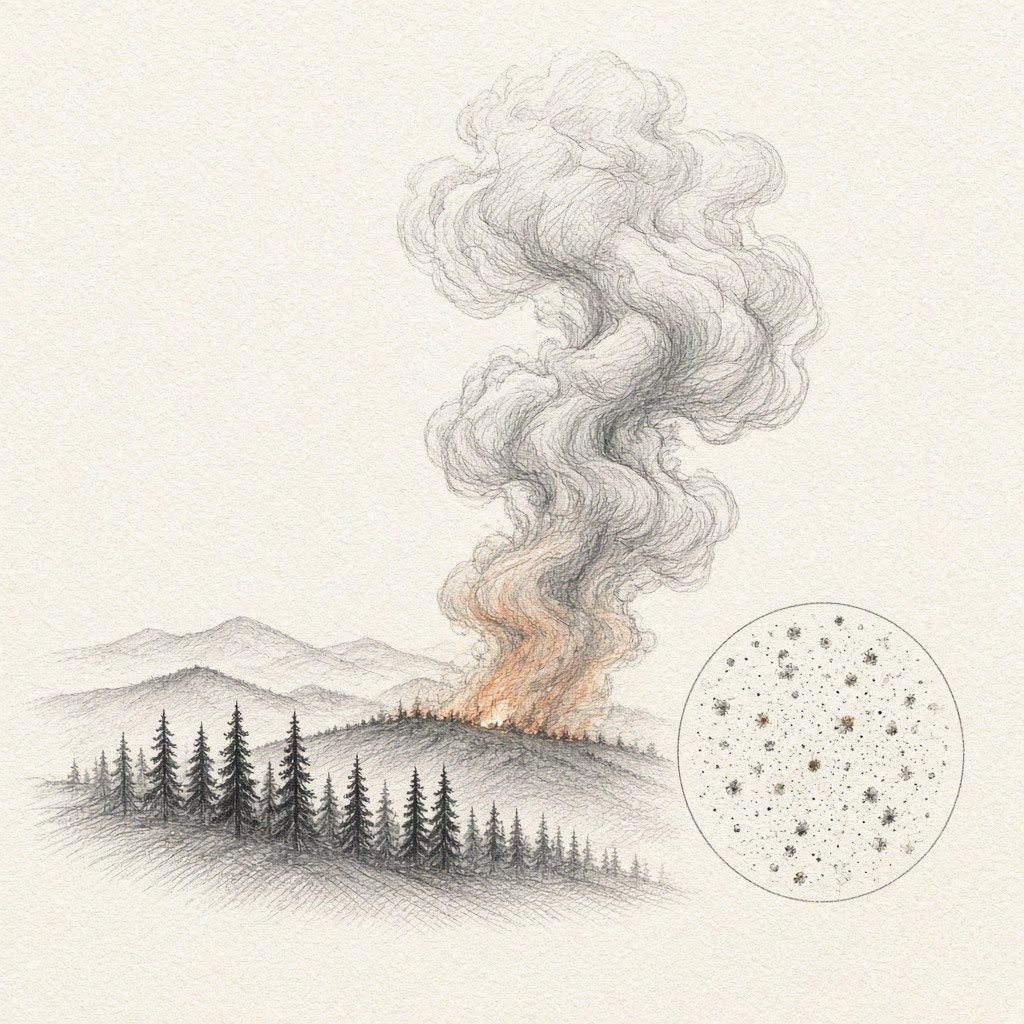 Wildfire smokeFumus silvestris
Floats, plus gas. When the sky turns orange, the inside air matters most.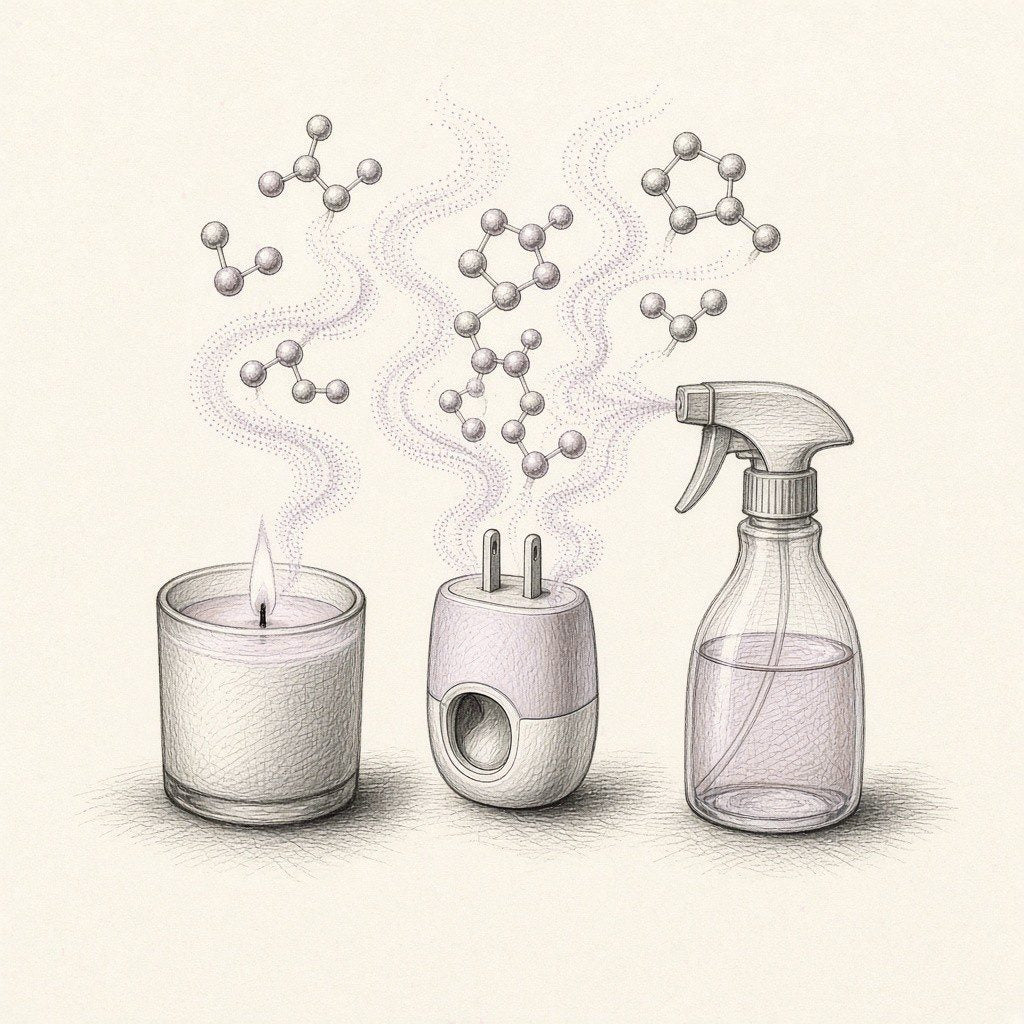 Chemical fumes (VOCs)Vapor organicus volatilis
Gas. Smells like lavender. Chemically, it's a group chat.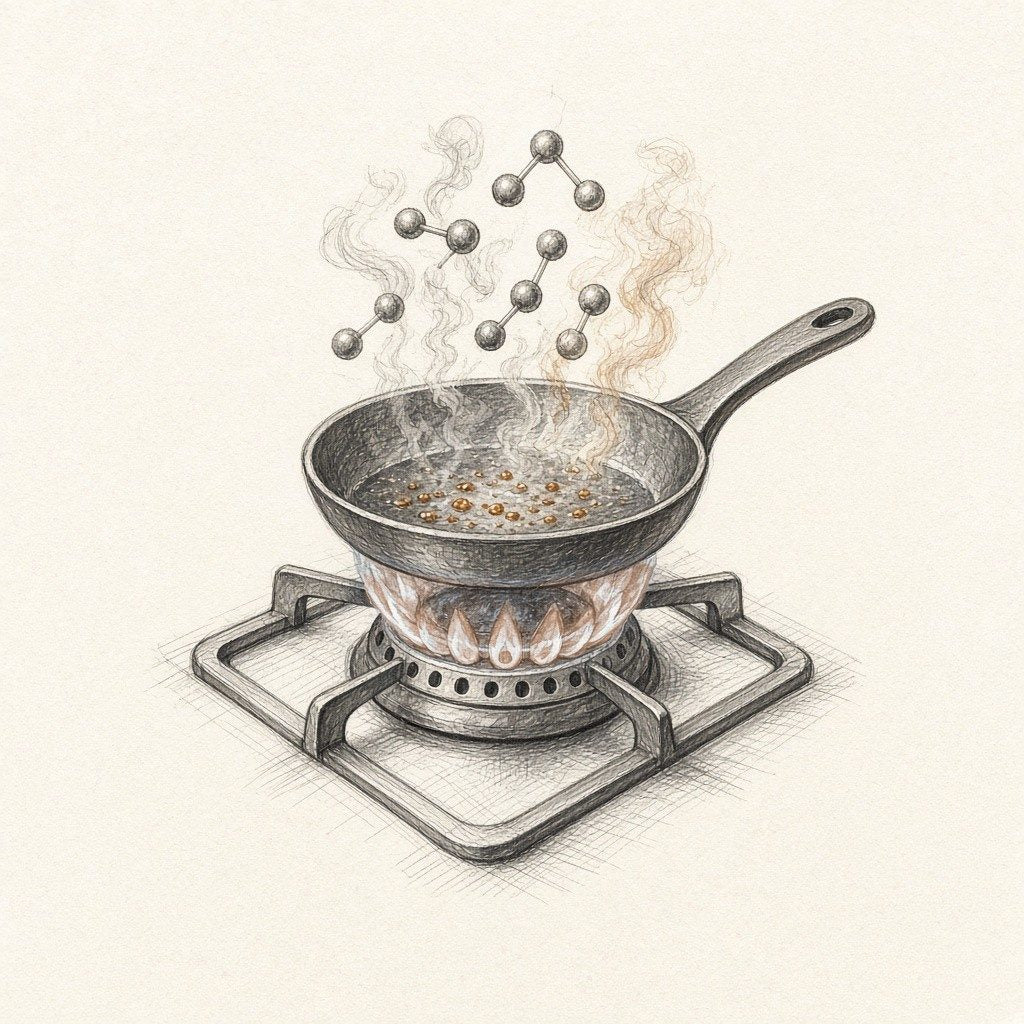 Cooking fumesFumus culinae
Gas, plus floats. Dinner smells amazing. The stove has notes. Carbon dioxideSpiritus exhalatus
Gas. The room's report card, written in your breath.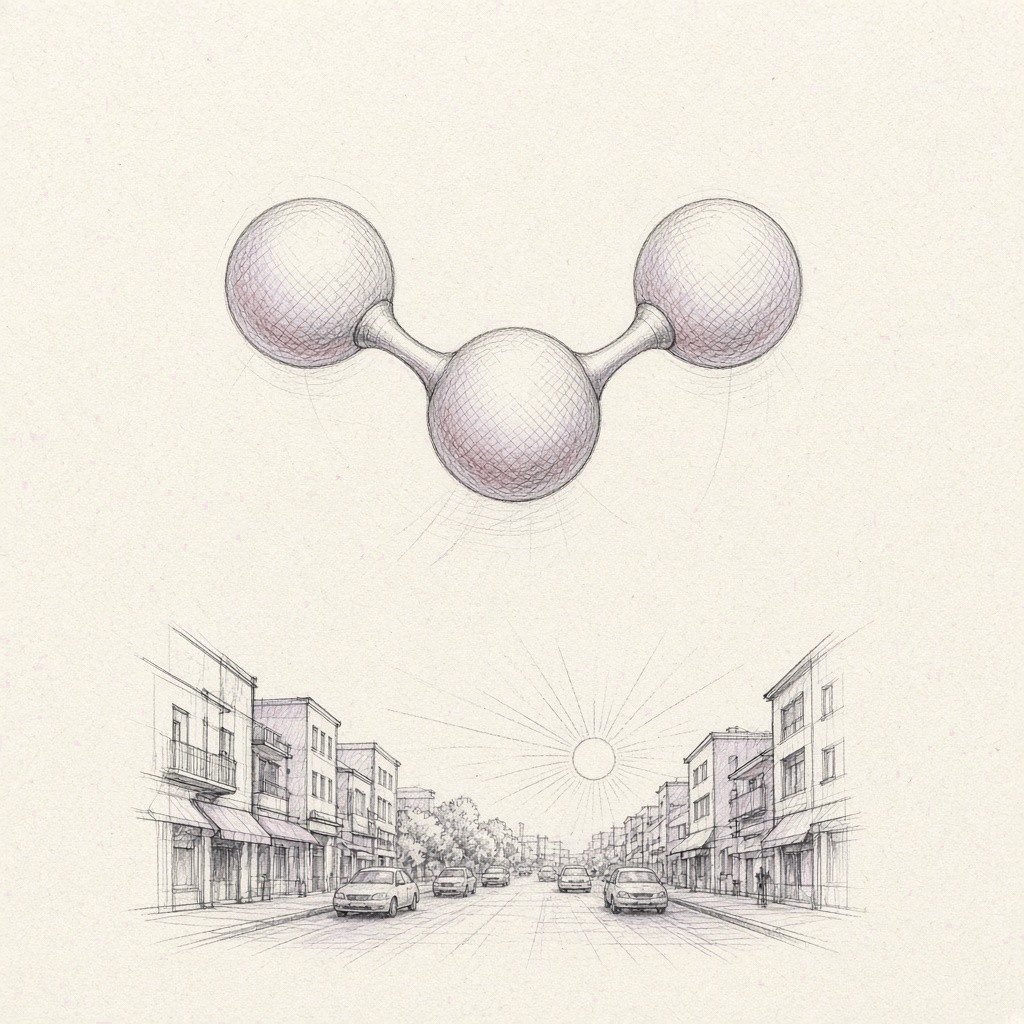 OzoneOzonum
Gas. Helpful up high in the sky. Rude down here. Airborne microbesAerosolum vivum
Floats. Every conversation leaves a little in the air.

