

Particles: the stuff that floats, and the stuff that falls

Copy matched to the current render (design/v2/pillars/particles.html, pillars2.py) on Nov 22, 2026, 4:30 AM CT; 1 line(s) corrected from posts/pillars/particles.md.
A sunbeam, a dog on the rug, and everything floating in the air between them.
From the notebook
Picture the living room floor, a sketchbook open, and the sun hitting the window at exactly the right angle. Suddenly the air is full. Hundreds of little specks, turning slowly in the beam like they own the place.
Here’s the part that gets us every time: they were there a minute ago. The sunbeam didn’t bring them. It just turned on the lights.
And the ones you can see are the big kids. EPA says some particles, like dust, are large enough to see with the naked eye, and others are so small they only show up under an electron microscope.[1]
Lab notebook: specks in the beam = the big ones / the tiny ones: still there, just not on camera / checked with EPA’s particle page ✓
The oh-wow part: The sunbeam didn’t fill the room. It just showed you what was already floating there.
The easy version
- Particles are bits of solid stuff in the air, from a few nanometers to tens of micrometers, living or not.[2]
- Big ones are fallers: they settle onto surfaces fairly fast. Small ones are floaters: they spread through a house and stay up longer.[2]
- EPA’s order of fixes: remove the source, bring in clean outdoor air, then filter as a supplement.[3]
Floaters and fallers
Keep watching for a minute. A few specks drift down and land on the bookshelf. Others just hang there, as if gravity were optional. That’s this whole page, in one sunbeam.
The fallers are the bigger ones. EPA says larger particles, like dust, pollen, some mold spores, animal dander and dust mite bits, “settle out of the air and onto surfaces rather rapidly.”[2] Walk across the rug or run the vacuum and they get kicked back up, but most of the larger ones land again.[2]
The floaters are the small ones, and they play the long game. A big share of cat and dog allergens rides on small particles, which are “more easily dispersed throughout a house” and “remain airborne longer.”[2] That’s why EPA pairs filters with plain old cleaning and dust control for the big stuff.[2]
How small is small?
Try drawing them to scale. It does not go well for the small ones.
An average human hair is about 70 micrometers wide, roughly 30 times wider than the largest fine particle.[1] EPA sorts indoor particles by size: coarse (PM10, from 10 down to 2.5 micrometers), fine (PM2.5, 2.5 or smaller) and smaller still.[2] Even “large” ones, over 10 micrometers, are only about one-sixth the width of a hair.[2]
Who's in the beam
Time to meet the regulars. Each one has its own page with a drawing, its tags and every source. Tap a tag to see who else shares it.
The dusty ones
mostly fallers, plus one tiny floater
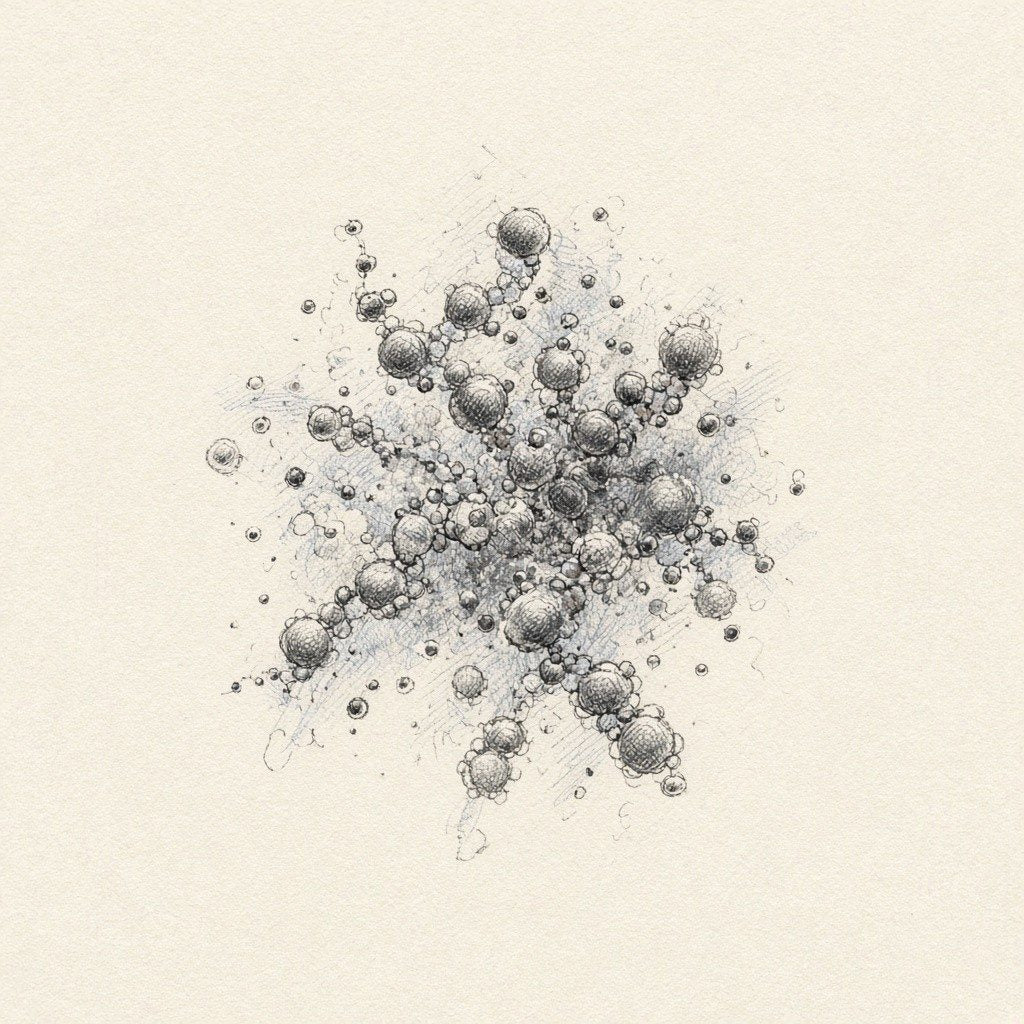 Fine particlesThe tiny floaters: 2.5 micrometers or smaller. EPA says some particles are so small they show up only under an electron microscope.[1]
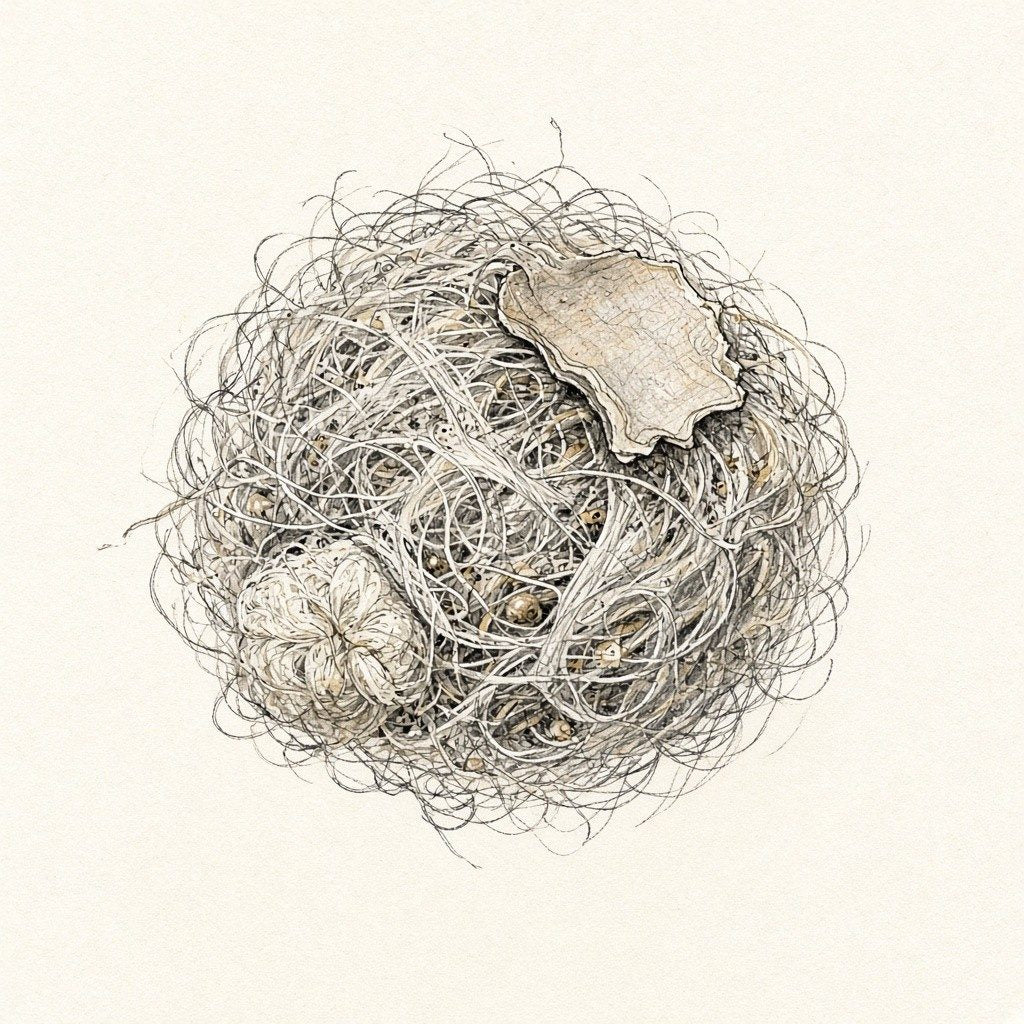 DustA classic faller. Coarse, and most of it lands again after you stir it up.[2]
The living ones
yes, some of what floats was alive
 Mold sporesFloats through indoor and outdoor air, and needs moisture to grow.[4]
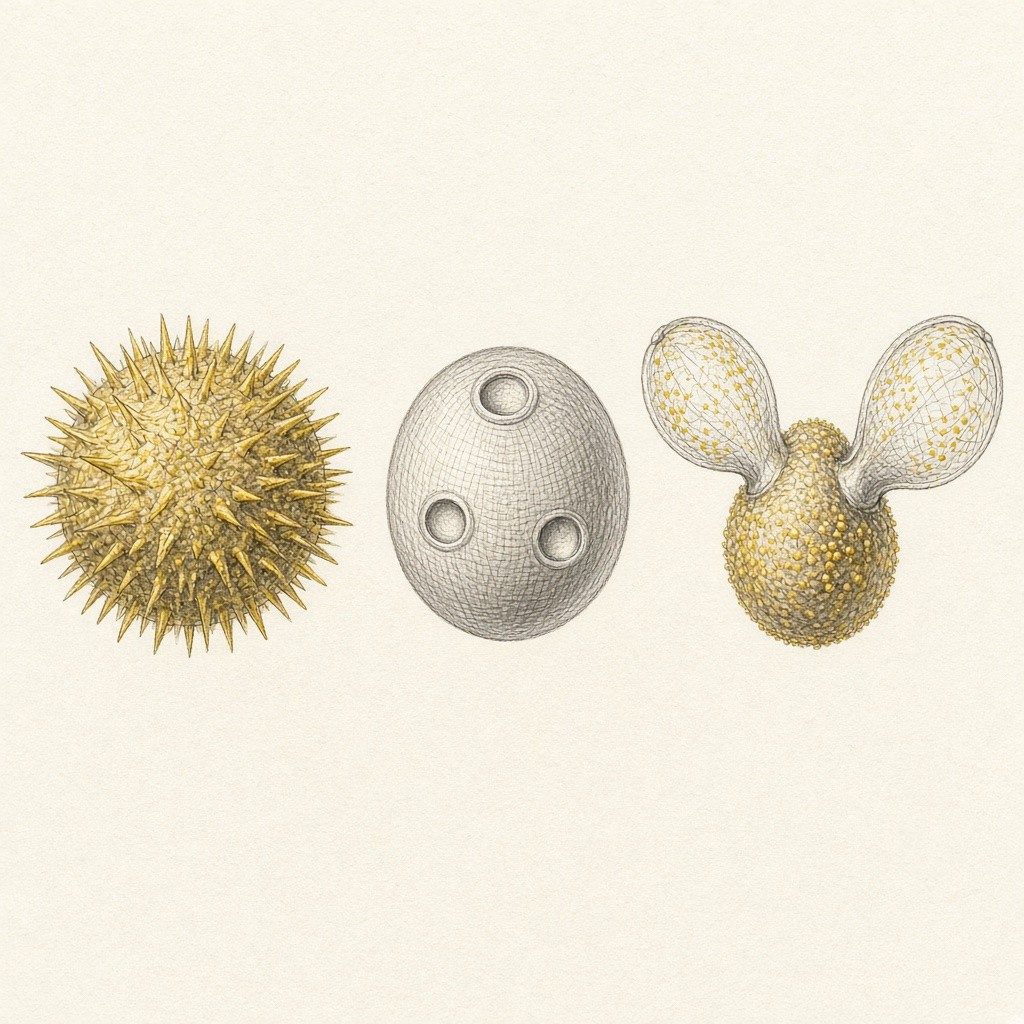 PollenOne of the biggest. EPA puts it first on its largest-to-smallest list.[2]
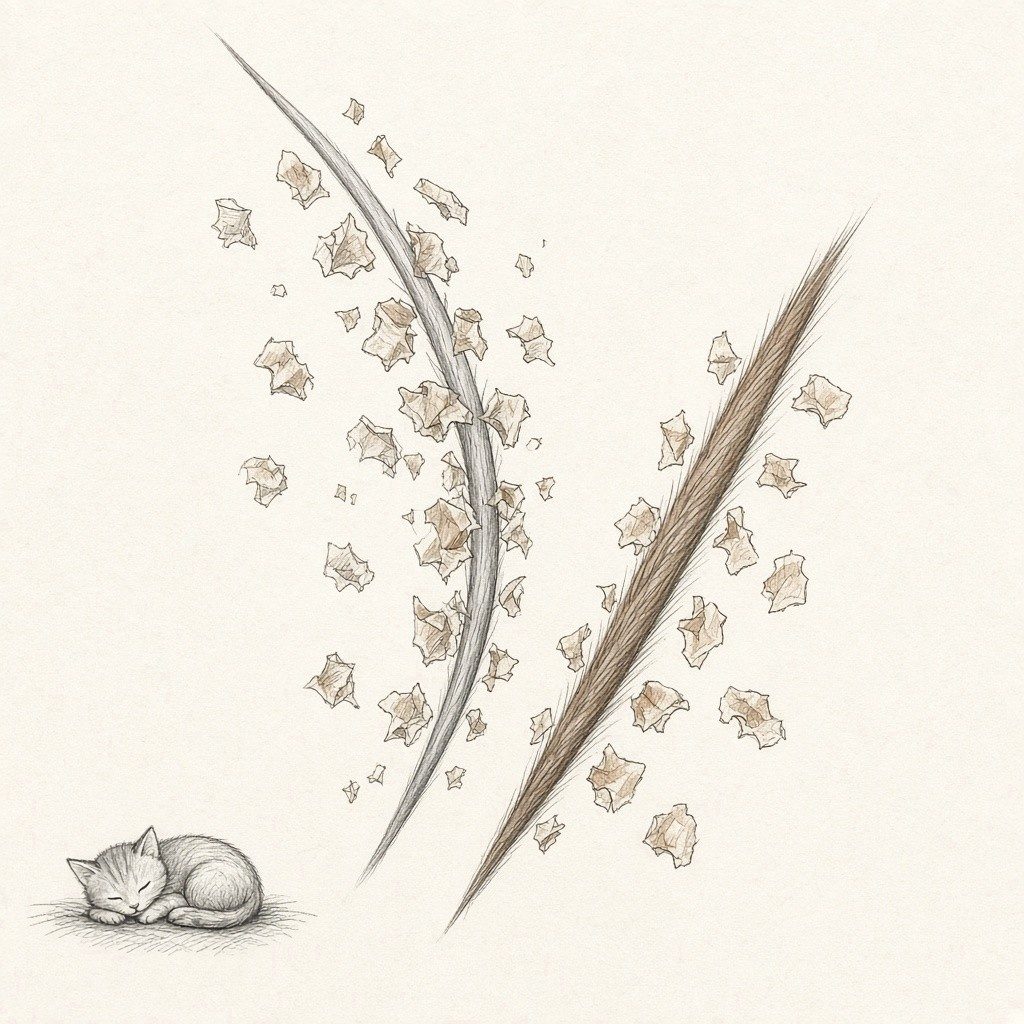 Pet danderThe dog’s contribution. It rides on small particles that spread through a house.[2]
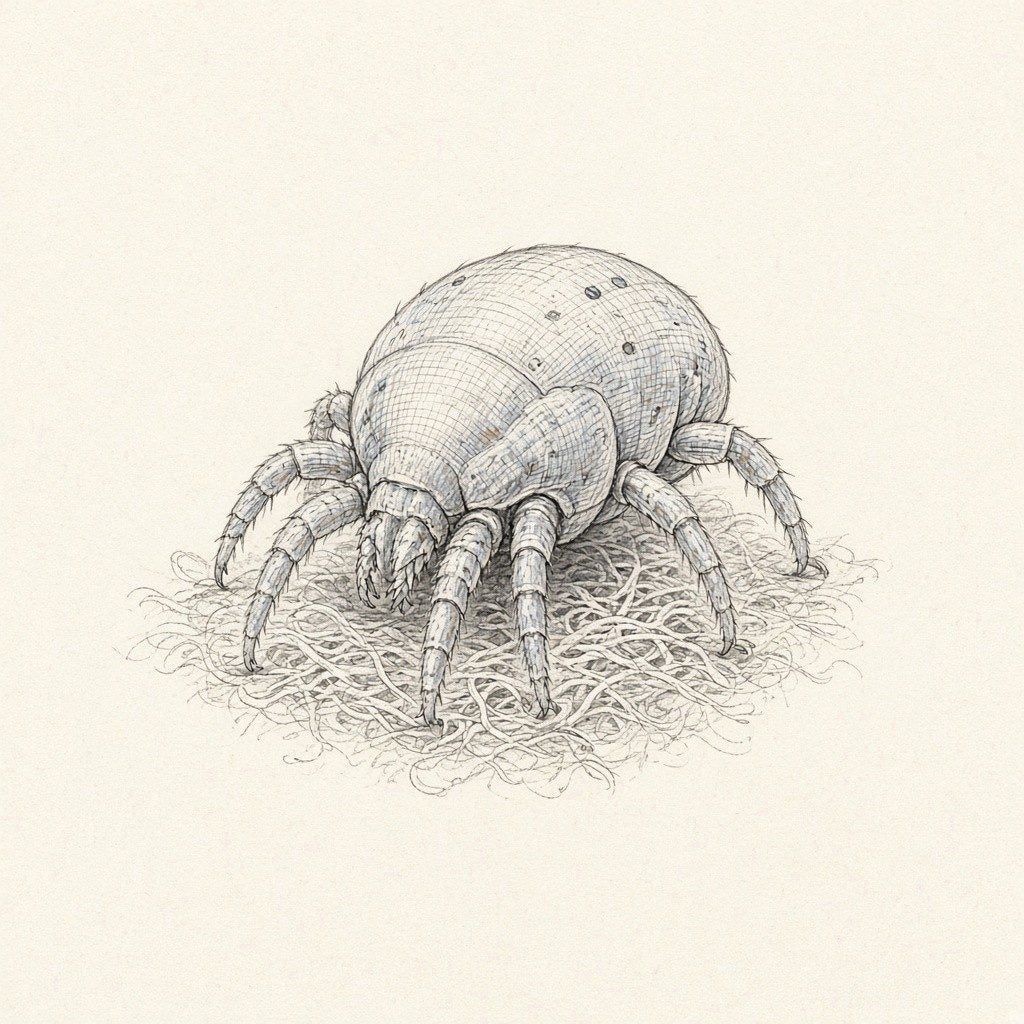 Dust mites
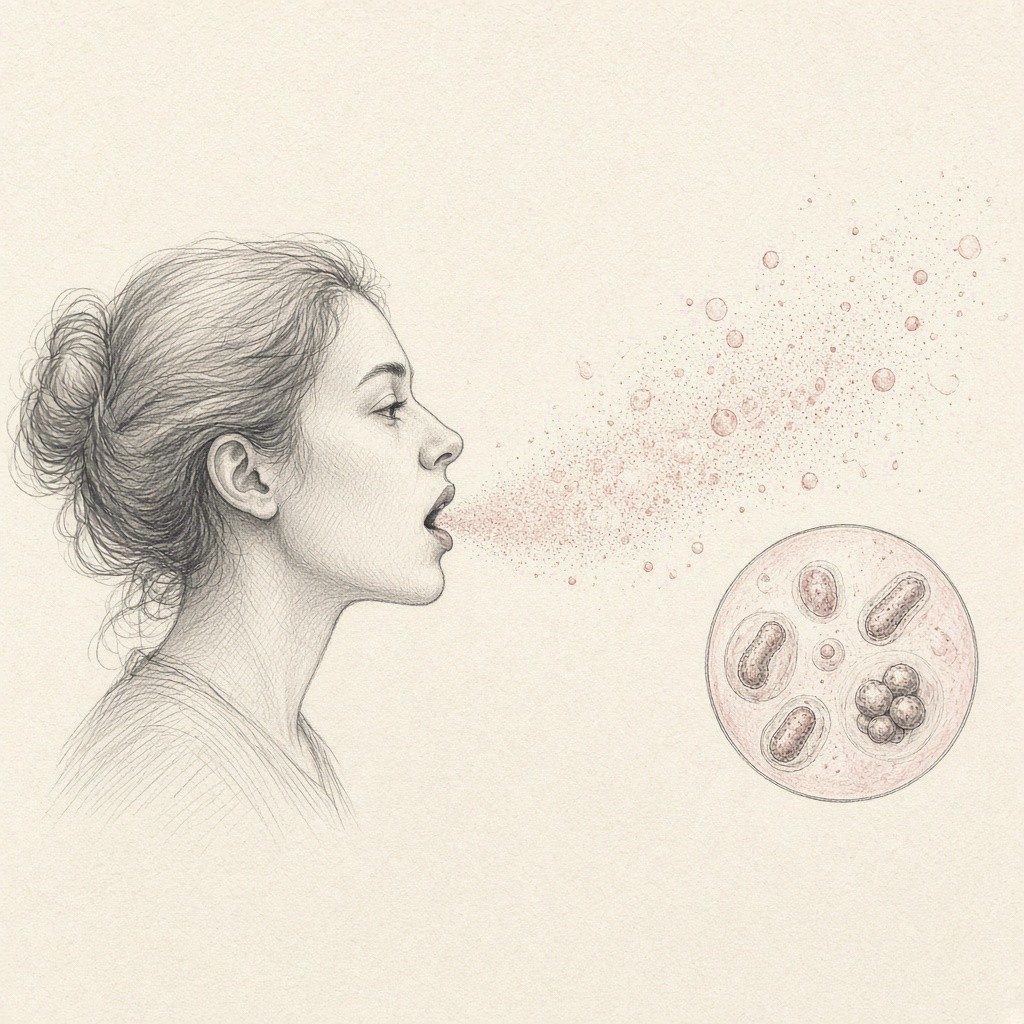 Airborne microbesTiny particles carrying living stuff. Viruses and some bacteria are fine-particle size.[2]
A bit of both
part particle, part gas
Where they come from
Remember the candle on the coffee table? It’s on a list.
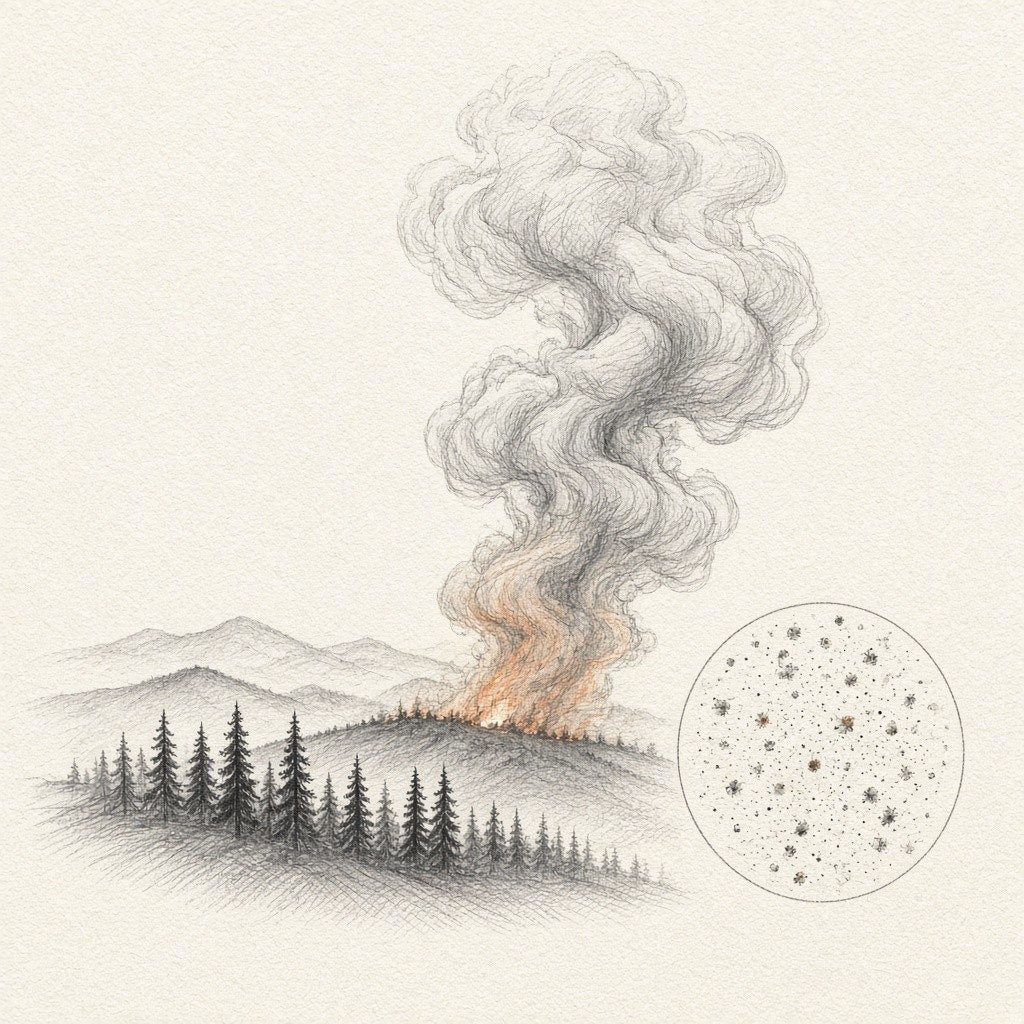
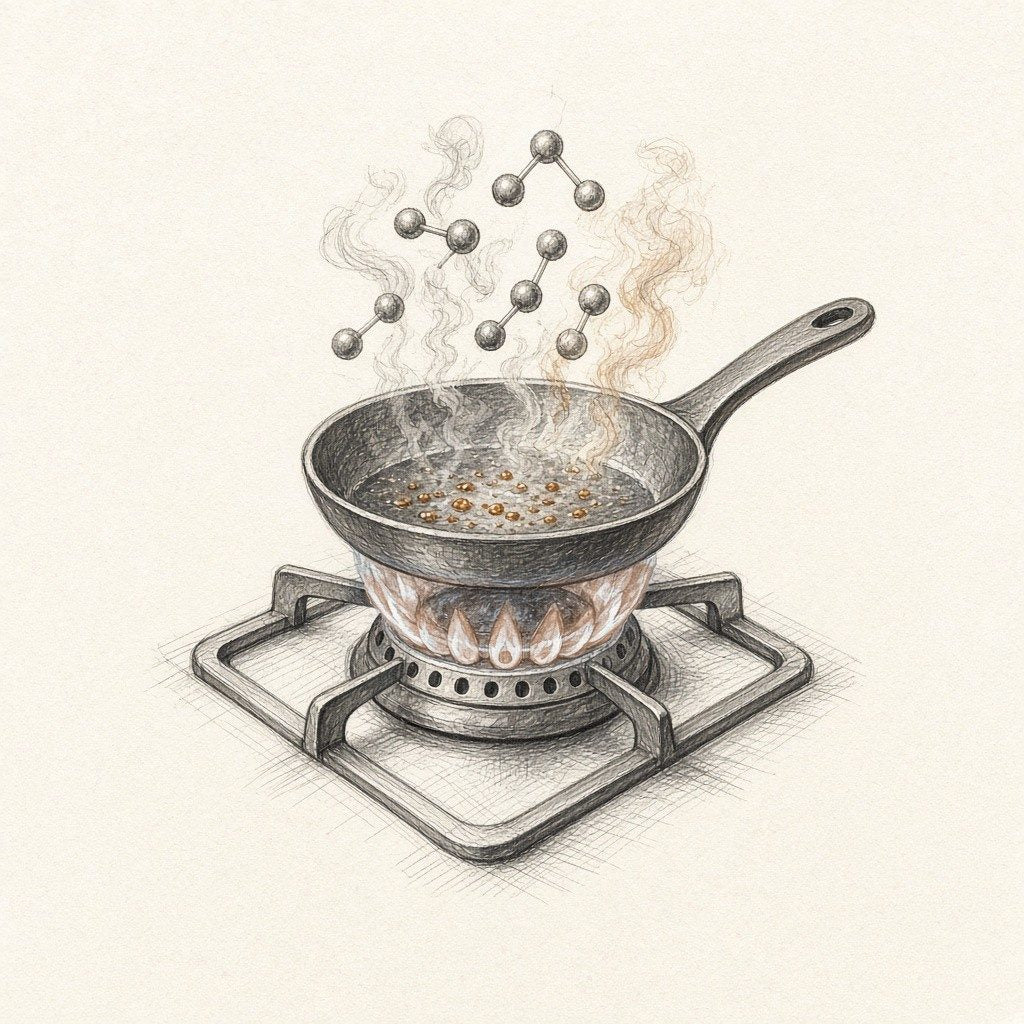
EPA’s list of indoor fine-particle sources reads like a cozy Saturday: candles, incense, fireplaces, woodstoves, gas and electric stoves, printers and tobacco smoke.[2] Some drift in from outside, like traffic emissions and wildfire smoke.[2]
Does it matter if I can't see it?
Fair question: if I can’t see it, does it matter? Here’s one study worth knowing.
In a year-long study of 302 office workers in six countries, higher indoor PM2.5 went with slower, less accurate answers on quick brain-teaser tests.[8] It’s observational, so it shows a link, not proof of cause. Still, “invisible” never meant “irrelevant.”
So what do I actually do?
So what do you actually do about a room full of floaters? EPA has an order for that, and it’s refreshingly boring.
EPA’s advice comes in a clear order. The most effective moves are to reduce or remove the sources and to ventilate with clean outdoor air. Filtration can be an effective supplement.[3] With filters, the higher the rating, the higher the removal efficiency for most particle sizes.[3] And no air cleaner or filter will eliminate all of the air pollutants in your home.[3]

Sources
- [1]US EPA, Particulate MatterPM) Basics (Agency guide
- [2]US EPA, Residential Air Cleaners: A Technical Summary, 3rd ed.2018) (Agency guide
- [3]US EPA, Guide to Air Cleaners in the HomeAgency guide
- [4]US EPA, A Brief Guide to Mold, Moisture and Your HomeAgency guide
- [5]US EPA, Asthma Triggers: Gain Controldust mites) (Agency guide
- [6]US EPA, Wildfires and Indoor Air QualityAgency guide
- [7]US EPA, Nitrogen Dioxide’s Impact on Indoor Air QualityAgency guide
- [8]Cedeño Laurent et al.2021), Environmental Research Letters 16:094047 (Observational
Citing an agency or study doesn’t mean it endorses any product. Field names are ours. The science isn’t.
