

Dust
Pulvis domesticus
Under the couch.
You pull the couch away from the wall to find the remote, and there it is: a gray dust bunny, soft as a kitten, rolling a little in the draft. Nobody remembers inviting it.
oh wow: That bunny is a scrapbook of your house. EPA says indoor dust is settled PM from a variety of sources: outdoor soil tracked in, pollen, mold spores, pet dander, dust mites, human skin flakes and hair, bits from cooking and candles, and more.[1] And it doesn’t stay put. It can be easily kicked up into the air by cleaning, vacuuming, and other activities like walking and crawling.[1]
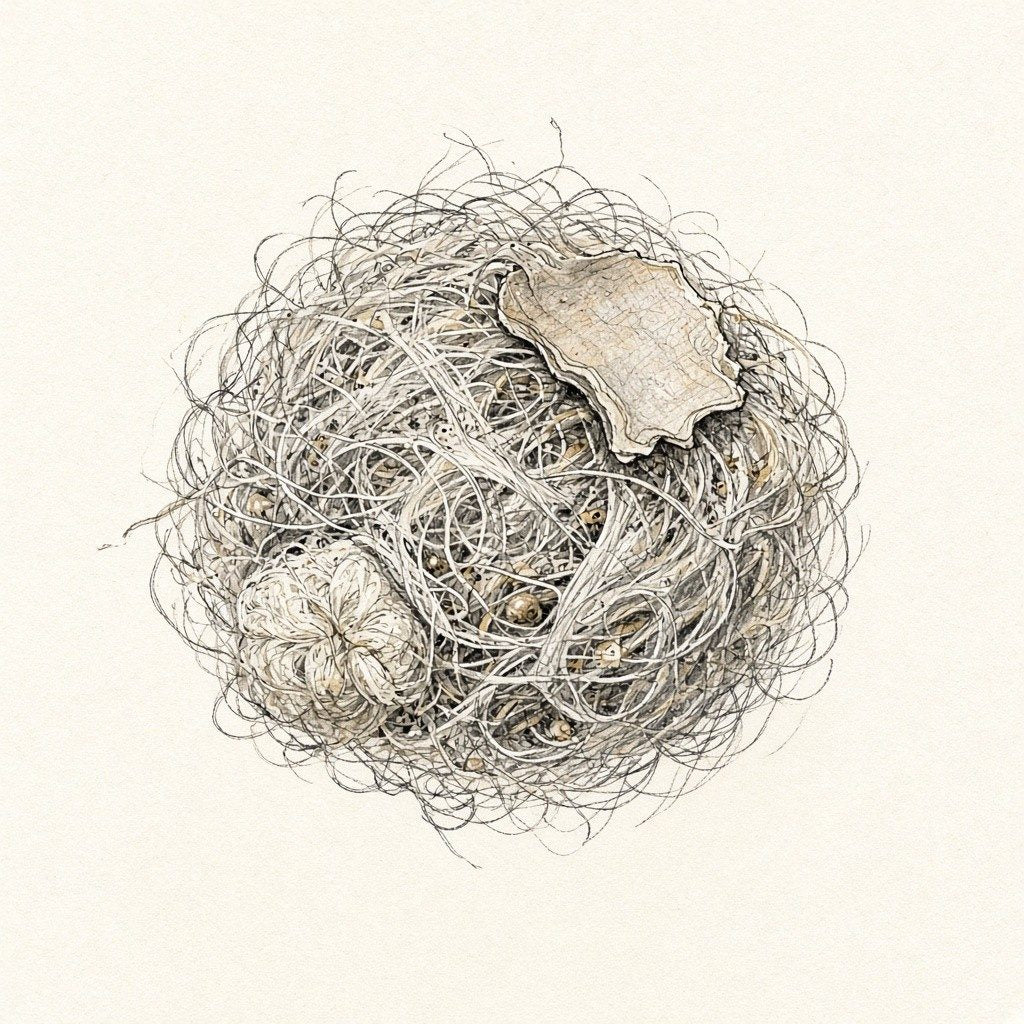
Dust is settled particulate matter from a variety of sources.[1] Some of it is large or dark enough to see.[2] Its one weakness: the larger particles settle out of the air and onto surfaces rather rapidly,[3] which is why EPA likes a damp cloth.[1]
Tap any tag to see everything else that shares it.
Hang time: Settles. EPA says larger particles like dust settle out of the air rather rapidly, and although walking, sweeping and vacuuming can stir them up, most of them resettle.[3]
Spot it: With your own eyes. Dust and dirt can be large or dark enough to see.[2]
“The dust bunny is a whole ecosystem. Please don't name it.”
The short version
What dust actually is
Dust is what particles become when they stop floating: EPA calls it settled PM.[1] It’s one of the standard indoor particle types EPA ranks by size.[3] Here’s a dust bunny, taken apart.

- outdoor soil. Blown or tracked indoors.[1]
- fibers. On EPA’s list of indoor particle types.[3]
- pollen and friends. Biological particles: pollen, mold spores, pet dander and dust mites.[1]
- hair. Human hair is in there.[1]
- skin flakes. So are human skin flakes.[1]
Words, untangled
- Dustsettled PM
- Indoor dust is settled PM from a variety of sources.[1]
- Larger particlesthe heavy ones
- Dust, pollen, some mold spores and pet dander are among the particles that settle out of the air rather rapidly.[3]
- Resuspensiongetting back up
- Walking, sweeping and vacuuming can resuspend particles. Most larger ones resettle.[3]

Myths, meet sources
It may contain outdoor soil, but also pollen, mold spores, pet dander, dust mites, skin flakes and hair, plastics, flame retardants, pesticides, and sometimes lead.[1]
EPA says to dust often with a damp cloth: dampening the cloth helps keep settled dust from going back into the air.[1]
Dust can be easily kicked up into the air by cleaning, vacuuming, and other activities like walking and crawling.[1]
It includes outdoor soil and dust that has been blown or tracked indoors.[1]
Some people, not everybody
“Children are exposed to more indoor dust than adults.”US EPA, Sources of Indoor PM [1]
“This is because they crawl and play closer to the floor, where the dust that accumulates on surfaces can be inhaled more easily.”US EPA, Sources of Indoor PM [1]
“If your home contains lead or asbestos, you should use extra caution and take additional steps to safely address indoor dust concerns.”US EPA, Sources of Indoor PM [1]
Our part: we describe what the agencies say, word for word where it matters, not what it means for any one person.
Questions people ask
What’s actually in dust?
Outdoor soil and dust, biological particles like pollen, mold spores, pet dander and dust mites, skin flakes and hair, particles from cooking, cleaning and candles, and particles from products.[1]
How often should I vacuum?
EPA: vacuum carpets and furniture every week, or more often.[1]
Why a damp cloth?
Dampening the cloth helps keep settled dust from going back into the air.[1]
Does dust float around all day?
Mostly not. Larger particles settle out of the air rather rapidly, and most resettle after they’re stirred up.[3]
Why do kids get more of it?
They crawl and play closer to the floor, often put hands and toys in their mouths, and eat, breathe and drink more relative to their body mass than adults do.[1]
Sources
- [1]US EPA, Sources of Indoor Particulate Matter (PM)Agency guide
- [2]US EPA, Particulate Matter (PM) BasicsAgency guide
- [3]US EPA, Residential Air Cleaners: A Technical Summary, 3rd ed. (2018)Agency guide
Citing an agency or study doesn’t mean it endorses any product. Field names are ours. The science isn’t.
